
After the Result: Who Is Government There to Serve?
11 November 2026· AFQY News
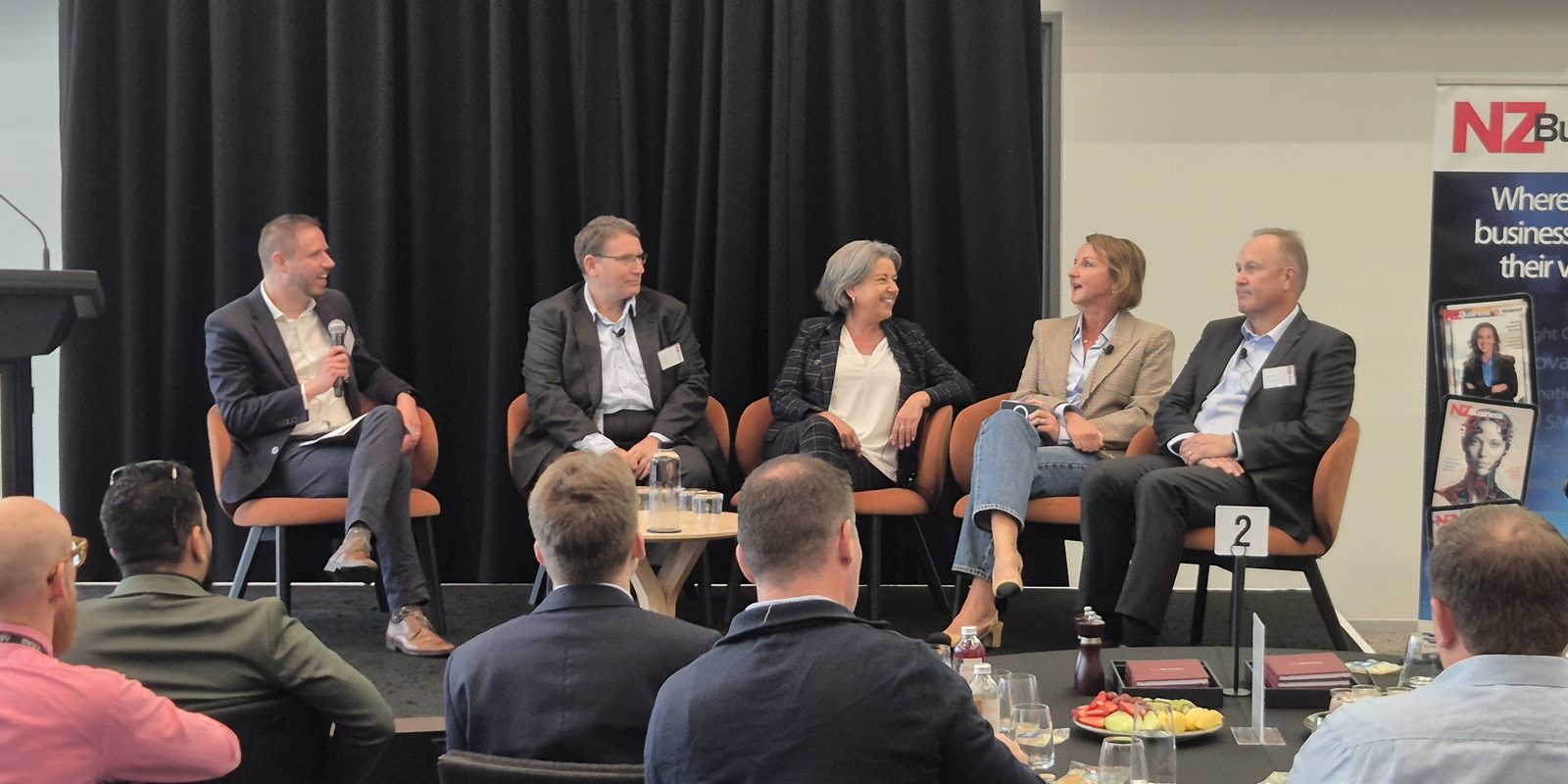
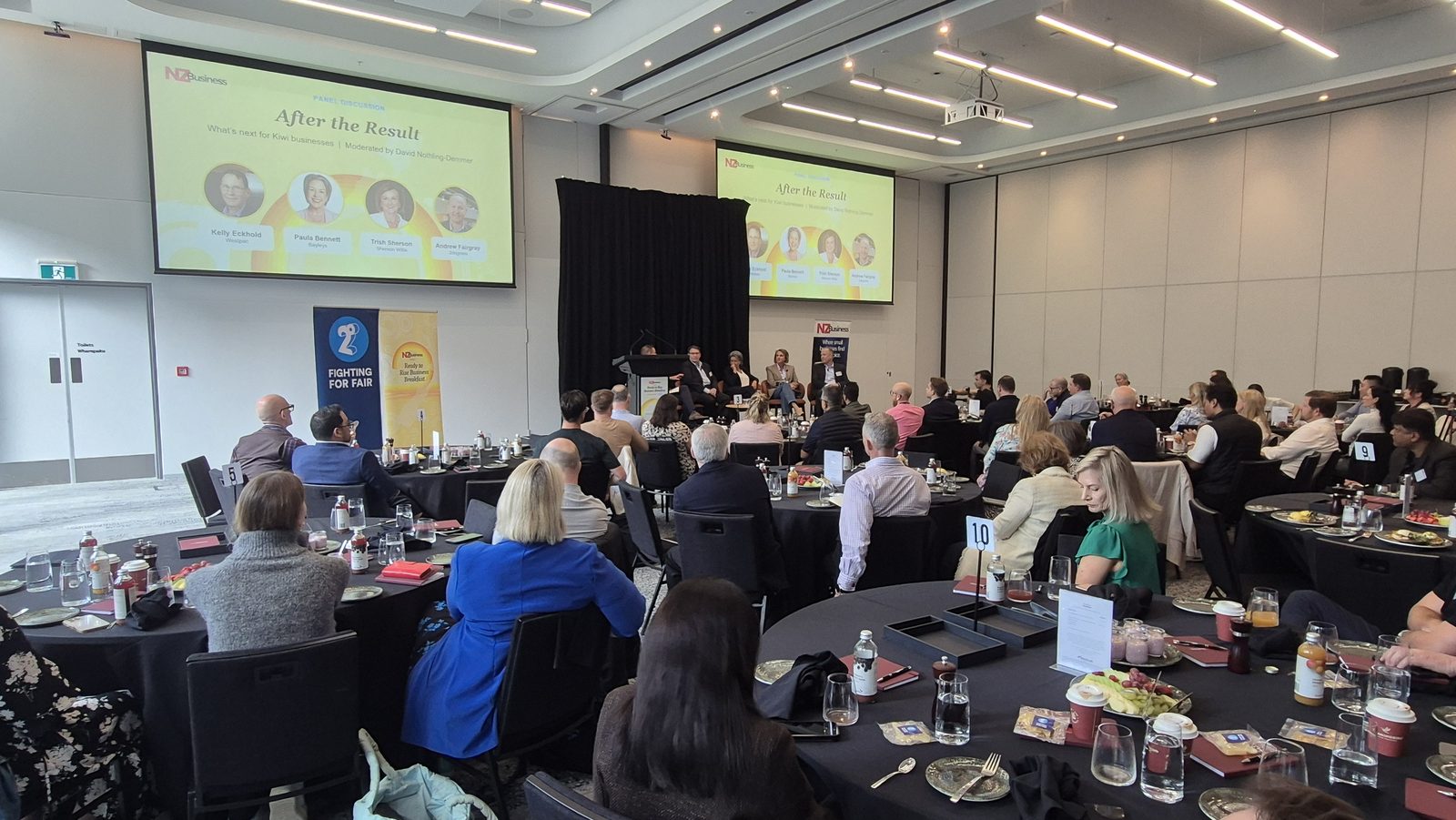
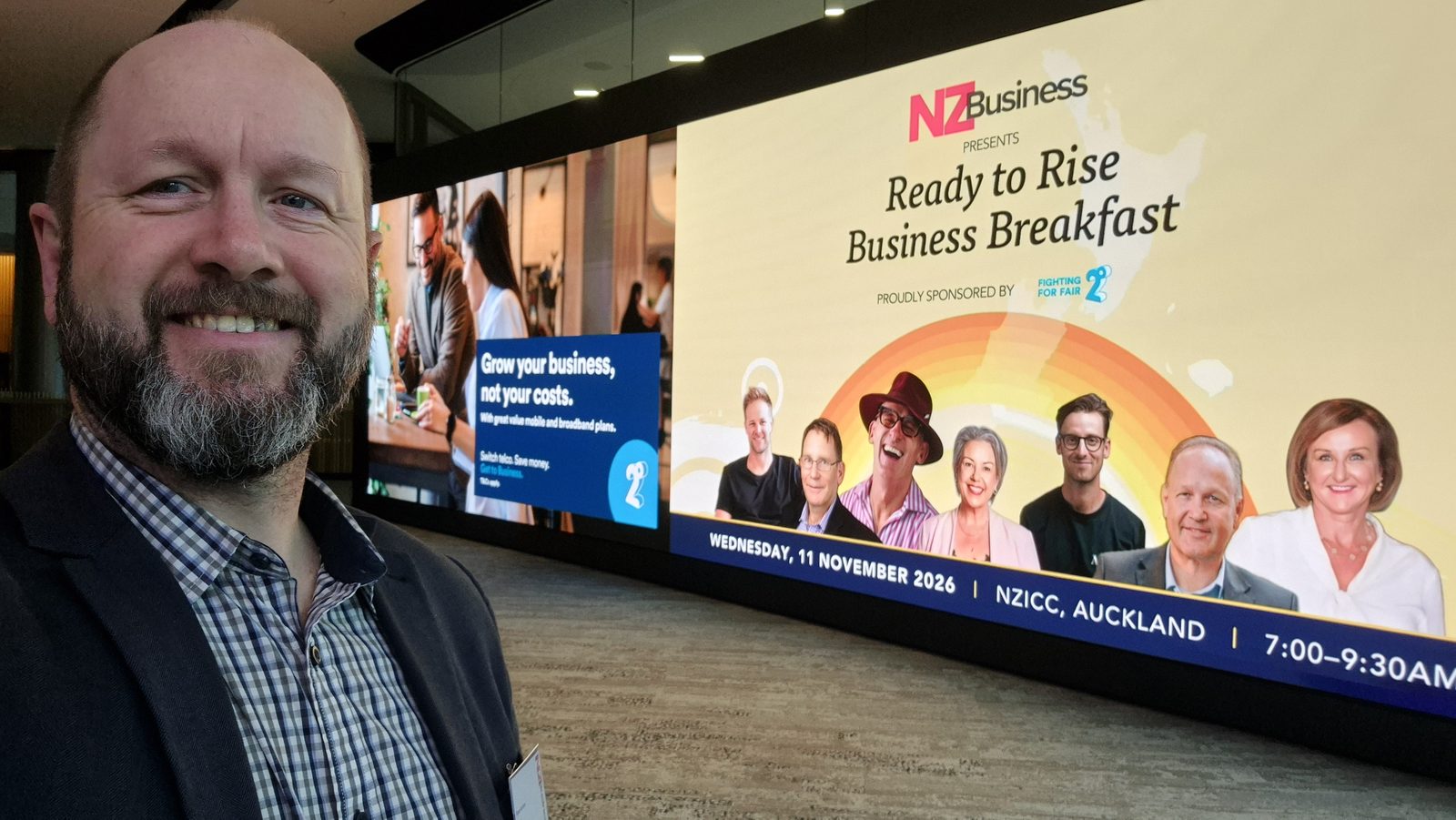
Four days after New Zealand voted, and with the result still too close to call, a room full of business owners sat down to breakfast at the New Zealand International Convention Centre in Auckland to ask what happens next.
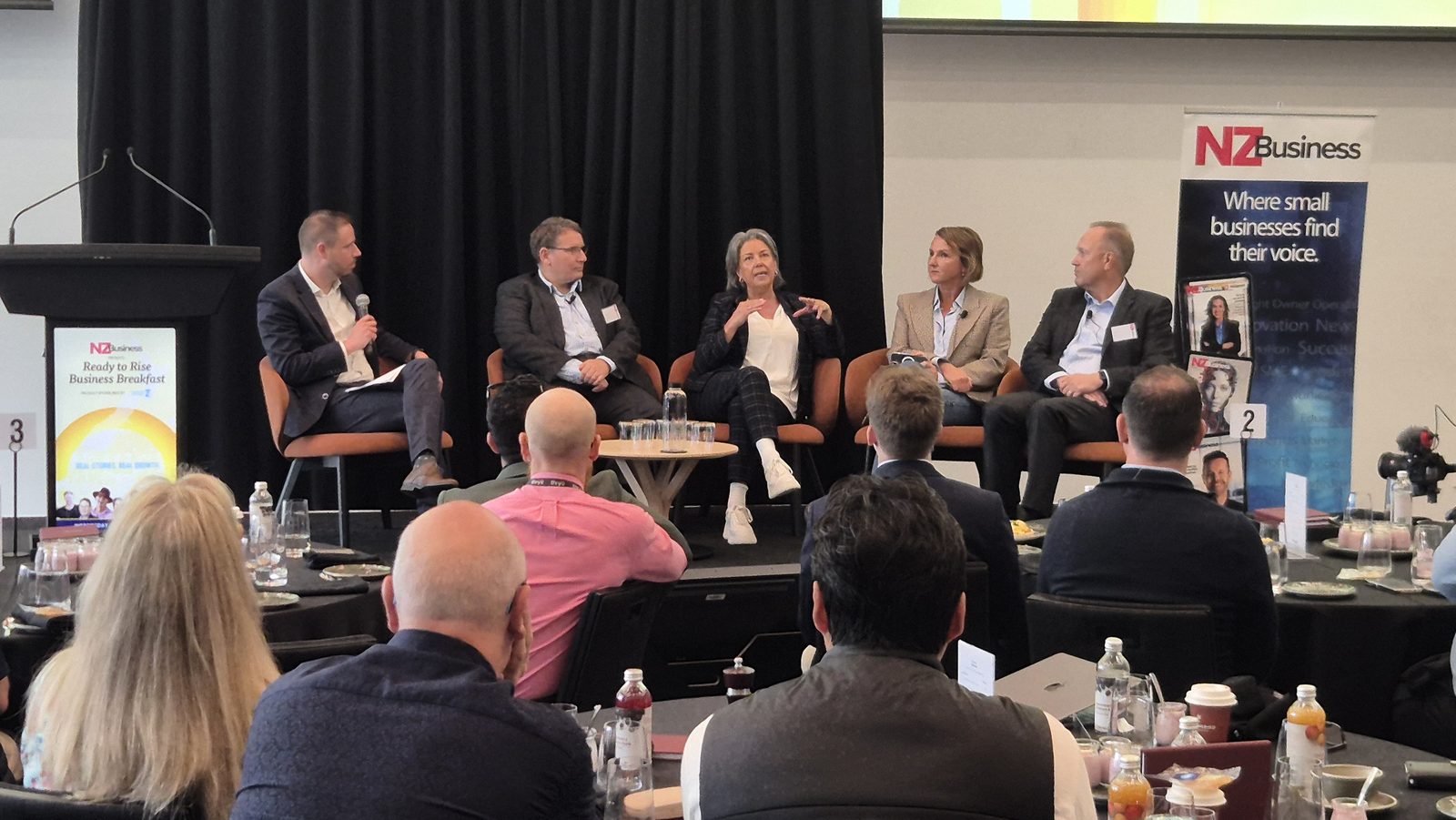
The occasion was the third Ready to Rise Business Breakfast, run by NZBusiness and sponsored by 2degrees, under the banner “After the Result”. Andrew Fairgray had opened the morning for the sponsor, and two founders had told their stories: Grant Taylor of MOXX Brands and Ārepa’s Angus Brown. Then MC Angus Jenkins called up the panel: Westpac chief economist Kelly Eckhold, former Deputy Prime Minister Paula Bennett, now with Bayleys, Sherson Willis co-founder Trish Sherson, and 2degrees chief business officer Andrew Fairgray, with NZBusiness’s David Nothling-Demmer asking the questions.
What followed was not a tidy run through a list of topics. It bounced: from the mood in Wellington to the size of a ministry, from interest rates to a 23-year-old’s board paper. But it kept landing on the same question. Who is government there to serve, and does it still remember?
Because the conversation kept circling back, this account is grouped by theme, in the order each theme was first raised, with every speaker’s points on it gathered in one place.
TL;DR
- The official election result is due on 27 November. Westpac’s Kelly Eckhold expects whoever governs to arrive without a strong mandate, in a combination he does not see bringing big ideas.
- Eckhold told owners not to plan around interest rates near 3 percent. The Official Cash Rate is 2.75 percent and he expects rates to reach about 4 percent in the second half of next year.
- Trish Sherson said the Ministry of Business, Innovation and Employment has more than 6,000 staff and called each one “a potential handbrake” on business. The ministry’s own report counts 6,000.
- Sherson said the hardest step for a New Zealand business is hiring its first employee, and that many do not get past being a sole trader. She asked how that path to success can be made more available.
- Paula Bennett’s advice for being heard by a new government: hand ministers a simple five-point plan, and talk to your local MP in real terms.
- On AI the panel agreed: redesign the work instead of polishing it, share what works, and hire graduates who already know the tools.
Two languages
Nothling-Demmer started with the mood. Bennett, who spent 15 years in Parliament, described Wellington as somewhat tense. Any smart government, she said, knows how to work with the public service to get the best out of it. Then she described the job she finds herself doing now. Only half joking, she said her job description is translator, because business and Parliament speak such different languages.
She sees the frustration from both sides. When business people tell her they are not getting what they want from government, she can often see why: what they said is not what the people in Wellington heard. And she gets just as frustrated with public servants who do not seem to grasp what it is like to work in what she called the real world. Her point was that neither side is the villain. Join the best of the two sets of capabilities together, she said, and the good it could do for the country would be incredible.
A ministry of 6,000
Sherson came at the same gap from the other bank of the river. She has owned a small business for 20 years, and when she listens to what comes out of Wellington, she said, she hears it as a business owner first and a commentator second.
She picked up two things the morning’s earlier speakers had raised: what government could do to help businesses scale and stay in New Zealand, and how tough the regulation is for a small business that just wants to get on with it. There is, she said, a big disconnect between the public sector and what it takes to make a small business work.
Then she offered a number.
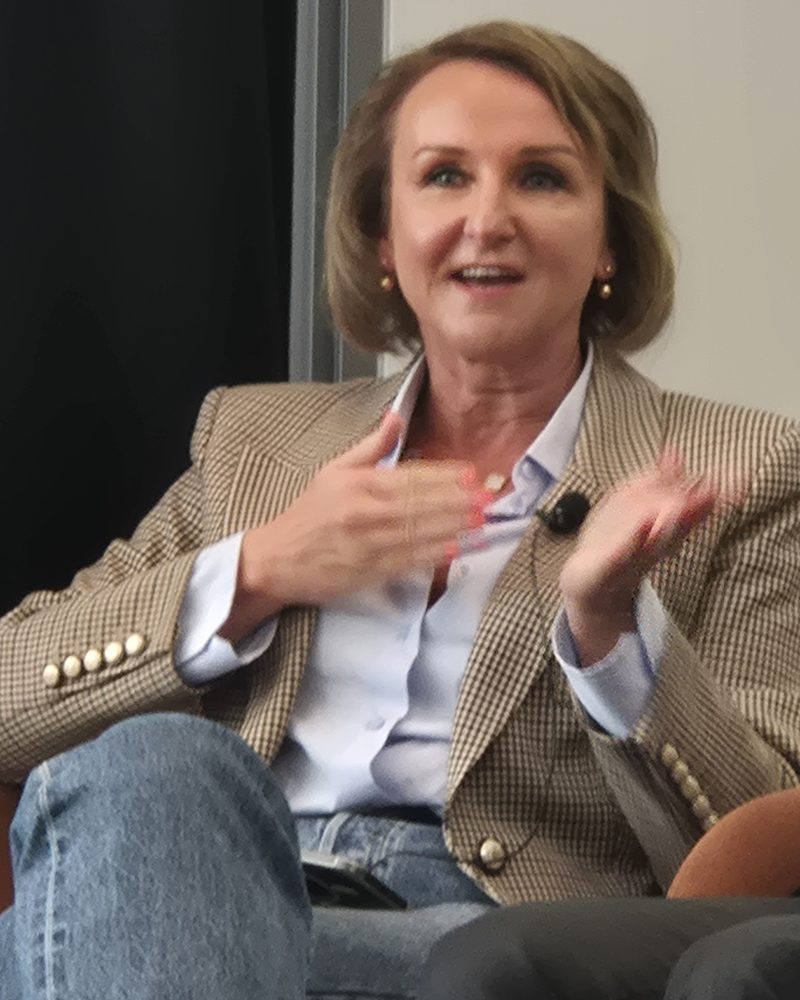
"We have a Ministry of Business, Innovation and Employment, a really interesting title, that has over 6,000 people employed. And so every person, in my view, in the ministry is not a supporter of business but a potential handbrake."
The ministry’s own latest annual report puts its workforce at 6,000 people at 30 June 2026.
Sherson’s argument was about distance, not malice. Turning up to a photo opportunity in a hard hat, or walking a manufacturing line, is not the same as understanding business, she said. If politicians are serious, the work is in genuinely winding back the regulation that gets in the way. There was no shortage of small business policy in this election, she added. What differed from party to party was the definition of the problem. So the test she will apply to the new government is whether its policy is coherent, and whether it is aimed at the real problems small businesses have.
Into the black box
The uncertainty itself was the next subject. The official result is not due until 27 November, once the special votes are counted, and only then do the parties with the numbers sit down to negotiate. Nothling-Demmer put the room’s impatience into words: about 20 days to find out what government the country has seems a long time.
Eckhold gave the economist’s read. A centre-right coalition appears to have a greater chance of forming than the alternative, he said, and in the short term that is probably a positive for business. But he was cautious. There is a lot of uncertainty, it may not work out that way, and his worst case is that the parties cannot agree on a coalition at all, which he said would be a disaster.
Whoever gets there, in his view, will not arrive with a strong mandate. The result is close and potentially unstable, and the next government could be what he called a four-headed hydra. That is not a combination he sees bringing the big ideas and big changes that would shift the dial on productivity. Nobody, he said, brought to this election the kind of idea that would substantially move the business environment on from the “meh” of the last few years. The larger parties had made themselves the smallest targets they could, with safe policy positions that would not achieve very much, and the public had noticed.
Fairgray went to first principles early. Somewhere along the way, he said, politicians have forgotten that they are elected servants, there to enable. He wants them to remember they are here to serve New Zealand, and to back what businesses are already doing.
From the panel also came a caution about the calendar. A government formed by Christmas is unrealistic, and after Christmas comes January, when the country is not at its most productive anyway.
Sherson called the process a black box, twice over. Voters make their pick and the count disappears into one box for nearly three weeks. Then the parties disappear into another to form a government, having put up a whole range of policies during the campaign, and nobody outside the room knows which of them will come out the other side.
Productivity is not done to you
Productivity was the word of the campaign, and the panel had little patience for how it was used. Sherson said it has become a buzzword for politicians, and that what business does not hear enough about is the public sector’s own effect on it. Look under the hood of government, analyse what it does to productivity and have politicians focus on removing it, she argued, and you are probably 60 percent of the way to a real boost.
Eckhold agreed the answers are not a mystery. New Zealand had a Productivity Commission, he pointed out, and it did good work on exactly this. The trouble is that the solutions are disruptive, they carry risk, and they upset stakeholders who matter to both sides of politics, so they do not happen.
His example was electricity: a sector he described as oriented around a steadily rising price path, rationing power for businesses and households and lifting the cost base of the whole economy until it struggles to compete globally. It is a sector that is more than 50 percent government owned, he said.
"We could do something about that if we had the courage. But no one has the courage."
Asked what levers government has, he named competition. New Zealand needs a more competitive environment in the key parts of its supply chains and in the factors of production, the things every business needs in order to make anything. There is a host of industries, he said, that are not as competitive as they should be, and electricity was only one of several sectors named during the campaign. Most of the people in the room were not the problem: small businesses tend to be the agile ones.
He added a reminder for owners. In the end, productivity is not something the government does to you. It is something businesses do for themselves. What government can do is provide a more permissive environment, and make sure markets are not dominated by one or two players who keep more of the pie for themselves instead of growing it.
The first employee
It was Sherson who brought the conversation down to the size of most New Zealand businesses. The missing part in all of this, she said, is enabling small business. She started hers with one partner, working from home. The step that matters is the one nobody designs for.
"How do you make sure that businesses in New Zealand can go from that, from basically sole traders? How is it easy for them to take that very first big step, which is employing the first employee, and then how do you take the subsequent steps and make that really easy?"
She was not sure, she said, that those simple stepping stones, and what makes them hard, are understood by the people writing the rules.
Who the ministers are matters
Bennett has sat in a coalition negotiating room, with Winston Peters, years ago, and she agreed with Sherson that nobody outside it has any idea what is happening inside. What she wanted the room to understand is how much then depends on the individual ministers who walk out of it. They carry different workloads and different agendas. The effective ones set an agenda for their three years, look out to six, and plan backwards to what they will achieve and by when.
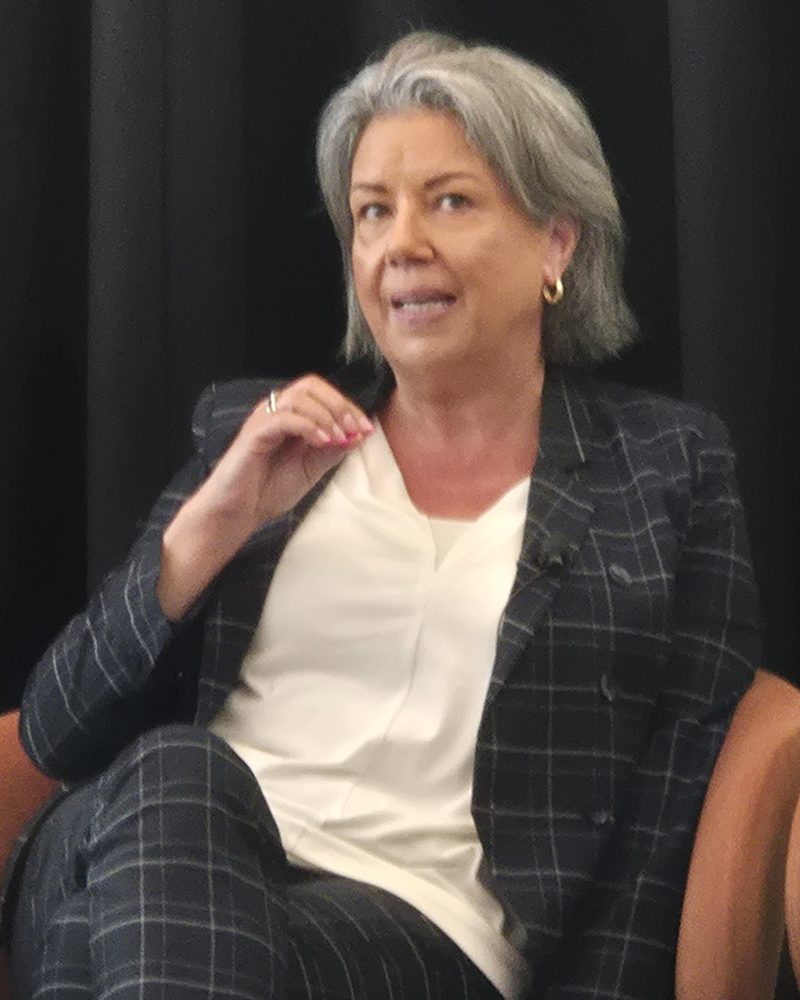
"Quite frankly, not everyone has a plan like that, and not everyone has actually thought through carefully how to get the best out of the public service."
It is, she said, like running a business: understand what you have, understand what your levers are, plan for what the future looks like, break it down and do it strategically. And it takes more than one good minister. Business needs ministers who understand it and who can work together, because employment, immigration, fast-track approvals and infrastructure all sit with different people.
Asked how the public service cuts would affect delivery, she said you can see the effect in Wellington itself. Then she was blunt about what sits underneath. On inefficiency in the public sector, she said: “You know how bad you think it is? It’s a lot worse.”
She spoke from where she sits now. Pharmac, which she chairs, is a small organisation, she said: about 189 people and a $2.7 billion spend, dealing with supply issues and with the expectations of people who want more than there is money for. Even from there, looking across the public service, her verdict was that you would not have a business if you ran it the way some of it runs, once you really look under the hood. There are people who are overworked and doing a fantastic job, she said. There are also efficiencies that could be made and should be.
Eckhold’s prescription was focus. Some ministries have too many things to do and end up doing a lot of them not very well, he said. Hone them down to a few key priorities and orient everybody towards achieving those, instead of trying to be something for everybody.
Bennett then told a story she was given years ago by a senior executive of a government department. A minister was understood to want a piece of work done. Officials talked about it for weeks, then set about the policy work, and it went on for about a year with around 20 people on it. Eventually someone asked what the minister had asked for, and where the Cabinet directive was. Nobody could find one. The whole exercise traced back to a single sentence in a speech to a business audience.
Sherson followed with two things she thinks every business, whatever its size, should be pushing the next government for. The first is structural. The Commerce and Consumer Affairs portfolio now takes in a very wide sweep of the economy, she pointed out, including small business and the big KiwiSaver fund managers, yet it sits outside Cabinet. She wants it at the table alongside Finance, where she said it belongs in importance, and she tied it back to Bennett’s point: things are still far too siloed.
The second is about capability. AI, she said, was missing from the campaign. She recalled an article in which MPs were asked whether they used AI, written mostly as a gotcha about who was using it to write speeches. One of them answered, “I wouldn’t know where to start.” For one of the most transformative technologies government will have to deal with, she said, that is outrageous.
AI: curious, brave and a bit vulnerable
When the conversation turned to what businesses can do for themselves, Fairgray went straight to a gap he sees every day. New Zealand, he said, has a real gap in understanding how to leverage technology. Many owners grew up with their businesses, not with the technology now running through them. He pointed back to his talk earlier in the morning: bring university students and graduates into the business, let them show you what they can do to make it more efficient, and do not rely on anyone else to do it for you.
Asked later what his customers are doing with AI, he described a pattern. Everyone had an initial play. Then the question of how to make money from it turned out to be really hard, and a lot of businesses are now going back to redesign their processes. The country is not accelerating as fast as it could or should, he said, to turn AI into an advantage. For a small nation the prize is obvious to him: a whole lot more bots “increases our population without actually ruining our great country”.
It comes back, he said, to education. Business owners and leadership teams often do not have the digital skills to harness the technology.
The risk is using AI to polish what you already do. That is not efficiency, he said. It is another cost layer on the business, and you will soon move on to something else. The gain comes from redesigning how the work is done, and from business owners sharing what has worked, in a setting where it is safe to say what has not. With those stories in hand, he argued, owners can go to policy makers with the courage to say this is what we need, and this will be the outcome.
"As a country we should have a little forum somewhere where businesses put up, 'This is what I use, this is the benefit.'"
New Zealanders, he said, do not tell enough success stories, and need to be brave enough to tell more of them. He sees the country holding back, and he put some of that at the top table. Boards are under-resourced for this wave of technology. Most New Zealand boards are risk-averse and made up of people with financial backgrounds, he said, at a time when businesses need people who think about innovation, and there is a skills gap where the driving should be coming from.
Sherson gave the practical example. About two years ago her small leadership team carved out time over a few months and put themselves through AI courses, one on business strategy, one on bringing it into the business. It was, she said, the best time they had spent. It also changed who they hire. A firm of senior advisers that never used to take graduates now does, because the graduates arrive fluent in AI and digital tools and teach the partners. Rather than worrying about AI taking jobs from graduates, she said, she sees a real positive: they hit the ground running and make everyone else run faster.
Take a chance on people, she said, and change what you expect from them. The old model was knowledge passed down. The new one runs the other way. She told of a 23-year-old who has gone to work for one of the country’s leading fund managers, and whose first act was to put together a paper for the board on how the firm could get rid of his job within 12 months. The paper stacked up, she said, and the thinking behind it was amazing: here was someone working out how the technology he knows and understands could benefit the business.
Eckhold told one against himself. Everybody in his team of economists is almost 50 or over. One of them, sceptical, tried the AI tool the bank pays for on a piece of statistical analysis. It gave the right answer in 10 seconds. Eckhold’s reply was that he had been trying to tell them so for six months. With unemployment about as high as he can remember, he said, there are capable people available right now who could be employed, probably relatively cheaply, to do the things a business does not know how to do itself. Every team of older hands needs some younger people in it. The young ones may not know what to do, he said, but they know how to use the tools.
Put the three together and the advice is hard to miss. Owners are the experts in their own businesses, but most did not grow up with these tools. Hiring AI natives, students and young people, to work out and show what AI can do for the business is a reasonable place to start.
Fairgray’s summary was three words long: stay curious, be brave, and be willing to be vulnerable enough to ask.
Sherson finished the thought. You can always ask a colleague whether they have tried a job with an AI tool. After decades in her work, she said, it is one of the most exciting technologies she has seen, and it teaches her something new every day. Her advice to owners was to use it to generate excitement about how the business can do things better, and about how people in it can teach each other.
Don’t plan around three percent
Eckhold was asked for his outlook on interest rates, and gave the answer borrowers least wanted. The years between the global financial crisis and COVID were a period of benign inflation (prices rising slowly and predictably) and very low rates, he said, and that is not the environment now, nor the one ahead. New Zealand’s rates are still low next to much of the world, where they are rising.
The Reserve Bank held the Official Cash Rate at 2.75 percent at its last decision, on 28 October. Eckhold read that as the Bank wanting to move slowly while the risks are high, which he called understandable. But building a business plan on rates staying close to three percent is, in his word, unrealistic. He expects them to reach about four percent in the second half of next year.
The arithmetic behind that is simple, as he told it. Core inflation is about 3 percent and headline inflation is over 4. You do not get that back to 2 percent, he said, by keeping interest rates at around 3.
From government he wants stability and a few bigger ideas to lift productivity. The big challenge for business and government over the next 12 months, he said, is generating jobs, particularly for younger people, because the lack of them is what is holding back the services sector, which is most of the economy. He described a two-speed economy: one part competitive and doing well, the other, with Wellington as his example, doing a bit average. People in that second part are not feeling any recovery, and that, he said, is what has to change.
The trillion-dollar handover
The first question from the audience was about succession. Over the next 25 years, the questioner said, about $1.6 trillion of wealth will change hands in New Zealand, a lot of it in small and medium businesses. How does the country encourage that transfer, and get those businesses into other ambitious New Zealand hands?
One panellist’s answer was to think bigger from the start. Encourage every owner to scale, they said, and to stop thinking of themselves as a small or medium business. Aim to build an international brand, one where the founder can exit, take their wealth and leave behind an organisation that carries on without them. Plenty of New Zealand founders do a great job, make enough for the next generation and then, reasonably, want to enjoy life. The task is to create an environment where the business keeps scaling after they step back.
Bennett answered from the sales side. Bayleys has business brokers, and what they see, she said, is owners who have not thought about their exit strategy, about what it is they are growing, or about what they will have to sell, and who are then quite unrealistic about what it is worth. The appetite on the other side is real. There are plenty of people who want to own a business and run it their way. Sales above $20 million have been strong over the last 12 months, she said, and interest from overseas investors has been striking. Those investors do not understand New Zealand’s coalition process, she added, so she expects their confidence to return once the result is settled.
The question from the floor
When the microphone came around, AFQY’s Ryan Ashton put the morning’s threads back to the panel. Fairgray had said government should be a better enabler of business, to remember who they are there to serve. Sherson had named the gap between a sole trader and them growing their business. Bennett had described the government waste. So how do we bridge it, and get value flowing from government when they invest in business through to the sole traders who want to become thriving businesses?
Bennett answered first, and practically. A new government will want to move quickly. Ministers can wait for advice from their officials, or business can hand them something better.
"A simple five-point plan of the top five things that you should do, it's got a lot of power and a lot of value."
Visiting your local MP and talking in real terms makes a difference too, she said. Ministers and MPs do want to get things done. Often it is simply too slow, and nobody has put the case to them clearly.
It was, she said, how she started as a new minister herself. In her first year in the welfare portfolio she went around the 130 offices, sat on the corner of people’s desks and asked what the first three things were that they would do in her place. She took the best of the answers and got on with them while she worked out the rest of the job, which, she admitted, she had no idea she was going to be given.
Sherson thought the problem sits deeper than any plan. New Zealand still has a love-hate relationship with business, she said. Perhaps it is because Kiwis are shy and retiring, which has its good side, but it means the country does not champion business enough. Every campaign, politicians reel off a short list of the favourite companies of the moment. This time it was Rocket Lab and Halter. Fantastic, she said, but firms that have been here for generations go unmentioned. Her example was Todd Corporation: more than 100 years old, started as a family business, and now central to the country’s energy infrastructure.
Championing every business starts with owners being proud of what they do and talking about it, she said, and with being clear about two things. Government is not going to do our business for us, “and it never will, and it never should”. And, as she put it, “the government is not the economy. It’s you guys.”
Fairgray built on that. Owners need to find ecosystems, he said, where they can push one consistent message back together: this is what we are going to do, and this will be the outcome. He reached back to the succession question for an example. When a founder sells, it seems a no-brainer to him that the money could go into an innovation fund at a discounted tax rate, so that the entrepreneurs who made the wealth earn a return on it instead of being taxed on money that is just sitting there. Ideas like that come out of a conversation like this one, he said, and they need to get to the surface.
He also took issue with a phrase. Politicians talk about getting the job done. For a business the job is never done, he said, because business does not run on a three-year cycle. It is continual. Then he took it back to first principles, and gave the morning its sharpest line.
"The language matters as well. That comes back to storytelling and belief, and governments remembering they are servants to communities, businesses, not the other way round. I think we have lost that somewhere along the line."
What the room took home
Nobody on the panel promised that the next three years will be easy, or that the next government will be decisive. What they offered was more useful: a short list of things that do not depend on who wins. Plan for dearer money. Know what you are building and what you will one day sell. Get curious about the tools, and hire the people who already are. Share what works, and say out loud that you are proud of it. And when the new ministers arrive, do not wait to be asked. Hand them the page.
Two of the lessons
- Hand a new government a five-point plan. A new government wants to move quickly. A simple list of the top five things it should do carries more weight than waiting for officials to advise.
- Be proud of your business and say so. Championing business starts with owners talking about what they do and what they contribute. The government is not the economy. You are.
There are 14 more lessons from this panel. Join the AFQY community to read the rest and discuss them with other members.
Sources
- NZBusiness: Ready to Rise Business Breakfast, November 2026
- Electoral Commission: media and news, 2026 General Election
- MBIE Annual Report 2025/26: organisational health and capability
- Reserve Bank of New Zealand: monetary policy decisions
- Westpac New Zealand: economics
- Sherson Willis
- 2degrees Business
- Bayleys
- Elements of AI: free online course from MinnaLearn and the University of Helsinki
- Inland Revenue: site search for tax