
Ask Where the Holes Are: How Grant Taylor Built MOXX Brands Without Outside Money
11 November 2026· AFQY News
Most suppliers walk into a retailer and talk about their product. Grant Taylor walks in and asks the buyer what is missing from the shelf. Then he goes away, and a couple of weeks later he comes back with it.
That habit has a name inside MOXX Brands, the reverse brief, and it explains a good deal of what came next. Taylor is the company’s Co-CEO and Co-Founder. MOXX was third on the 2025 Deloitte Fast 50 with revenue growth of 512 percent over three years, and it got there without an outside investor.
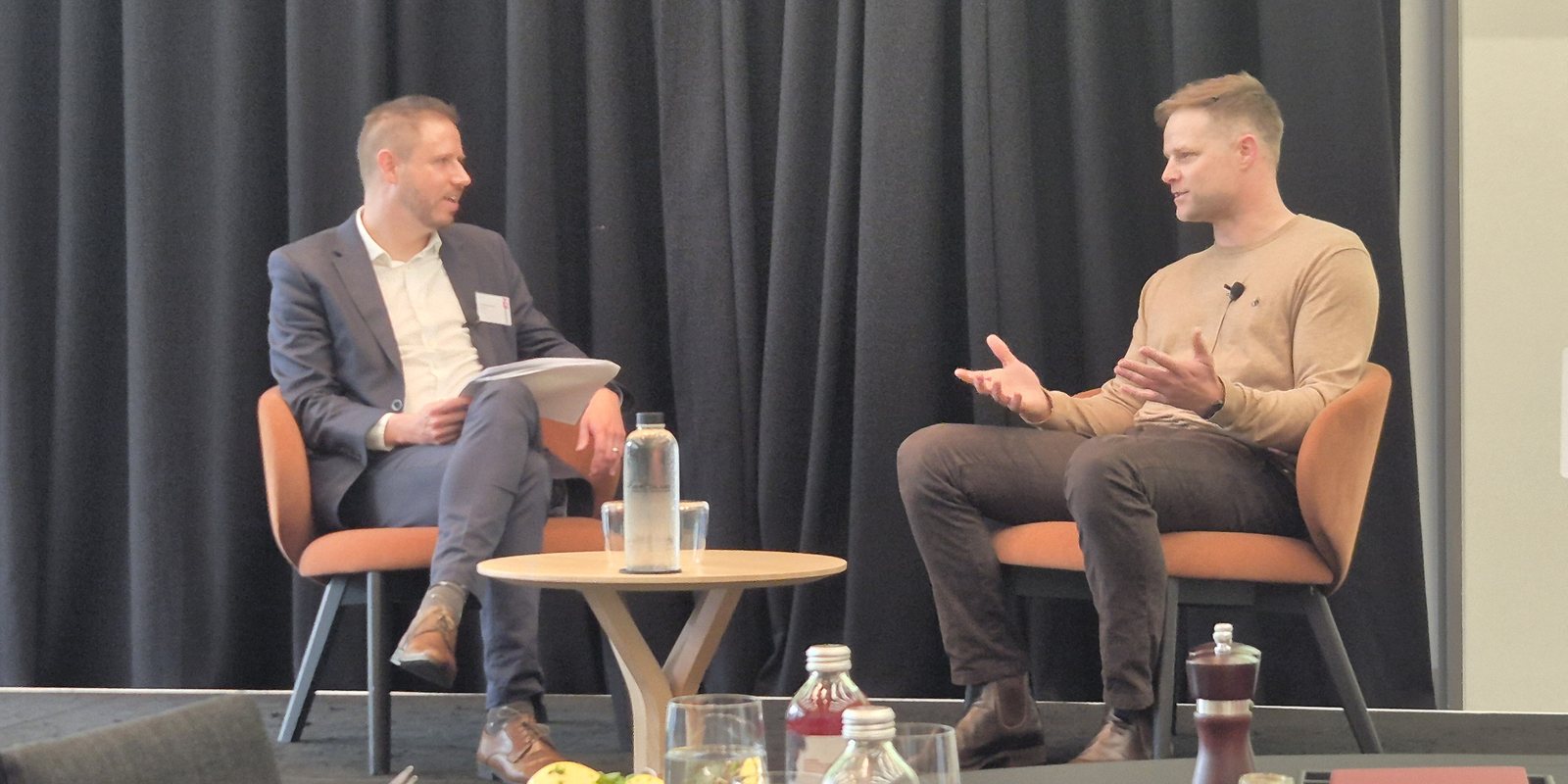
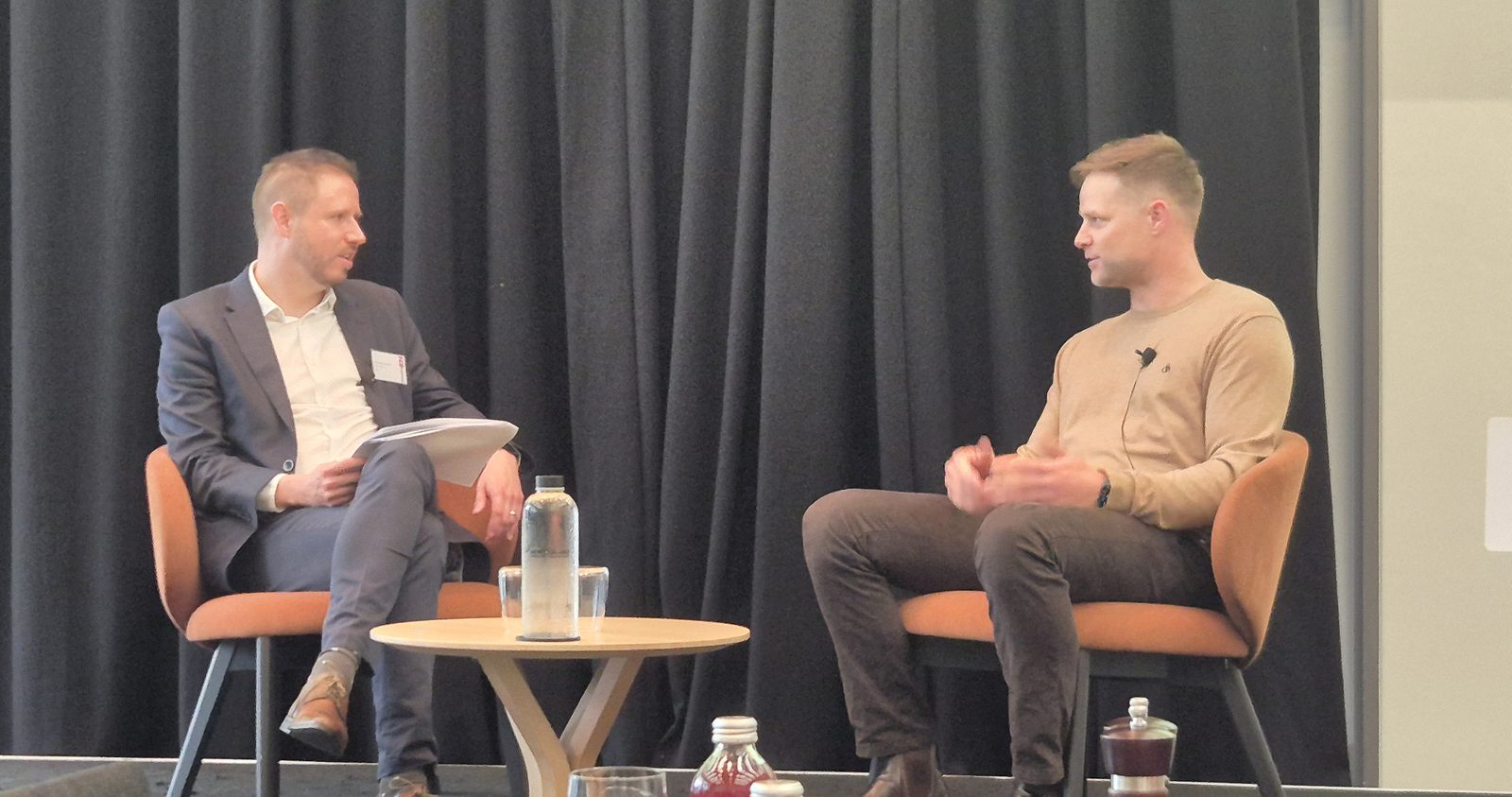
He told the story in a fireside chat at the Ready to Rise Business Breakfast in Auckland on 11 November, in conversation with David Nothling-Demmer, the editor of NZBusiness, while breakfast was served around them. Nothling-Demmer opened by saying that anyone who grows a business by 512 percent without external funding has some stories to tell. Taylor had them, and most came with a number attached.
This account follows the conversation in the order it happened. Two of its lessons are set out at the end. The morning’s other founder was Angus Brown of Ārepa.
TL;DR
- MOXX Brands has grown without outside investors on purpose. Taylor said he and his co-founder can agree to a retailer’s change inside the meeting, because both decision makers are in the room.
- Maison&Muse, which he called the company’s biggest brand, began as a reverse brief: ask the category manager where the gaps are, then come back within weeks with a product that fills one. His rule for a pitch is to talk about your own product about 20 percent of the time.
- A product that sells for $8 or $9 in New Zealand sells for $15 or $16 in Australia or the United States, he said, before the exchange rate. About 95 percent of the company’s revenue now comes from offshore.
- When United States tariffs hit and others stopped shipping, MOXX kept sending, took the empty shelf space, and Taylor says its relationship with Target has gone from strength to strength since.
- In the United States he would rather be in 800 stores and get it right than in 4,000 at once. An early mistake was hiring an influencer in California to reach shoppers in Texas.
- He wants government to back companies like his with tax incentives that keep them New Zealand owned for a set time, so that the revenue and profit they earn offshore keep coming home.
A house of brands, on purpose
Taylor had landed back from the United States the week before. The trip produced new programmes with Sam’s Club and with Target, he said, and he spent the flight home asking how the company was going to make it all work. He called it a double-edged sword.
For anyone who did not know the business, he described it as a house of brands. There are the hair care brands, among them DoseTheory, everblue and Kinzie Kids, each aimed at a different part of the market. There is Maison&Muse, the fragrance house. And there are restor and Atomic in the laundry aisle.
Nothling-Demmer put it to him that launching several brands looks like the harder road. Everyone says that, Taylor replied. He had come from Rascal + Friends, the nappy brand he founded, and had watched one brand grow into something very large. He had also seen how quickly a business built on a single brand could lose it. So MOXX spreads the risk: different brands, each speaking to a different audience, whether millennials or Gen Z. People he meets often do not know what MOXX Brands is, he said, but they recognise the brand on the shelf. “For us it was a pretty straightforward option to diversify.”
The way it runs is that each brand has an owner. A brand manager owns the brand and its story, and a designer works alongside them and owns the design. MOXX has 23 staff, double the number of a year ago. A business doing what it does would normally need about 150, he suggested. The company rewards its people well, he said, but it runs on efficiency, and looking for efficiencies is a big part of his own job.
Out of Rascals, and back in
Why go again after selling a business that size? For the first six months after leaving Rascals, Taylor said, he did not want to get into anything.
He had reached a point there where five staff were turning over $50 million and he did not have a life. He got out, and did not want to do it again. But it is built into him, he said. “I just couldn’t stop, and I needed to go again.”
What he changed was the way he did it. The next business would be a healthier environment, with more staff, and an enjoyable place for people to work. He said he had learned a lot about how to set up a company and who to go into business with.
MOXX is now five years old. He gave its turnover as 60 this year, heading for 100 within the next 18 months, figures we take to be in millions of dollars. The healthier environment includes a reason to chase the numbers: when the team hits certain targets, they go to Bali.
Two years of bashing on doors
You would think a founder with his record would start with the doors already open. Taylor said it did not work that way. Category managers, the retail buyers who decide what goes on the shelf, rotate constantly, so the relationships from his last business did not carry over. It was very much a fresh start.
“It’s an environment where you’ve just got to keep pushing,” he said. Two years in, the company went through a patch where the numbers were not there. He remembers talking with his co-founder, Renee Stuart, about hockey sticks: the growth curve that stays flat and then turns sharply upward. “It gets harder and harder, and then all of a sudden it will take off.” That, he said, is what happened to them. Even with his background it was two years of bashing down doors to get products in, and they made some ordinary mistakes along the way.
The turn came with a gamble on Australia. First, though, Nothling-Demmer asked him about the reverse brief.
The reverse brief
Maison&Muse, which Taylor called the company’s biggest brand now, started as a reverse brief.
A lot of people, he said, go to a category manager and spend 90 percent of the meeting talking about their product. That is not what the category manager wants. They have problems of their own. It might be supply. It might be that their range is not reaching a certain part of the market, Gen Z for instance. The supplier’s job is to go in and talk about how to fix those problems, so that the buyer can go back to their own boss with the thing that was missing.
"That's understanding data, that's understanding trends. And maybe you might talk about your product 20 percent of the time."
Products are products, he said. The difference is how you make one work for the category manager, and presenting in a way nobody else does is the engine of the company.
So MOXX went in and asked: where are your holes at the moment, and where are you struggling? The retailer told them. They went away, turned it around in a couple of weeks, and came back with what they proposed to fill the gap. At that point the buy-in is already there, because the buyer has told you what they want. “It’s not like you’ve got to bash the door down.”
They still work that way. They tell a retailer what is selling overseas and what is working elsewhere, and then ask what problems it has, because MOXX can turn something around, or change one small thing on an existing product, to solve it.
The Australian gamble
Taylor called the move into Australia a funny story, though it cannot have felt like one. It came when the company was struggling and its survival was not certain.
The chance was to put a brand into Australia for the first time, and the stock would go in on consignment, so MOXX would carry the cost and the risk. It meant putting a lot of money in. Not everyone in the business wanted to go ahead. They doubled down, and he said it changed the company.
The reason is in the arithmetic. Some of the range is made in China, and the products that go on the skin they try to make in New Zealand. To make a product here and sell it here, on the same dollar, he said, is “super difficult”. Send the same product to Australia and what sells for $8 or $9 here sells for $15 or $16 there, and that is before the exchange rate. He called it the biggest change the company has seen in its profitability, and it is what lets MOXX keep funding its growth.
Too small to stay home
How hard is it for a new consumer goods business to scale in New Zealand? Hard, he said, and the reason is volume. Bring product down from a factory in China and you have to bring a lot of it. The New Zealand market cannot absorb that. By the time you have paid for storage, in the limited number of stores there are here, the cost is very hard to justify.
People give the supermarkets a hard time, he added, but much of it comes back to the same thing: New Zealand does not have the scale to bring prices down. In Australia or the United States the volumes are there.
"New Zealand's tough, and I think you have to have a lens of going overseas."
His advice to other owners was not to be afraid of it. Dealing with a Coles, a Woolworths or a Target sounds like the bigger hurdle. In his experience it is the easier one. At that size a retailer knows what it wants, the process is straightforward, and it has its own marketing channels that a supplier can pay to use. “I wouldn’t be afraid of it,” he said. “I’d just go and do it.”
People ask him how he knows what to do. His answer is that he gets on a plane and finds out, which is how Rascals began too, flying to China and walking around factories. The barrier, he said, is in people’s heads. You just need to go and act.
America: 800 stores, not 4,000
The United States is a different game, he said, and it punishes mistakes. Early on MOXX had a labelling problem there. The product had to come off the shelves, be relabelled and go back on, and it was expensive.
Get it right, though, and the rewards are large. He gave the example of a product that sells for $8 in New Zealand and for $15 or $16 at Sprouts, the American grocery chain, with the exchange rate on top. Tariffs, he suggested, do not undo that.
The trap is trying to go too big, too quickly. A lot of people think landing 4,000 Walmart stores is the win. It is not, he said. A good start is 800 stores, or a thousand: go deep, get it right, get the marketing right, get the influencers right. Then he gave an example of getting it wrong.
"One of the mistakes we made at the start was getting an influencer that was in California to target Texas, and that just doesn't work."
You need an influencer in Texas to reach Texas, he said. It is like a whole other country. There are small things like that to get right everywhere, and getting them wrong costs far more if you have scaled out to 4,000 stores straight away.
Angus Brown picked the same point up later in the morning, telling the room to launch in 200 stores before 800, and gave Taylor full credit.
When the tariffs came
Nothling-Demmer asked how MOXX had handled the United States tariffs. Taylor’s answer was that they were a game changer for the company, in a good way. He looks for the opportunity whenever there is a problem.
When the tariffs went on, a lot of suppliers pushed stop. MOXX did the opposite. It went, in his words, hammer down, and kept sending product. The thinking was simple: the situation was unsustainable, either the consumer or somebody else was going to have to pay, and it could not last. Meanwhile retailers still needed stock on the shelf. So MOXX supplied while others did not, and took a lot of shelf space as a result.
That was a big change for the company, he said, and its relationship with Target “just went from strength to strength from there”.
"Everything has an opportunity."
Nobody else at the table
Most owners assume that scaling means raising money. MOXX has not, and Taylor said that was deliberate from the start. The founders did the hard yards early and have taken very little out of the business in the years since. He acknowledged he could do that because he had sold a business before and had something behind him. But it was a decision about control more than money.
He described a meeting with a buyer at a Walmart or a Target. The buyer asks for a change to the product: the wording, the packaging, whatever it is. MOXX can decide in that meeting, because the two founders, the two decision makers, are sitting there. With other people around the table, he said, the same decision goes up ten levels and down another five. A change that might take two or three years elsewhere, he said, MOXX gets done within the hour. That is what being nimble means.
"We didn't want anyone else in the room telling us what to do."
Private equity firms have been circling, he said. The answer has been to play the long game: come to us later. Growth has been paid for from cash flow. The one change is recent. At the size these markets now demand, MOXX has opened a trade finance line with its bank. The week before the breakfast, he said, another ten products went into a thousand Target stores.
Overheads, and the first five employees
Asked what any business needs in place before it can grow, Taylor went straight to cost. “Efficiency and overheads is a massive one.”
He has watched businesses get one win on the board and then take on a new office and new everything, so as to look the part. The skill is staying away from all that. His inbox is full of people telling him what his business needs, he said, and he did not need any of it when he started. Do not take the easy road. Stay true to the basics.
"This is what's made us get to this point. Let's just scale that out."
Scale everything else as well, he warned, and you push your overheads up until you cannot fund them.
The other fundamental is people. MOXX still has its first five employees, from 2021. There was a period when everyone was being offered big salaries elsewhere and the company could not compete. So it took the long view and gave them a share of the profit instead. He told them plainly that MOXX could not match those salaries, that he did not think the market could sustain them, and what the company would give them in their place.
The subject had come up at a leadership meeting the day before. Some of them asked about being paid their share. Not yet, he told them: the company is still growing, a lot of its profit is tied up in stock, which it pays tax on, and the cash is needed to fund the growth. They understand the brands, he said, and they have been part of the journey for a long time. They joined in their early twenties. They are in their late twenties now.
Fourteen thousand dollars and a pizza
Who does he lean on as a leader? His father, he said, has been instrumental in his development.
Then he went back to his first business, in storage, and to building it out of timber scraped together from people who were building houses. He had $14,000 that first year. He remembers buying a pizza on a Friday night and feeling buyer’s remorse, because it was a lot of money to spend.
Those were years of self-learning, he said. Knowing you have been through hard times is what drives you. Stuart sees it the same way, and the two of them bounce off each other. But much of it, he thinks, is just built into him.
Around the corner
On the uncertainty every business has been living with, his advice was to keep looking at what is around the corner. Nobody knows when things will get better or worse, he said, so the business has to be in a good position for either.
MOXX grew through uncertain times by looking for where the next growth would come from, and it may not be where you think it is. When things are hard, the question to ask is how to make them better. He admitted it is a hard one to answer. You keep going. It is the hockey stick again: keep moving, and something comes your way that takes off.
What he wants from government
The theme of the breakfast was what comes next. For MOXX, he said, the United States is a big part of it, and the company is talking to the United Kingdom now.
Then he made a request. About 95 percent of MOXX’s revenue is earned offshore and brought back here, where the company pays tax on it. It employs 23 people. Three of its brands are made in New Zealand and three in China. He would like to see government support companies like that with tax incentives that lock them in as New Zealand companies for a set period.
His reason was blunt. If the people who want to fund MOXX turn out to be an offshore company, then the revenue and the profit can become an offshore company’s too. The founders have built it the hard way, he said, and have not taken money out. Back businesses like it and more of them will grow, bringing jobs and export revenue home. “I think we need support from government to build companies like us.”
The accent helps
Does being from New Zealand still carry weight overseas? Massively, he said. Retailers do respect it.
MOXX does not trade on being New Zealand made. The products have to stand on their own. It is more about the people. They know how to talk to a retailer, and they do it in a New Zealand accent, which he knows some people find cringe. People at Target often remark on it, he said, and it does them no harm.
“It’s just that little bit of something, right?” he said. People from the other side of the world, doing it on the big stage. It makes MOXX something other than one more American firm with goods to sell, and it gets a foot in the door early.
Was he excited about the next few years? A hundred percent, he said. “We just keep on keeping on.”
The two founders came at it from different ends. Brown started with the science and built a product nobody had asked for yet. Taylor starts with the buyer and builds what they say is missing. Both arrived at the same advice on rollouts, and both paid to learn it.
Two of the lessons
- Ask the buyer where the holes are. Find out what is missing from the shelf before you say a word about what you make.
- Have a lens of going overseas. The same product can sell for close to double offshore, before the exchange rate.
There are 19 more lessons from this conversation. Join the AFQY community to read the rest and discuss them with other members.