
Four in Ten: Andrew Fairgray on the Productivity Mindset New Zealand Is Missing
11 November 2026· AFQY News
Andrew Fairgray had the first slot of the morning and a number he wanted the room to take home. In two years of asking, only about four in ten New Zealand businesses have told 2degrees that they are focused on being highly productive.
Fairgray is the Chief Business Officer at 2degrees, the sponsor of the Ready to Rise Business Breakfast, and he gave the sponsor address at the New Zealand International Convention Centre in Auckland on 11 November, four days after the election. He would be back later on the panel. First he had a short slot and a survey.
He started with the mood. The country did not yet know the shape of its next government, he acknowledged, but he had driven in listening to the morning’s economic indicators and they were still pointing the right way. Then he went to the data, and added his own opinions as he went.
This account follows the address in the order he gave it, with the slides he showed.
TL;DR
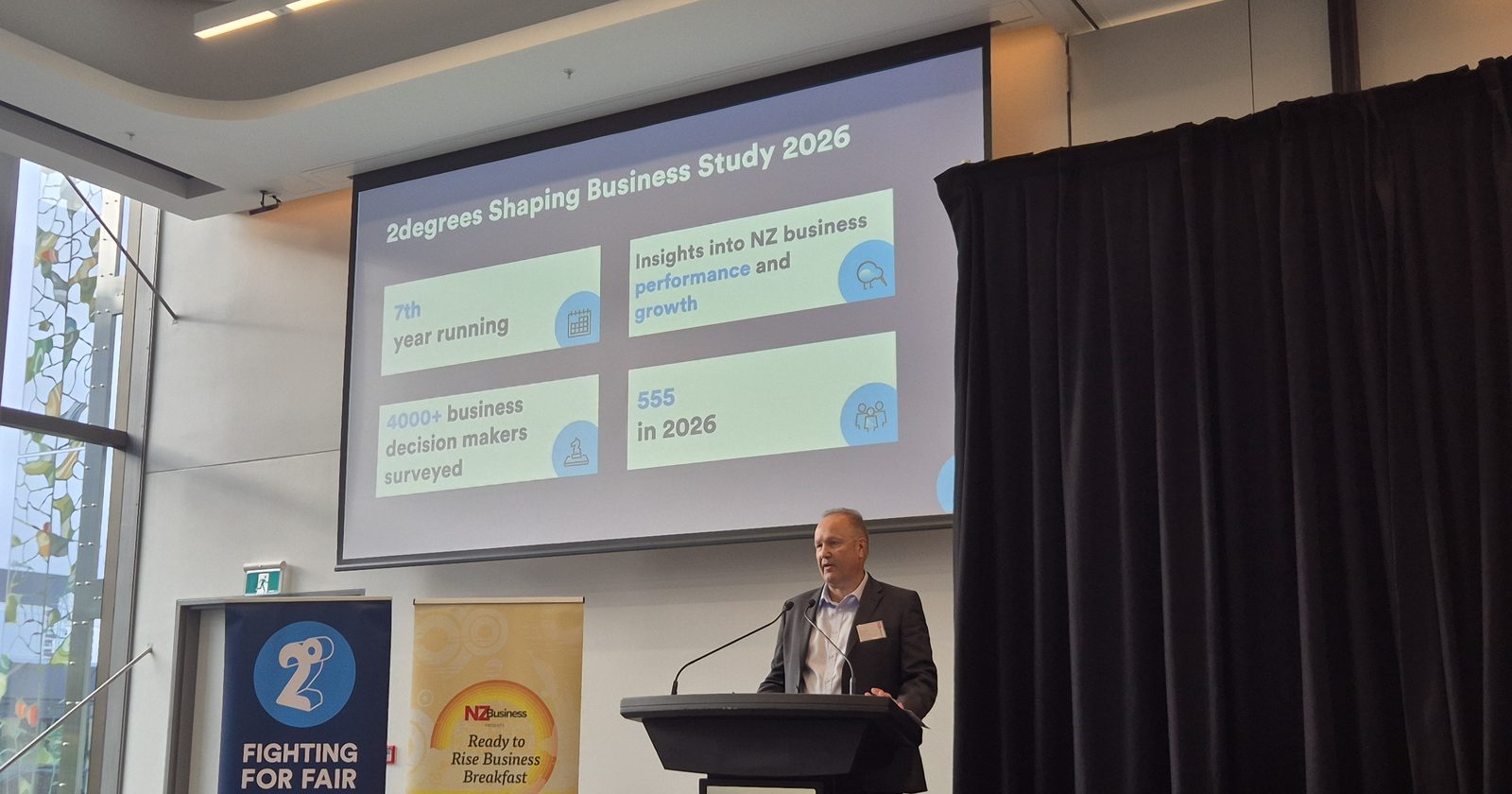
- The 2degrees Shaping Business Study is in its seventh year and has now surveyed more than 4,000 business decision makers, 555 of them in 2026. Fairgray said most of what it found in June still holds.
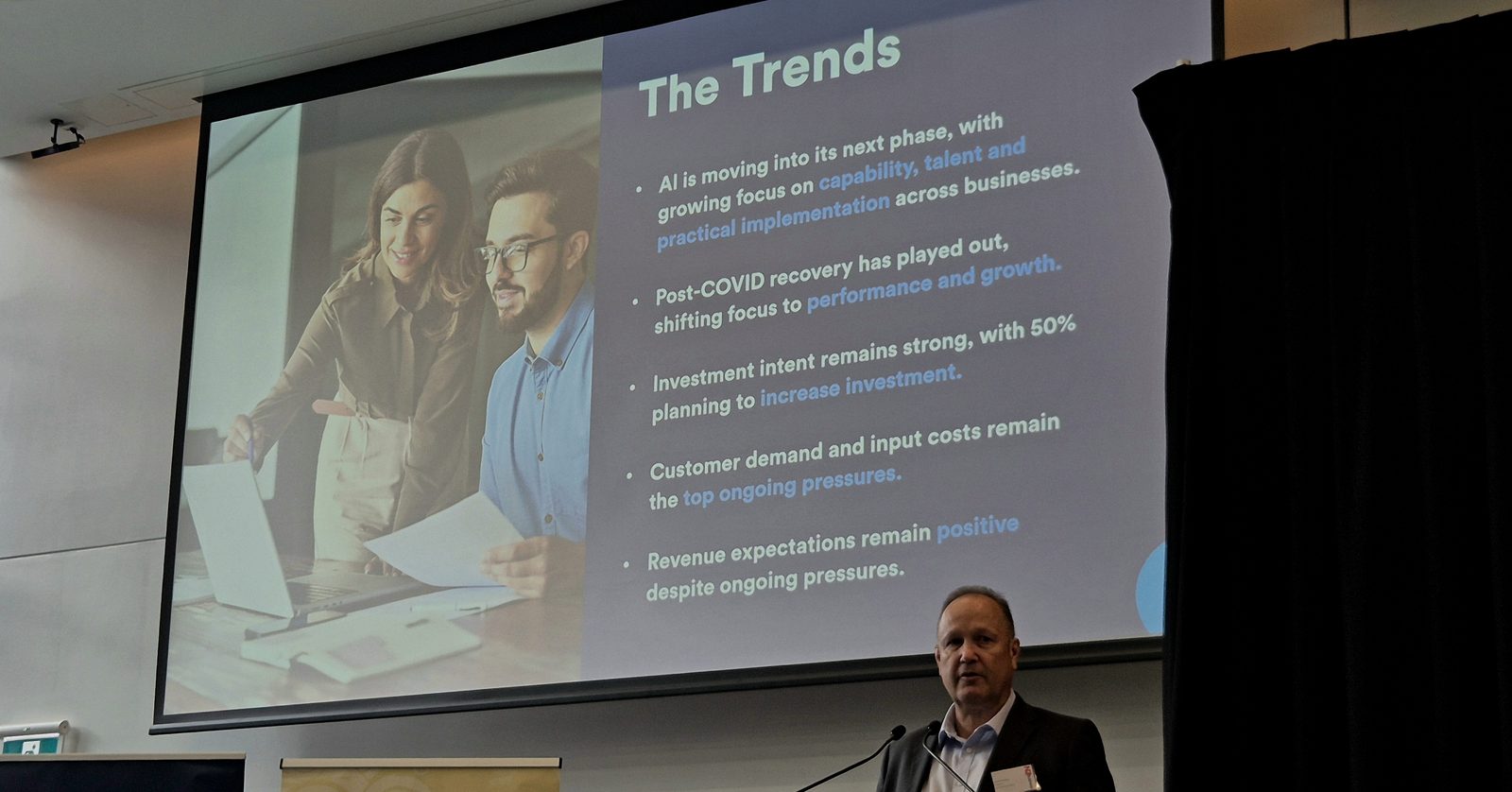
- Half of the businesses surveyed plan to increase investment, and revenue expectations remain positive, according to the study.
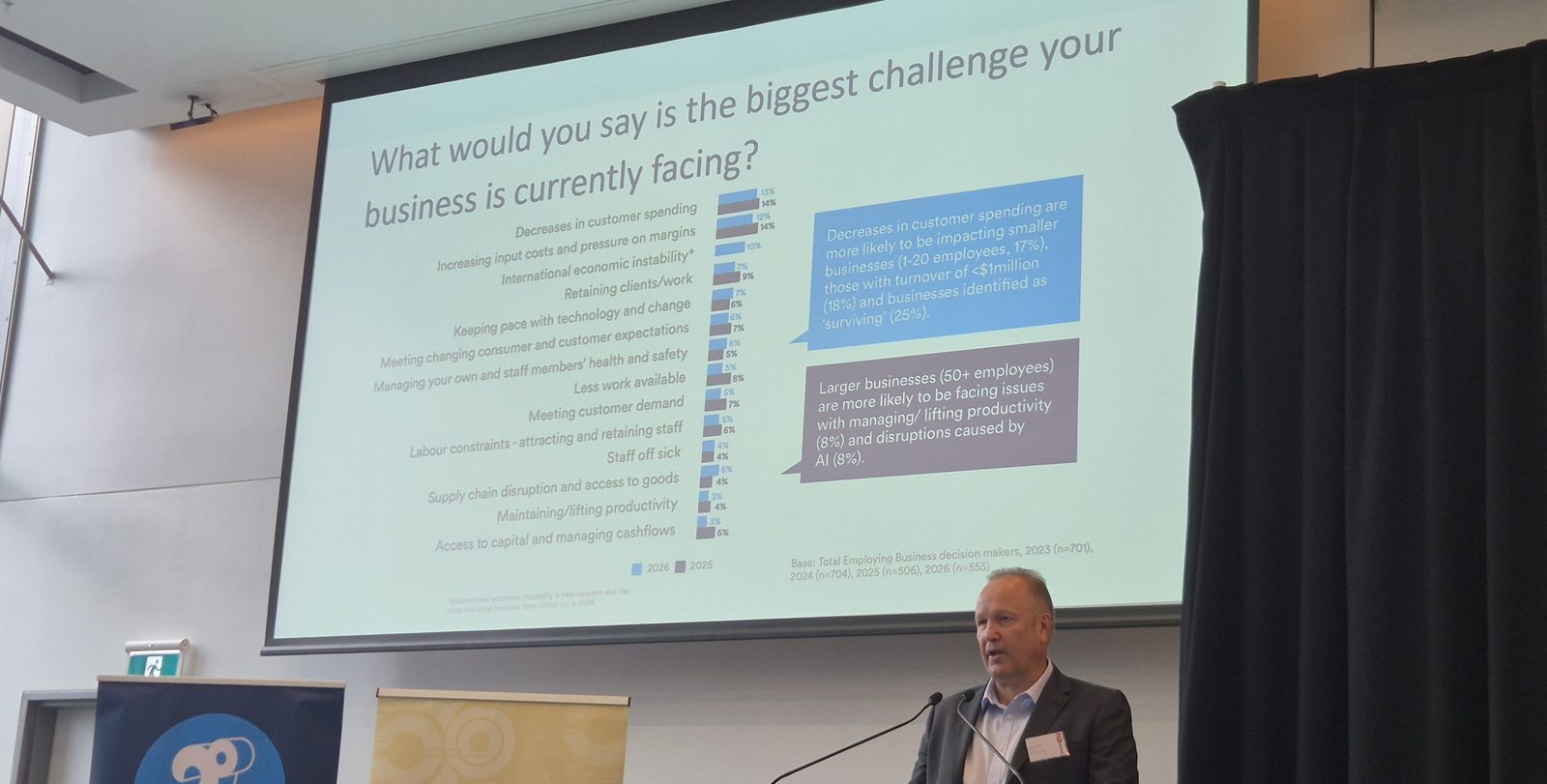
- Falling customer spending is the biggest challenge businesses name, at 13 percent. It hits the smallest hardest: 25 percent of businesses that describe themselves as surviving put it first.
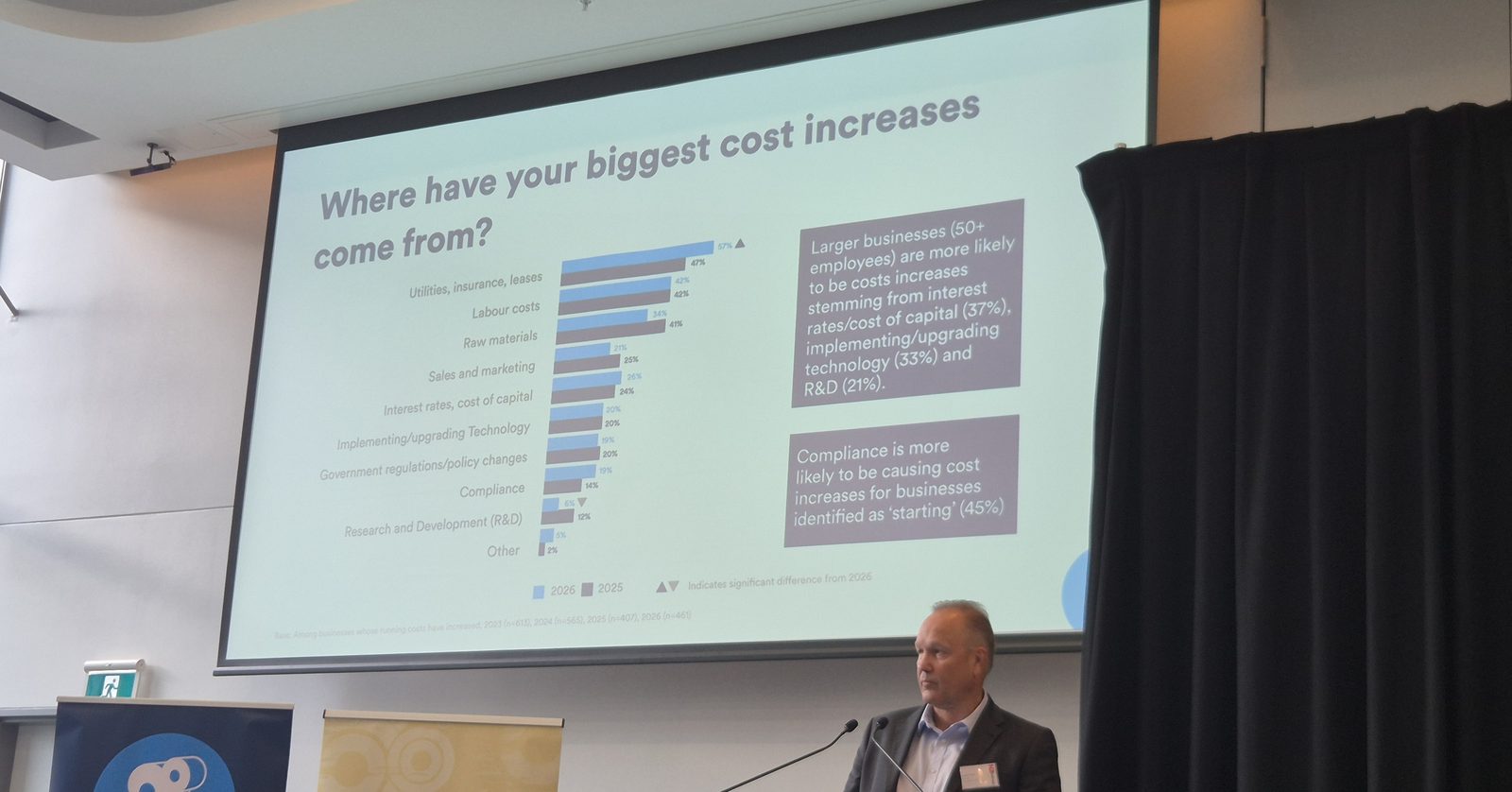
- Utilities, insurance and leases are now the most common source of cost increases, named by 57 percent of businesses, up from 47 percent a year earlier.
- 2degrees does not send work offshore and has more than 100 developers in New Zealand, Fairgray said. As AI reduces some jobs, he wants roles brought back onshore so the work that remains is here.
- His one request of every owner: ask what you are doing inside your own organisation to lift productivity. His suggestion for a start was to give a university intern a project to find where the business could be more efficient.
Seven years of asking
The Shaping Business Study is something 2degrees has run for seven years, Fairgray said. Across that time it has gathered the views of more than 4,000 business decision makers, with 555 taking part this year. The fieldwork was done in June. Looking at it again five months on, he said, most of what he sees in the market is consistent with it. The whole report is on the 2degrees website. He was there to give the high points and what he makes of them.
AI: from excitement to what do we do with it
The first shift he described was in how organisations talk about AI. The excitement is giving way to harder questions: what do we really do with it, and how does it turn into money? The question of monetising AI has not gone away, he said. What is new is that businesses are starting to think about redesigning their processes around it, to get better outcomes, instead of adding it on top.
The study’s own summary slide put it this way.
"AI is moving into its next phase, with growing focus on capability, talent and practical implementation across businesses."
Bring the jobs home
Then he gave an opinion of his own, and it was the part of the address most likely to start an argument.
2degrees does not offshore anything, he said, and has more than 100 developers working in New Zealand. AI is going to change that kind of work over the next few years, and he did not pretend otherwise: there will be job reductions. His conclusion was that New Zealand should be pulling work back, not sending more away. Where roles sit in India or the Philippines today, bring them into New Zealand, so that the jobs which remain are jobs for New Zealanders.
Getting on with it
The businesses in the study, as he read them, are not waiting for anyone. They are getting on with it. They are not looking for someone else to solve their challenges. They are looking to move forward.
The numbers back the mood. For the first time in a while, he said, businesses are more confident about where they can invest, and the study has half of them planning to increase investment. Revenue expectations have stayed positive. For owners prepared to look at what they do a bit differently, he said, the opportunities are there.
The customer who is not spending
The biggest challenge will surprise nobody: customers are spending less. New Zealand is a country of small businesses, he said, so that lands hard. Consumer confidence is down and the spending is not there, and the country needs to get confidence back behind the economy to push it forward.
His slide showed how unevenly it falls. Decreases in customer spending led the list at 13 percent of businesses, just ahead of rising input costs and pressure on margins at 12 percent, and international economic instability, a new entry this year, at 10 percent. Among businesses with one to 20 employees the spending figure was 17 percent. Among those turning over less than $1 million it was 18 percent. Among those that describe themselves as surviving it was 25 percent. Larger businesses, with 50 or more staff, were more likely to name lifting productivity, and disruption caused by AI, at 8 percent each.
Energy before groceries
Cost pressure has not eased, and Fairgray picked out one line of the chart. Utilities, insurance and leases are now where the most businesses say their biggest cost increases have come from: 57 percent, up from 47 percent last year. Labour costs were steady at 42 percent. Raw materials fell from 41 percent to 34.
He admitted to a slight bias, and then made his case anyway. For New Zealand to be a productive country, he said, it has to get its energy settings right. The country has spent a long time looking very hard at whether it can save ten cents at the supermarket. That was not a flippant remark, he said. It was a point about economic growth. The cost of energy cannot be allowed to become a barrier to it. New Zealand has great natural resources and is starting to see a way forward, but it has to be cost effective, so that businesses are not held back by what they pay for utilities.
He added a quieter warning. Larger businesses can keep investing in research and development, he said. For small businesses the last 12 months have made that very hard.
Four in ten
His last slide was about productivity, which he said the country talks about a great deal.
He began with his own company. 2degrees describes itself as a value-driven operator, and Fairgray said that means it wants, without apology, to deliver the best value of any telco in New Zealand. Yes, he said, that means wanting to be the cheapest. The only way to do it is to be the most efficient on the inside, looking at everything the company does and every tool it has.
Then the number. Across 2025 and 2026, he said, only about 40 percent of businesses in the survey were focused on being highly productive. His reading was blunt. With more than 4,000 businesses asked over the years, New Zealand still does not have a mindset that says productivity really matters. In his view it should be at the top of the agenda. He allowed that this is hard when an owner is flat out doing the work itself.
So he offered somewhere to start. Reach out to the universities, bring in interns, and give them one project: find where this business could be more efficient. The talent in New Zealand’s universities is phenomenal, he said, and using it can challenge the way an owner thinks about their own business.
If the room took one thing away, he wanted it to be a question. What are we really doing inside our organisation to lift the productivity of the business? Once that has an answer, look outward, at the suppliers and the ecosystem around you.
With pride
He closed with thanks, and an invitation to find his team in the room and ask them anything. Then he said why mornings like this one matter. Events like this let owners learn from each other, steal each other’s ideas “with pride”, and keep taking the country forward.
Fairgray’s intern idea did not stay in the opening slot. By the time he sat on the panel later in the morning, it had grown into an argument, taken up by Trish Sherson and Kelly Eckhold, that owners should bring in students and graduates to show them what the new tools can do.
Two of the lessons
- Ask the productivity question. What are we really doing inside our own organisation to lift it? Put it at the top of the agenda.
- Give an intern one project. Ask a university student to find where the business could be more efficient.
There are five more lessons from this talk. Join the AFQY community to read the rest and discuss them with other members.