
Data, Not Vibes: How Ārepa's Angus Brown Makes His Own Luck
11 November 2026· AFQY News
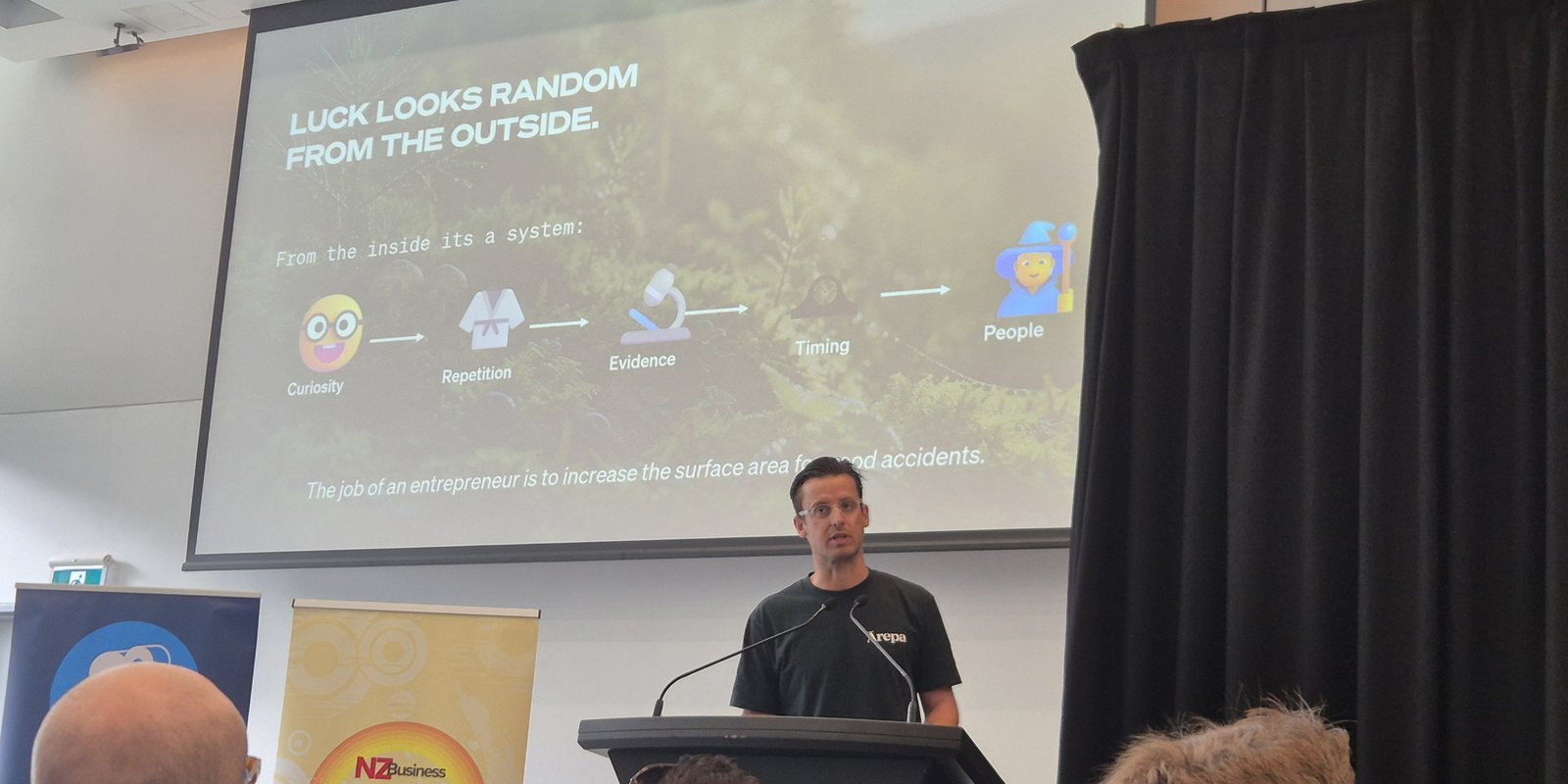
Angus Brown put one slide up early and left it there. Luck looks random from the outside, it read. From the inside it’s a system: curiosity, repetition, evidence, timing, people. And underneath, in smaller type, the job description he has written for himself: the job of an entrepreneur is to increase the surface area for good accidents.
Brown is the founder of Ārepa, the New Zealand brain food company built on blackcurrants, and he was one of two founders who spoke before the panel at the Ready to Rise Business Breakfast in Auckland on 11 November. For half an hour he told the story of the business the way founders rarely do, with the failures left in and the price tags attached.
It was funny, too. This account follows the talk in the order he gave it, and pulls out the lines that got the laughs, because most of them were lessons in disguise. Two of the lessons are set out at the end.
TL;DR
- Ārepa’s first attempt was an $80,000 clinical trial of a formula built from desktop research, and it failed. Brown’s lesson: work with the best brain you can find at the centre of the product.
- He says the company moved from making drinks by hand to a contract manufacturer and cut its unit cost from about a dollar to 25 cents, which gave the founders their time back to sell.
- Brown brought a major blackcurrant grower and the maker of its pine bark extract in as investors, so the business’s two key ingredients sit inside its own tent.
- Filing one patent in 12 markets can cost up to half a million dollars, he said, and as much again to get it through. His advice is to think twice, and he called one of his own “a dumb patent”.
- When regulators and the media came down on Ārepa over how it talked about its science, a director told the founders the crisis was “a bloody four out of 10”. They changed the label and kept going.
- The company says it has found a molecule in blackcurrants, sarmentosin, and has raised $3 million to prove it safe and scale it up, with the aim of building a new ingredient industry for New Zealand.
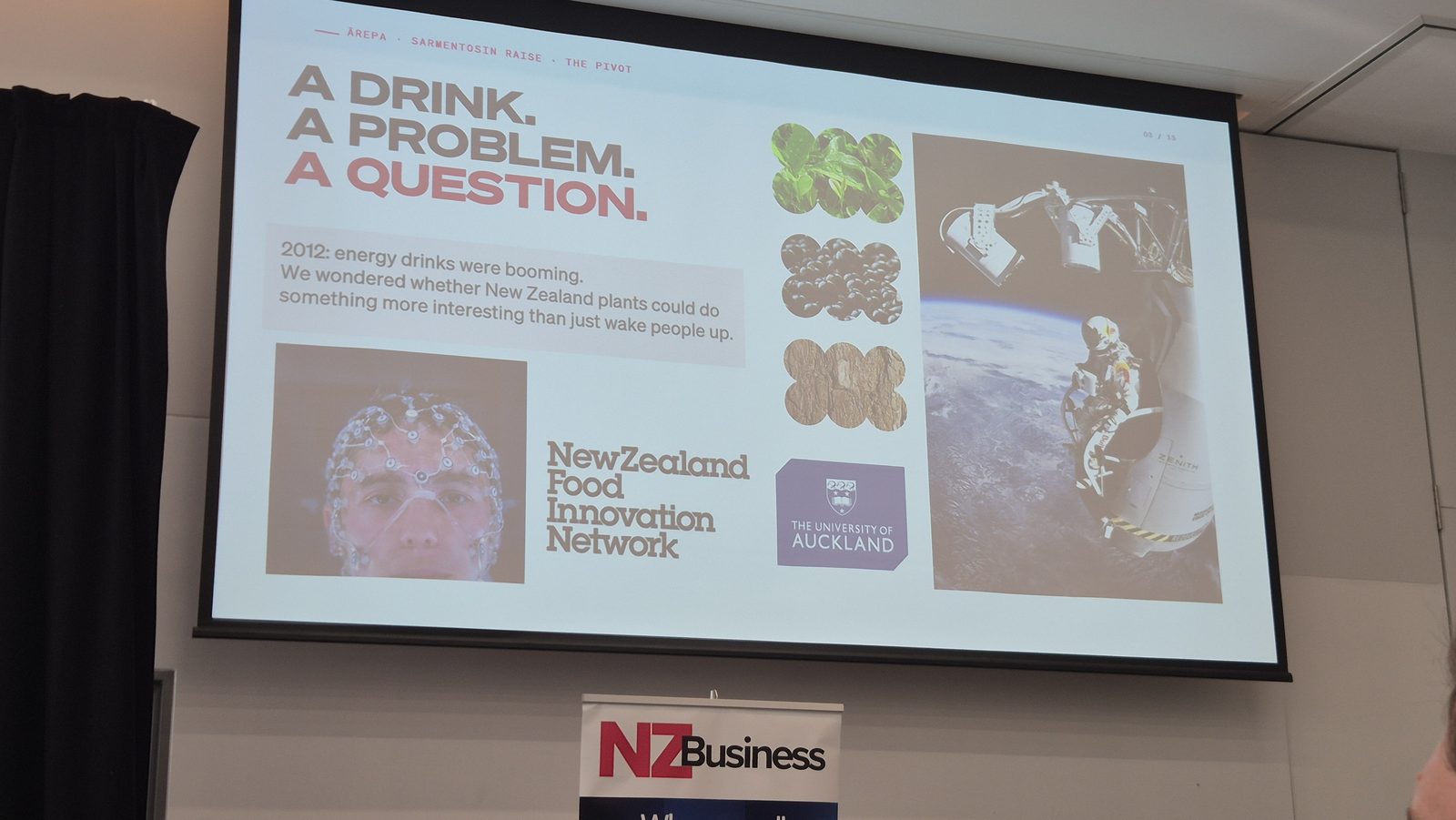
A drink, a problem, a question
Brown and his co-founder, Zac Robinson, had the idea in 2012 and launched the business in 2016. The mission has not changed since: make brains work better, through nutrition, backed by science and backed by intellectual property, and take it to the world.
He came to it from two directions. One was personal. He lost a friend while he was at high school. The other was his first job out of university, selling energy drinks, which he hated: caffeine and sugar, sold to as many New Zealanders as possible. He remembers asking himself what good it was doing the country. Then he watched an energy drink company send a man to the edge of space, saw the size of that market, and wondered why nobody was making something caffeine free, natural and good for you that New Zealand could export.
By then he was working for the government in food technology, at the FoodBowl in Auckland, which he described as a $30 million modular food factory. He spent his days advising big exporters on new products. In his sixth year there he started tinkering with his own, and his employer let him take leave to do it in the lab. He had been doing all the talking, he said. It was time to do some walking.
He set out the method before the story.
"We've got a saying in our business: we make our decisions on data, not vibes."
Curiosity came first on his list: keep asking, keep networking, because you do not know what is around the corner or who knows what. Then evidence. Then timing, which he said the company has got right in some places and is still waiting on in others, keeping its head down for a couple of years before it goes again. Then people, the “wizards” in the team who took it from an idea to a product.
An $80,000 lesson
The first version was built the way most first versions are. Some desktop research on Google, a local food technologist, a formula. The founders committed $80,000 to a clinical trial. The trial failed.
His first learning, he said, was that if you want to make a brain drink you should probably work with a very smart brain. They found one: a psychopharmacologist at a university in Melbourne, a “gun for hire” who had run clinical research for some of the biggest brands in the world.
The brief they gave him is worth reading slowly, because every line of it is a business decision. Caffeine free. Able to improve mental focus, reduce stress and look after the brain over the long term. Ideally with a synergy between the ingredients, so it could be patented. Ideally something that could be proven in more than one study. And ideally with at least one ingredient from New Zealand, so the company could one day own part of its supply chain.
The price was $50,000, which Brown remembers greeting with one short word. Robinson’s father put up the money. The scientist came back with a formula and a tip: there is a blackcurrant in New Zealand that does something interesting, and they should use it.
The formula has three parts. New Zealand blackcurrants. An extract from the bark of radiata pine, which Brown pointed out is a waste stream of the timber industry. And L-theanine, an amino acid found in green tea. The company later patented the combination, and he said that patent has since seen off competitors who tried to copy it.
Six elephants on a 10 cent coin
Then they had to make it, and at first they made it more or less by hand.
They used high pressure processing, a way of preserving a drink without heat. The bottles go into baskets, the baskets into a chamber, the chamber fills with water and the water is compressed. Brown’s picture of the pressure involved was six elephants standing on a 10 cent coin. It kills the bacteria and keeps the nutrition. As a government food technologist he loved it.
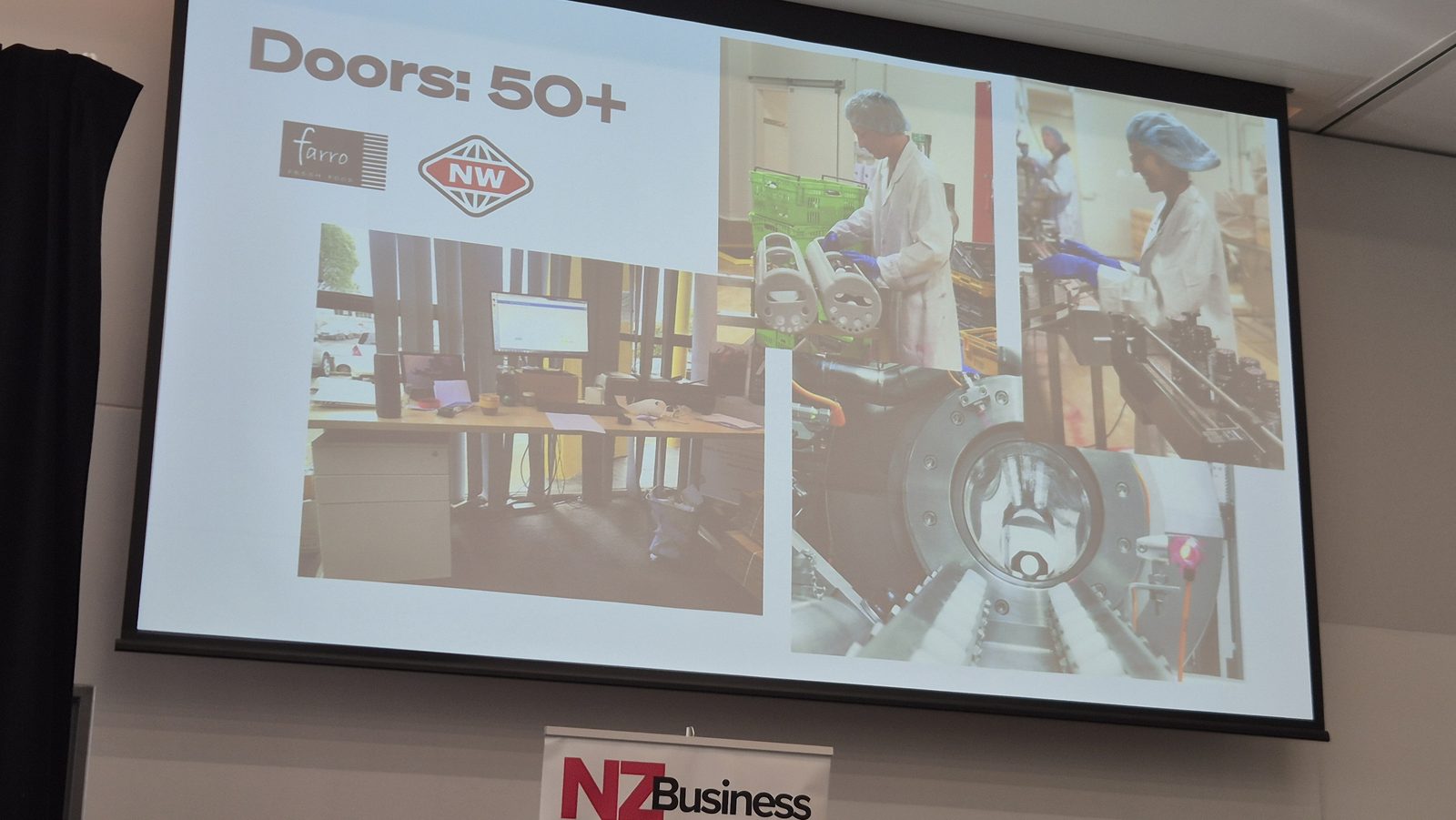
"This technology is amazing, how cool is it? It is so not scalable. You break the bank doing it."
He was working out of the back warehouse of one of the company’s investors, who owned a bagel business. “It was dusty as hell and really noisy, really hot,” he said. “But I finally had my own office and I was quite pumped about it.”
The plan for selling it was to start at the top of the pyramid and work down. Pick the best retailers for the brand, do a really good job there, then move to the next tier. For Ārepa that meant Farro and New World first. And in every store they went into, they ran tastings, so shoppers met the product and knew it was on the shelf. For a long time that was Brown himself handing out samples, with his mum and dad helping to make the product. His mum still works in the business, running customer service.
The smile curve
Making it themselves taught them they should not be making it themselves.
Brown pointed to the smile curve, an idea from Acer’s founder, Stan Shih. Draw a product’s journey from left to right and plot where the value is added, and the line makes a smile. The high ends are research, development and intellectual property on one side, and marketing, sales and after-sales on the other. Manufacturing sits at the bottom. There will always be someone bigger and better than you at manufacturing, he said. Your money should go into the things that create your brand and your IP.
The evidence was on the slide. The filling line left every bottle about 20 millilitres short, so his mum topped them up one at a time. And when the first export order for Australia was finally stacked on a pallet, he made the most of it.
"Here's me stacking up one particular side of the pallet to make the pallet look bigger for the photo."
They were stoked, he said. They also started telling the story as it happened, on LinkedIn, and found that sharing the journey brought traction, followers and support.
A placebo opens doors
The first successful study took a year just to start. The scientists asked for a placebo, and the founders had to ask what that involved. It has to look like your drink and taste like your drink, with none of the active ingredients in it. When the actives are blackcurrant and pine bark, that means making a blackcurrant and pine bark flavoured drink with no blackcurrant or pine bark, the same colour and the same sweetness.
Brown’s food technology colleagues solved it. He now counts the result as one of the company’s assets: a taste-matched, colour-matched placebo turned out to be a door opener with scientists.
In that study athletes took the drink or the placebo once a day for seven days. On the eighth day they were put through 90 minutes of hard exercise and then a standard set of cognitive tests. Brown said the study, published in the journal Antioxidants in 2020, found a seven-fold improvement in accuracy under fatigue against the placebo.
It won an innovation award at Fieldays. Then, he said, the All Blacks started buying it before every game, and it turned up on television as their pre-match formula. That was a thrill, and it came with paperwork. Anything a professional team takes has to be batch tested for anti-doping. So Ārepa made a small batch, sent a sample to the United Kingdom, paid £700 for the test, and sold the team 30 packs.
"We make more money on a supermarket over the weekend than we do over the All Blacks for a whole season."
It was still a cool thing to do, he said, and the company likes supplying the sharp end of performance. The television coverage produced a spike in sales, which then fell away again. The lesson he took was that a spike has to be followed up, so they began advertising to hold the momentum.
Owning the supply, defending the idea
As the supermarkets were added, Ārepa found itself buying more than a quarter of New Zealand’s blackcurrant crop. So Brown brought one of the country’s largest growers in as an investor. Then he did the same with the company that makes the pine bark extract. Two key ingredients, both vertically integrated.
He was straightforward about what that buys. Suppliers who own part of your business tell you more. You become their preferred customer. They tend not to supply the companies that compete with you. He was just as straightforward about the cost: as Ārepa has grown it has needed almost all of one grower’s fruit, has had to find other sources, and has had to manage a relationship in which both sides have leverage. He called it a balancing act, and a tremendous relationship.
The supply got tighter in another way. One year after COVID the price of blackcurrants doubled, and Ārepa was partly to blame: its own research had helped make the world want blackcurrants.
On patents he was at his driest. It is a fun game, he said, to go around announcing that you are patenting this and patenting that. Then the bills arrive. File one patent in 12 markets and you can spend up to half a million dollars, and another half a million getting it through. Filing is not acceptance. It is followed by a year or two of back and forth with each country’s patent office, during which a broad claim becomes a narrow one. And at the end you may find your competitor does not even operate in that market.
"I would think twice before you do it, but they are also very cool."
He gave one of each kind. A later study took blood samples, which he prefers to questionnaires, because asking people how they feel takes large numbers to prove anything and blood does not. “Bloods don’t lie,” he said. It led to a patent on sports performance in polluted air, granted in Australia, and to an awkward question about how anyone would make money from it. “That was a dumb patent,” he said. “We shouldn’t have done that.” The other kind is the patent on the molecule the company has since found, which he called the reason Ārepa is still around today.
From a dollar to 25 cents
The move to a contract manufacturer changed the business. Ārepa went from plastic bottles to glass, and found its formula did not need high pressure processing to stay stable. The cost of making each unit fell from about a dollar to 25 cents, he said, and the amount they could make in an hour doubled. All the time that had gone into making the product could now go into selling it.
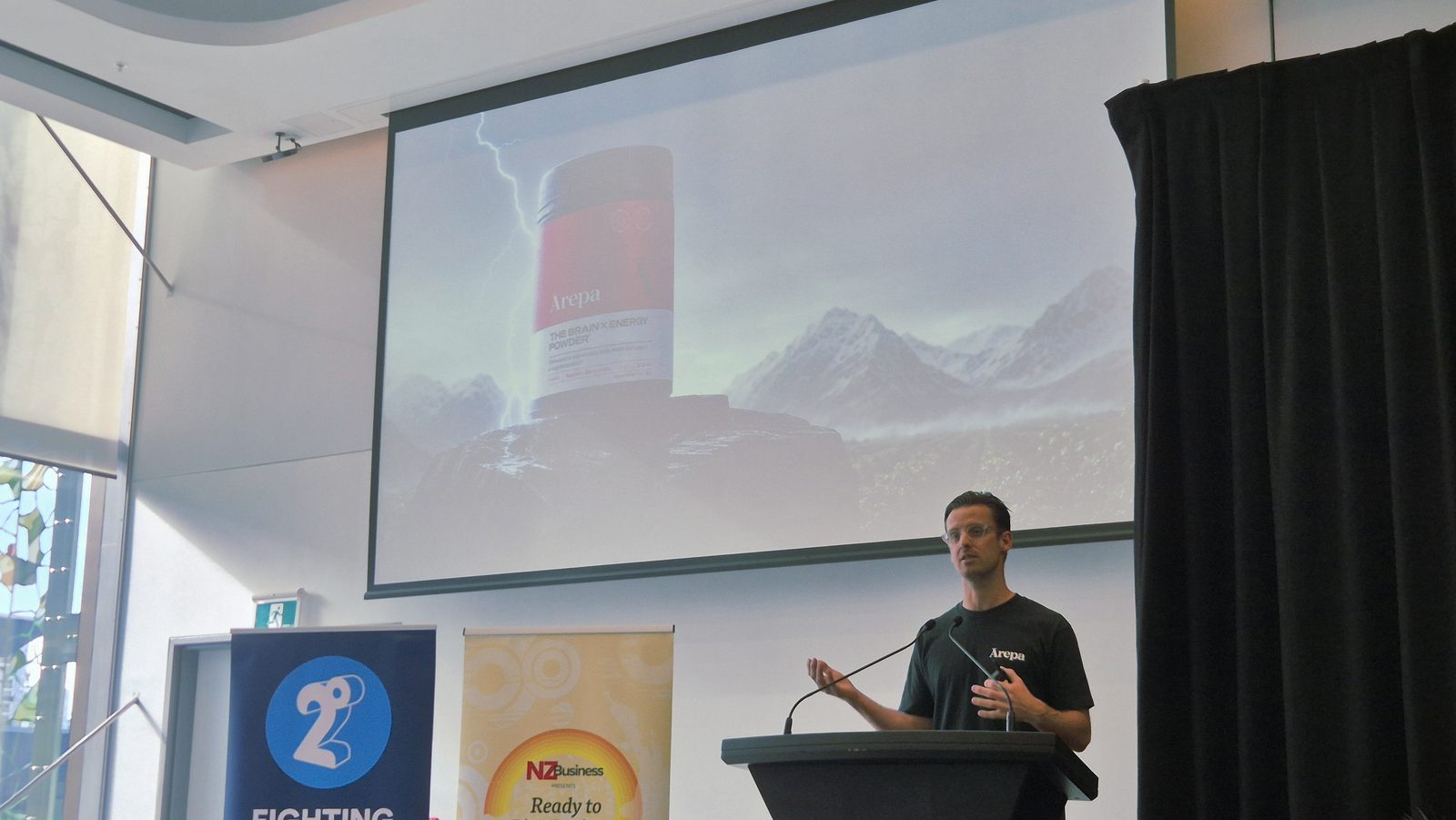
The next question was reach. The drink sold for about $7. Through customer service, his mum was hearing from families from every walk of life, including some on very low incomes with children who were struggling. The founders wanted the product within reach of as many people as possible, so they looked for the cheapest way to deliver the same formula and landed on a freeze-dried powder.
Then they tested the powder, and here he offered a regret. One study, run during COVID with small numbers, looked at athletes exercising in ozone-polluted air. It was interesting, and it was a niche. In hindsight, he said, the company ran too many small, scattered studies. It should have done one study, got it right, and then repeated it, because a result has to be repeated before it can support a health claim.
Making your own luck
Every time Ārepa went into a new retailer, it made sure the whole world knew, and it sampled in store. Some of what followed was planned and some was not.
When the company launched in Australia it paid for a mural at Bondi Beach. “We thought, man, that was a very expensive mural. God, I hope people can see it,” Brown said. What they had not realised was that the Sydney Marathon was on, with the runners streaming past the wall on their way to the finish. They nailed the timing without knowing it. Riders from an action sports tour asked for the product. So did a man who had landed four backflips on a BMX.
The slice of luck he was proudest of was made by a member of staff.
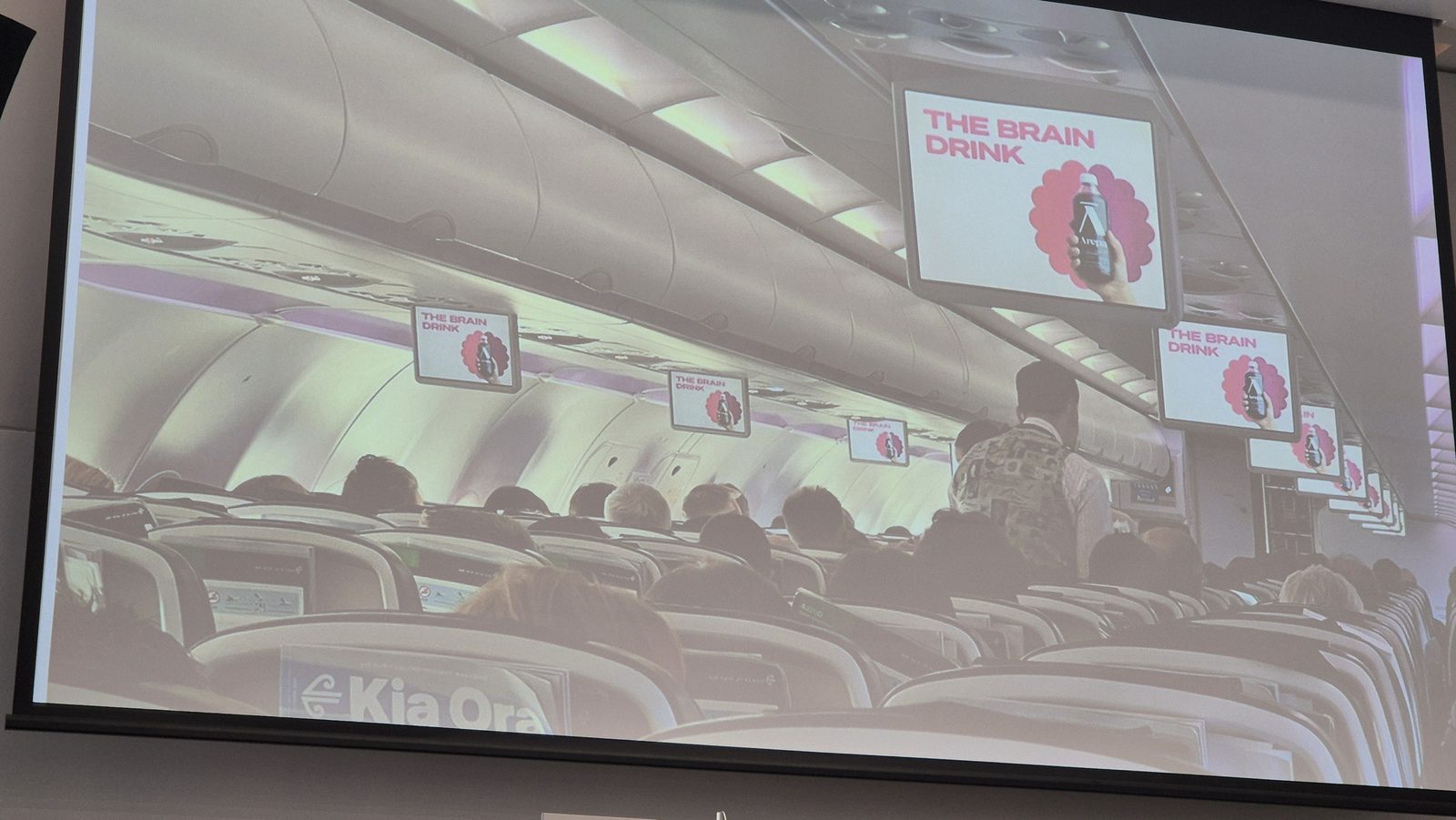
"Good marketers are really bloody handy. And good marketers should be hustling."
One of Ārepa’s marketers tracked down the media agency that books the drop-down screens on Air New Zealand flights. The drink was already in the inflight magazine. Now it was on the screens too, in between the quiz questions, in front of a cabin full of people with nowhere else to look. After that came a listing in the airport stores.
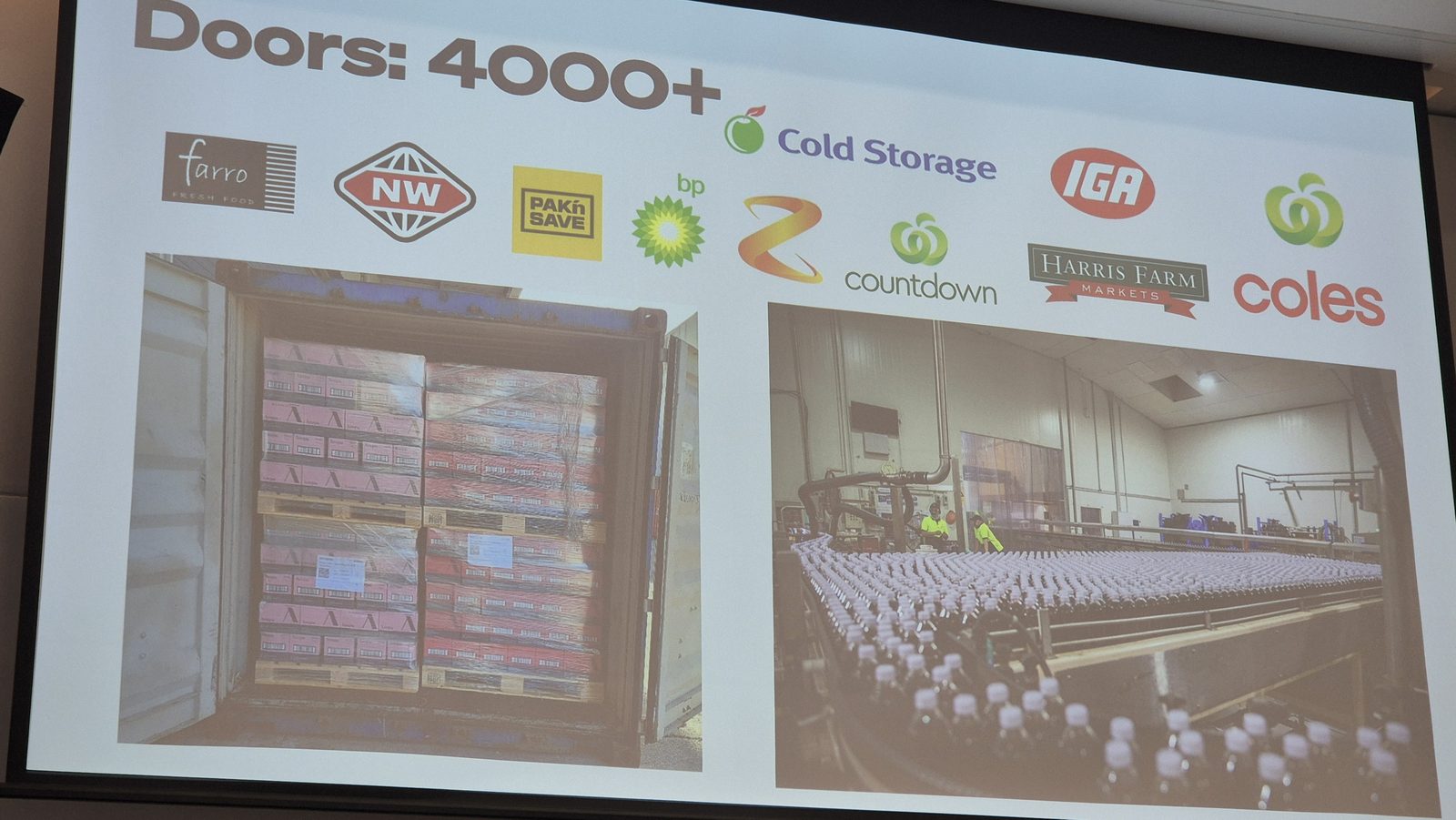
At its peak the product was in about 4,000 stores. It is in about 3,000 now, and Brown used the difference to agree with the morning’s other founder, Grant Taylor of MOXX Brands. When you launch with a retailer, start in 200 stores, not 800. Do a bloody good job in those 200 and you earn the move to 800. Go straight to 800 and do a half-hearted job, and they cut you. Full credit, he added, to Taylor for being in 10,000.
A four out of ten
Then came the part of the story most founders would leave out.
Ārepa had been talking about its science, and in Brown’s words it had been more or less ignoring the rules. Under the Australia New Zealand Food Standards Code, what a company may say about a food is tightly controlled. Had the formula been sold as a dietary supplement, he said, it would have been fine. Because it was a food, the company was not even allowed to link to its own published research on its own product. That counted as a health claim.
The Ministry for Primary Industries was preparing to act, a newspaper found out first, and suddenly the company was in its first media storm, being told to stop its claims and change its label. “The first time my son saw me on TV was for the absolute wrong reason,” Brown said.
It got worse. The expert quoted in the coverage was the scientist who had run Ārepa’s very first trial, the one that failed, using the formula that contained no blackcurrant. He believed that was the product on the shelves. The founders could not put him right in public, because answering with the science would have been another breach.
What helped was a board that had seen worse. One director, the former Zespri chief executive Lain Jager, put it in proportion for them.
"Boys, this is a bloody four out of 10. You wait till you're in 10 markets and you're in the US and you're getting sued."
So they boxed on. They went back and forth with lawyers and the ministry, and changed the label. He showed the before and after side by side: a few small asterisks, the same formula inside.
Two weeks later a result arrived from another clinical trial, in 38 healthy women taking the product daily for four weeks. Brown said it showed a 33 percent improvement in working memory against the placebo, with tension down 20 percent and anger down 37 percent. The company’s public relations adviser told them it was not the moment, so they said nothing. It has been published since.
Sales did drop, he said, mainly among people who would have been buying for the first time. The customers who had already tried the product and felt a difference kept buying, and carried the company through.
Moats, megatrends and a molecule
What the storm taught him is that a business like this needs several defences at once, and has to keep all of them in balance: research, patents, trademarks, credentials, the team, manufacturing know-how and the ingredients themselves. It was the combination that kept Ārepa on the shelf.
The business has changed shape since. The drinks are now made and sold through a joint venture with a beverage manufacturer. The supplements Ārepa controls itself, selling online into five markets. And there is a third arm, in ingredients.
It has also learned to ride trends without being carried off by them. The company watches the big movements in supplements and asks which ones fit. Creatine did, so it was added to the formula, and Brown said the result is now its best-selling product online. Protein is going into everything, he noted, and it is not going into Ārepa, because it does not fit what the brand is about.
The ingredient business rests on a molecule. In its research on blackcurrants the company identified sarmentosin, and Brown explained what it does with a video game.
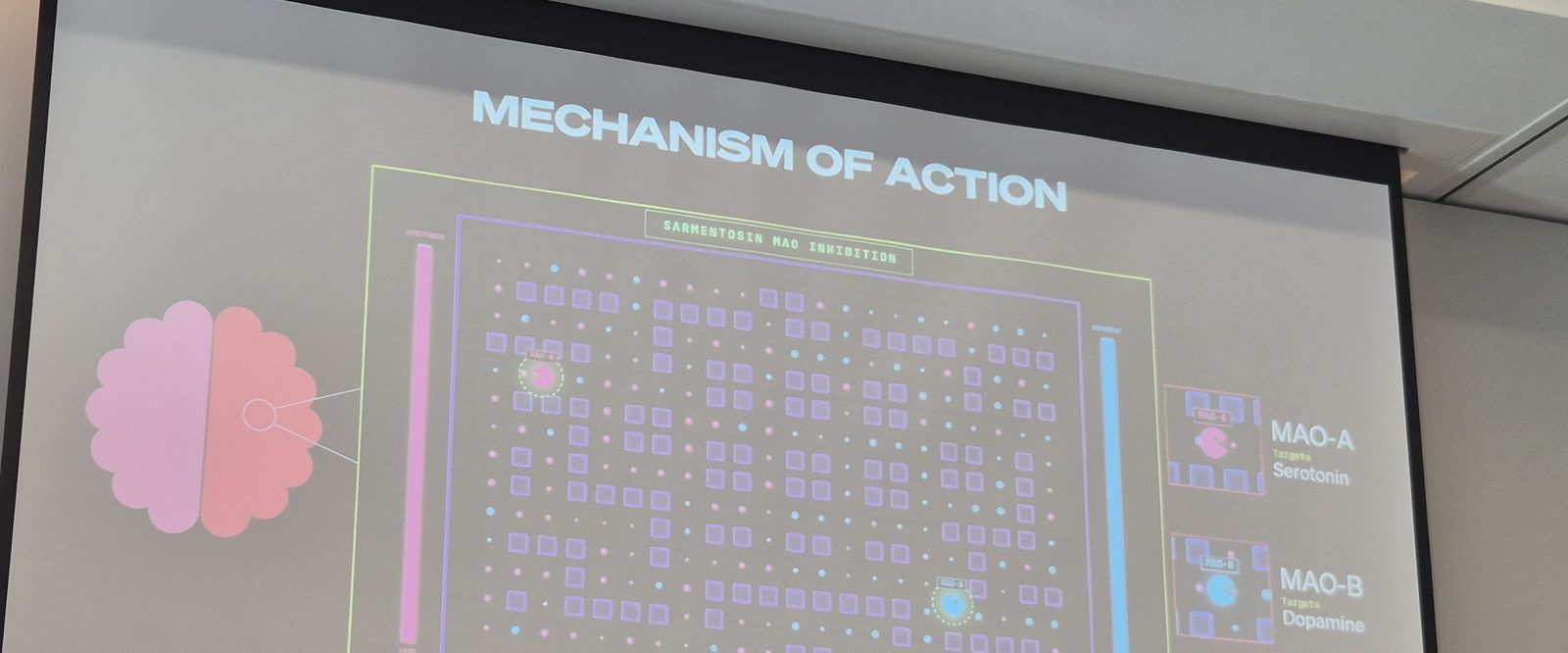
"You see these Pac-Man eating up your serotonin and dopamine."
The Pac-Man in his picture is an enzyme that breaks down the brain’s own chemical messengers. Compounds that slow that enzyme have until now been known as a class of pharmaceuticals. Ārepa says sarmentosin is the first from the plant food world shown to do it in people, in a first human study carried out with Callaghan Innovation, and it has filed patents around the world on the molecule’s use.
He reached for a comparison every New Zealand exporter would recognise.
"It's like we've found the UMF factor in blackcurrants, but it's the neuro factor."
The discovery won an Asia-Pacific food technology competition, which took him to Switzerland to meet some of the biggest food companies in the world. They all want access to the ingredient, he said. The plan is to supply it to Ārepa’s own products first and then to others, the way the manuka honey industry built value on a measurable factor, and in time to do for blackcurrants what the dairy industry did for milk: split one raw material into several high-value ingredients.
To get there the company has just raised $3 million, he said, including $750,000 from the Bioeconomy Science Institute. About a million dollars will go on the safety work needed for clearance by the United States Food and Drug Administration. About another million will go on a large clinical trial, to show whether people feel, perform and sleep better, now that the mechanism has been shown in blood. The rest is for scaling manufacture from grams to kilograms.
The dream, in his last words to the room, is a new industry for New Zealand: new blackcurrant varieties bred for the purpose, and a very large export opportunity grown from them.
Two of the lessons
- Luck is a system. Stay curious, keep asking, back it with evidence, watch your timing and find good people. The job is to increase the surface area for good accidents.
- Decide on data, not vibes.
There are 23 more lessons from this talk. Join the AFQY community to read the rest and discuss them with other members.
Sources
- NZBusiness: Ready to Rise Business Breakfast, November 2026
- Ārepa
- Antioxidants (2020): Improving Mental Performance in an Athletic Population with the Use of Ārepa, a Blackcurrant Based Nootropic Drink: A Randomized Control Trial
- Food Standards Australia New Zealand: nutrition, health and related claims (Standard 1.2.7)
- New Zealand Food Innovation Network: The FoodBowl
- Wikipedia: Smiling curve (Stan Shih)