
Digital Kaitiakitanga: The Biologist Teaching AI to Count What We Are Losing
7 September 2026· AFQY News
Victor Anton opened his CIO Innovation Showcase slot with a quiz, which is a brave move in front of a room of technology leaders. Four images of native species: two real, two generated by AI. Five seconds to pick the fakes. Then a harder one. How many kiwi species does New Zealand have? The answer is five, and only one of them, the North Island brown kiwi, is not threatened with extinction.
Then the question he really wanted to ask. How many wētā species do we have? The room guessed six, then twenty. The honest answer is that we do not entirely know. The most recent report Anton could point to is four years old, describing around 160 species, with more identified since. More than a quarter of them are threatened or at risk of extinction, and for more than ten percent there is simply not enough data to categorise them at all.
For a Spanish-born wildlife biologist who now lives in Taranaki, that gap is the whole point. Anyone might reasonably ask why 160 wētā species matter. Anton’s answer was disarmingly simple: guess what a kiwi’s favourite food is.
"Every single species that goes extinct is one less piece in the jigsaw puzzle that we are playing with the environment."
Here is where he started speaking the room’s language. You cannot improve what you cannot measure, and conservation has a data problem. The current pattern looks like this: professionals travel to a site, collect information for days or weeks, process it locally, and produce insights specific to that project which are hard to replicate anywhere else. The AI-assisted alternative looks different at every step. Volunteers and citizen scientists collect data with easy mobile tools, remote sensors run continuously, processing happens on the device or automatically, and the insight can be global rather than local.
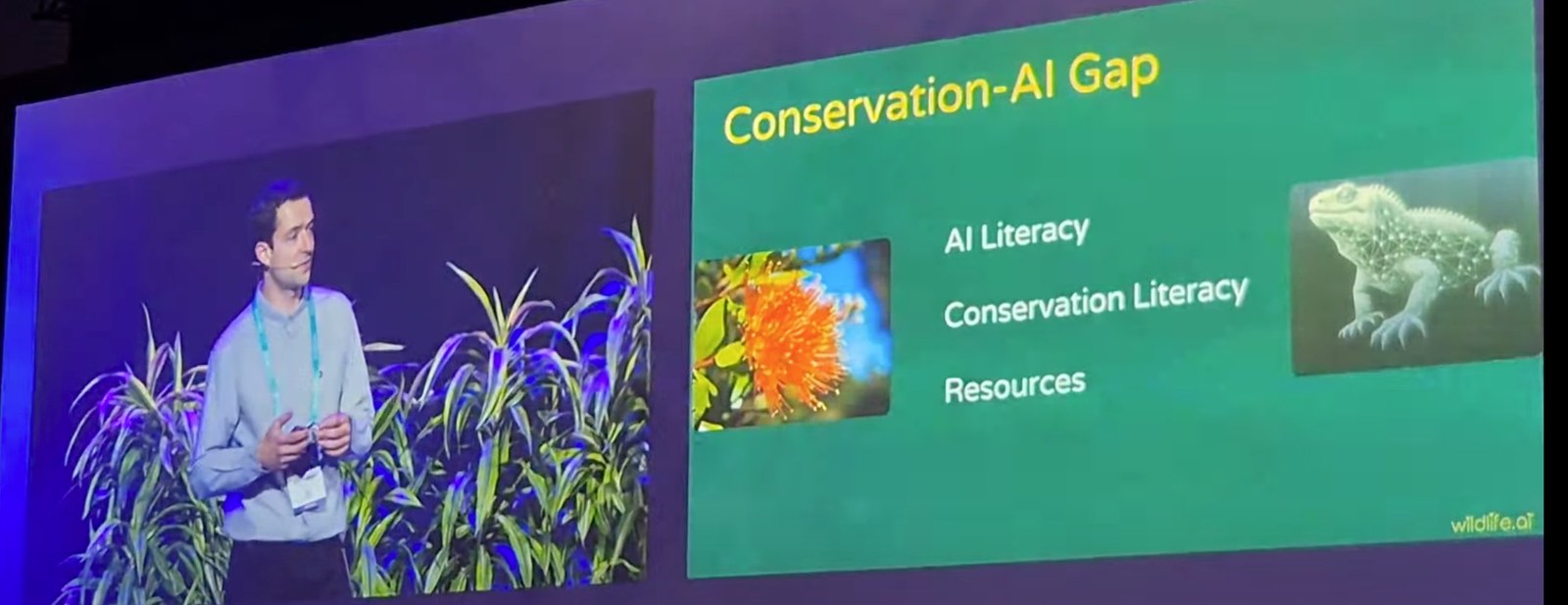
So why is conservation still largely manual? Anton put it as a conservation and AI gap with three parts, which his slide named AI literacy, conservation literacy and resources. The second was aimed squarely at the audience. Conservation groups often have a limited sense of what AI can and cannot do for their work. Software engineers and CIOs, meanwhile, tend to treat a conservation challenge as a purely technical problem, without accounting for the ecological, cultural and social dimensions that decide whether anything actually works in the field. And then there are resources, because getting AI to scale takes more than enthusiasm.
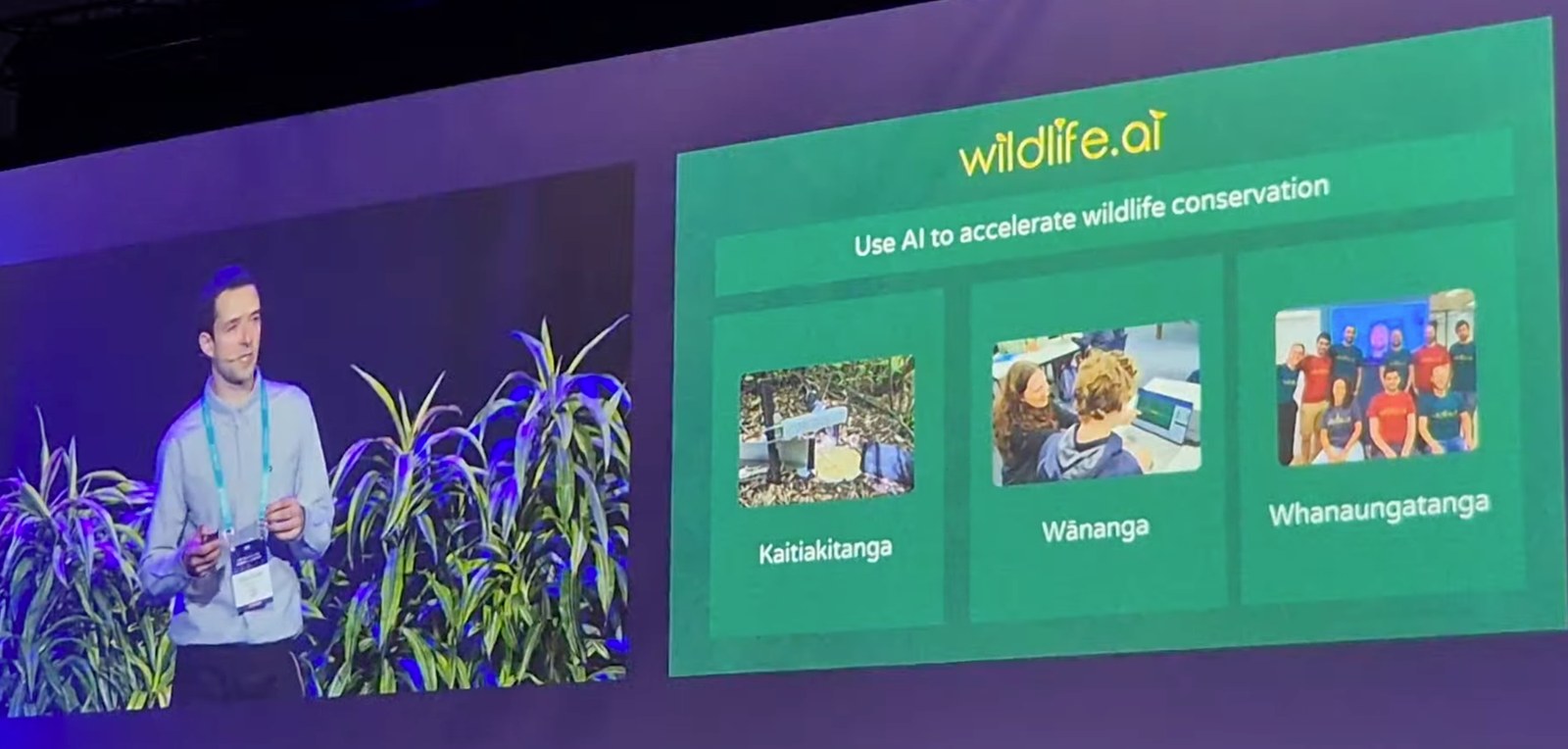
Wildlife.ai, the charity Anton founded here seven years ago, exists to close that gap. Its mission is to use AI to accelerate wildlife conservation, and its work stands on three pou. Kaitiakitanga, building tools so the people caring for our taonga can be more efficient. Wānanga, activating and educating more people at the intersection of AI and conservation. Whanaungatanga, growing a community around it. That community includes the data rangers, a group of data scientists and engineers volunteering their skills, with more than 500 people now interested in taking part.
The first project he showed, Wildlife Watcher, tackles camera traps, which have transformed conservation over the past two decades but carry a blind spot. They miss the smaller creatures: medium and small mammals, reptiles, amphibians and insects. Amphibians are the most threatened group in the world, with more than 40 percent of species facing extinction, so missing them is not a rounding error. On top of that, reviewing the footage is usually manual and slow, which means decisions get made on outdated information.
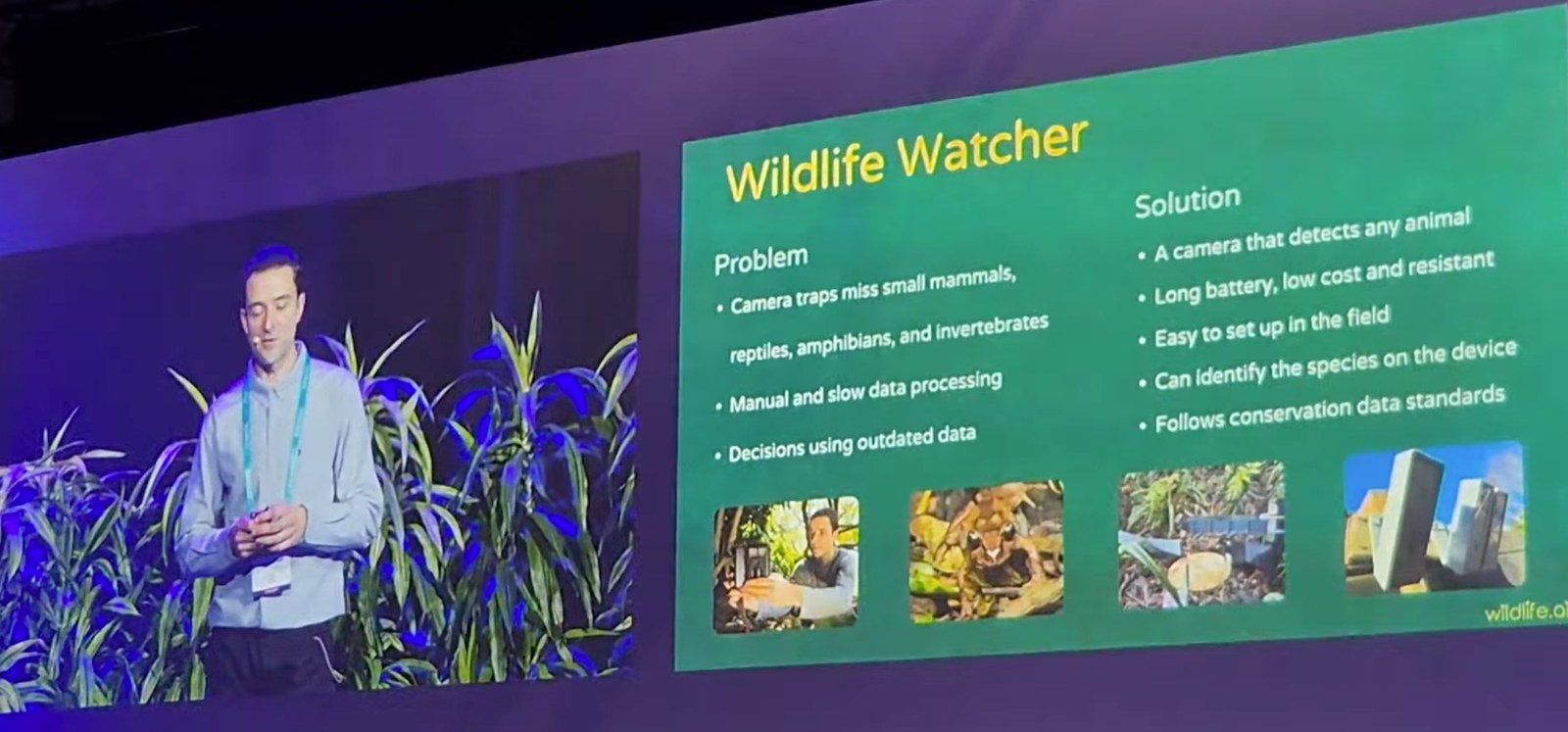
The ideal, as Anton described it, would be a camera that can monitor any animal, is built for the outdoors, has long battery life, runs in real time, is affordable, is easy for community groups to set up, and processes images on the device so what comes back is already conservation-ready data. His team has designed both the electronics and the case for that camera in New Zealand. They have tested it in the lab against commercially available tools and deployed it in the field with a mobile app for collecting information, showing it can detect a wider range of animals than the big mammals alone.
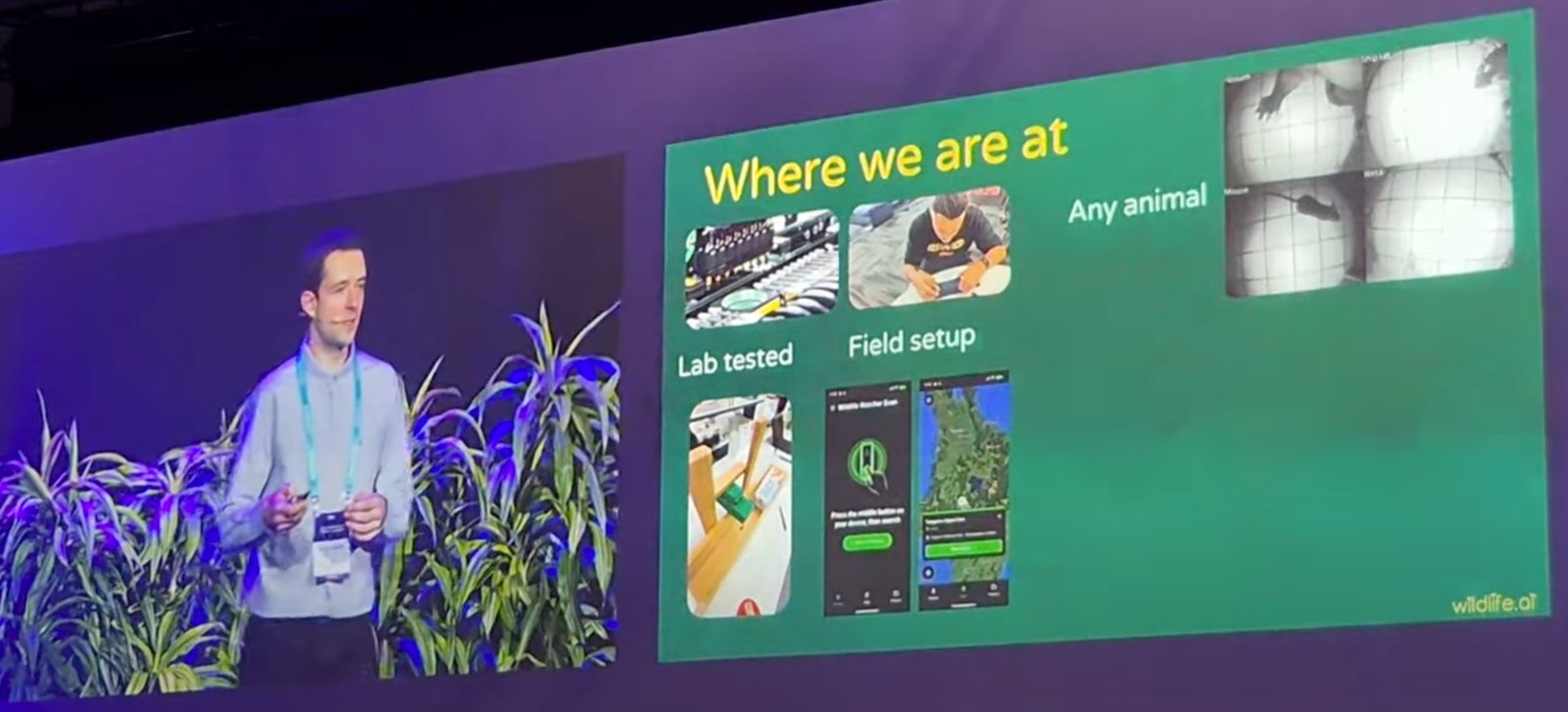
What makes it more than a hardware story is who is involved. School students set the cameras up and review footage alongside scientists and community groups, which is the practical shape of kaitiakitanga in a digital age.
The second project, Spyfish Aotearoa, is a collaboration with the Department of Conservation monitoring around 40 marine reserves across the motu. The method is baited underwater video: drop a camera facing a bait, record 30 minutes, then have someone watch it and count what species turn up and how many. Repeat inside and outside the reserve to see how fish populations compare and how they change over time. The bottleneck is obvious once you hear the numbers, and the historical data had been living across paper, spreadsheets and hard drives around the country.
"We have over 10,000 volunteers all over the world, looking at videos of fish, and over 2,000 school students from 30 different schools. They have classified 300,000 videos."
The team built a data app now holding 3,000 historical deployments, added 500 new ones with the new tools, and used those volunteer classifications to train machine learning models that identify 12 different fish species. That is an end-to-end pipeline: collection, classification, model, dashboard. It is also the answer to a question technology leaders ask often, which is where the labelled data for a niche model is supposed to come from. Here, it came from people who wanted to help.
Anton was clear that none of this is one person’s work. It is a team of people with different skills and a shared purpose, plus a long list of partners, stakeholders and community groups. The next step is scaling, so this stops being a set of specific projects and becomes something many more groups can pick up. The blueprint exists, the impact on the ground is real, and conservation groups keep asking for help.
He closed with an invitation rather than a pitch. Spread the word. Go to Spyfish and help classify footage, which needs no marine biology background and no sign-up. And share your skills, or your team’s skills, because conservation needs more people who can build things.
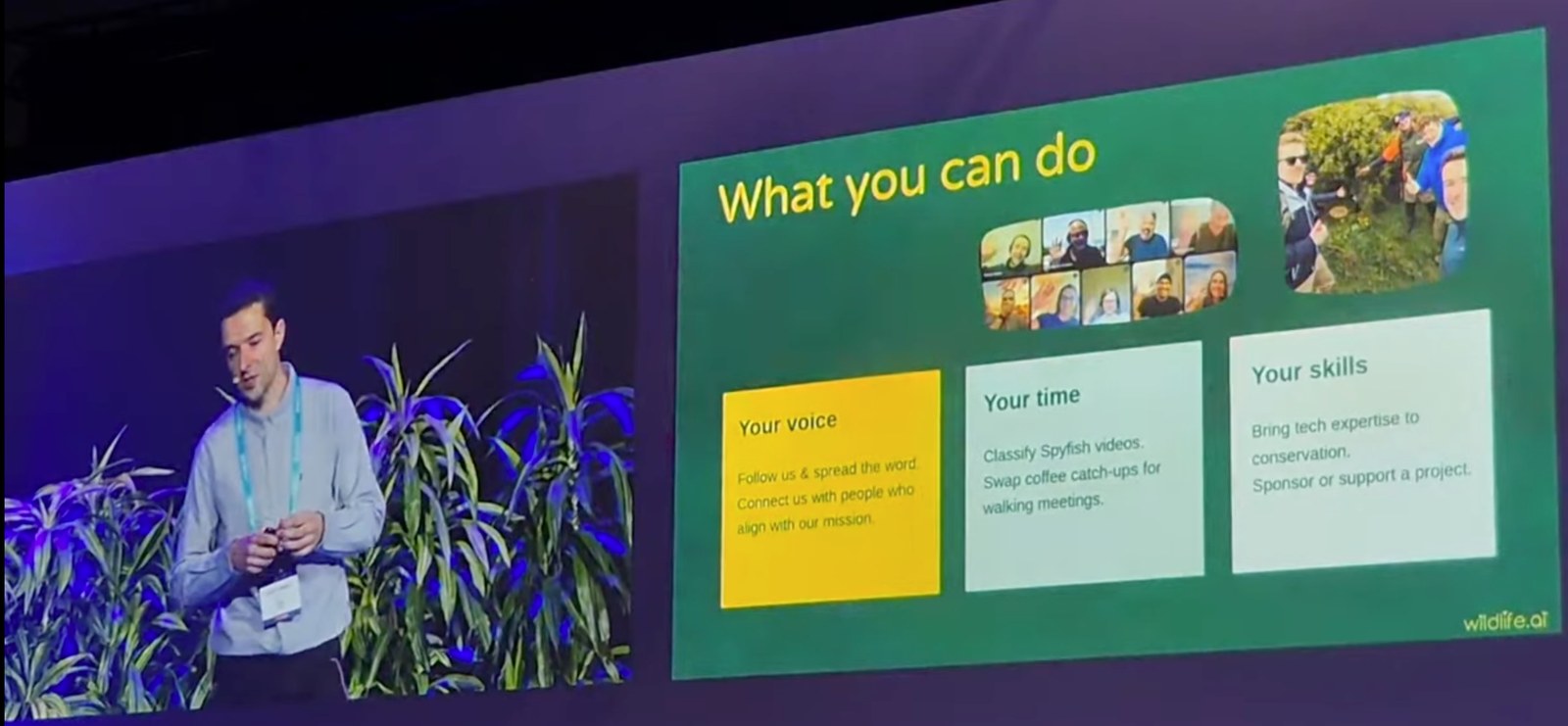
For a room full of people who spend their days on migrations and platforms, it was a useful reframe of what those skills are worth. As Anton put it, the goal is that the next time someone asks how many wētā species we have, you can say you are helping to find out.
Sources
- CIO Innovation Summit New Zealand: agenda and speakers
- Wildlife.AI: Home
- Wildlife.AI: Spyfish Aotearoa
- Department of Conservation: Citizen scientists train artificial intelligence for healthy oceans
- Google: New Zealand's Wildlife.ai Trust selected for Google.org-supported APAC Sustainability Fund
- Wildlife.AI: Finalists for NZ Hi-Tech Awards 2026