
Invisible exhaustion, the concern for those delivering change - Abbie Stevens transforming continuous change
6 August 2026· AFQY News
The warning sign was not a failed project, a resignation or an employee survey. It was washing.
During a period of relentless organisational change, Abbie Stevens found herself looking forward to the weekly laundry because it offered something work no longer did: a clear beginning, an orderly sequence and a finish. Wash the clothes, dry them, fold them and, most weeks, put them away. No competing priorities. No new executive direction. No further decision hiding behind the last one.
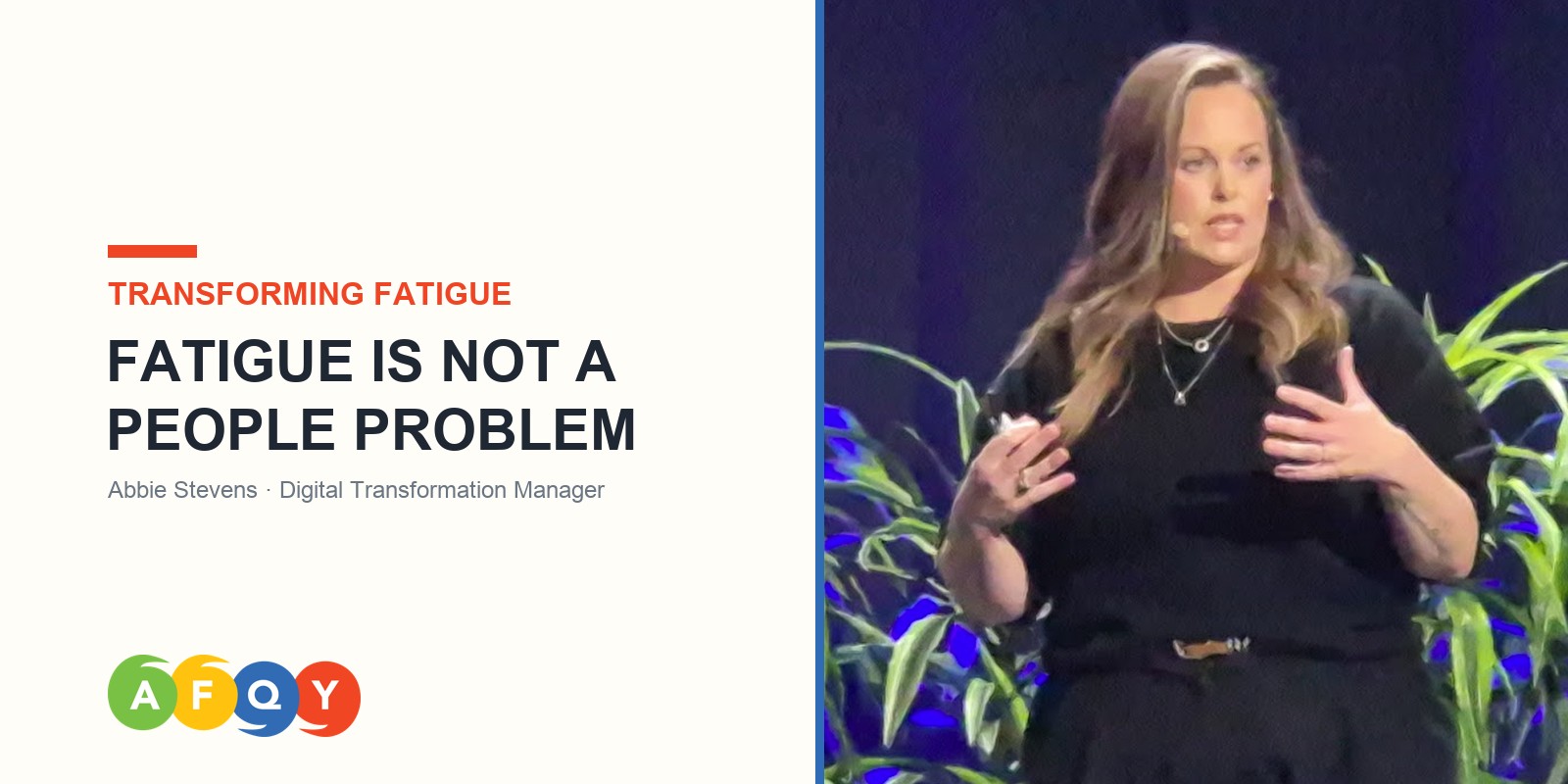
At the CIO Innovation Summit’s session on transforming fatigue, Stevens, Digital Transformation Manager at The Royal New Zealand College of General Practitioners, used that personal detail to make a larger point. Transformation fatigue rarely announces itself. People adapt to continuous change until exhaustion feels normal, then leaders misread the resulting control, withdrawal, irritability or indecision as a problem with the person.
Her alternative was practical and systemic: learn each person’s normal pattern, notice changes early, reduce cognitive load, measure capacity in minutes rather than through another large survey, and make recovery part of the operating rhythm. Leaders may not control the volume of change around their teams, but they do control whether the system gives people anywhere to recover.
TL;DR
- Transformation fatigue is exhaustion from continuous change over a long period without recovery. It is not automatically resistance, disengagement or poor attitude.
- Establish a “baseline of OK” by knowing how each person normally communicates, decides and participates, then notice changes from that pattern.
- Respond to changed behaviour with connection before judgement. A smaller workload, fewer interruptions or one clear priority may restore capacity faster than pressure.
- Use a five-minute fatigue budget covering workload, interruptions, incident recovery and confidence in priorities to make team capacity visible.
- Bake recovery into the operating rhythm through focus time, post-incident decompression, real leave and leaders who visibly disconnect.
- Fatigue-driven control is resolved through trust, not organisational charts alone. Build confidence in the team through small wins, coaching and gradual transfer of responsibility.
The exhaustion that becomes invisible
Stevens began by asking the parents in the room to remember the first six months with a new baby: waking every few hours, running on coffee, struggling to focus and sometimes feeling like a train wreck. Then she changed one condition. Imagine that it does not end after six months. Imagine it continues for a year, then 15 years, not because of somebody you love, but because of your job.
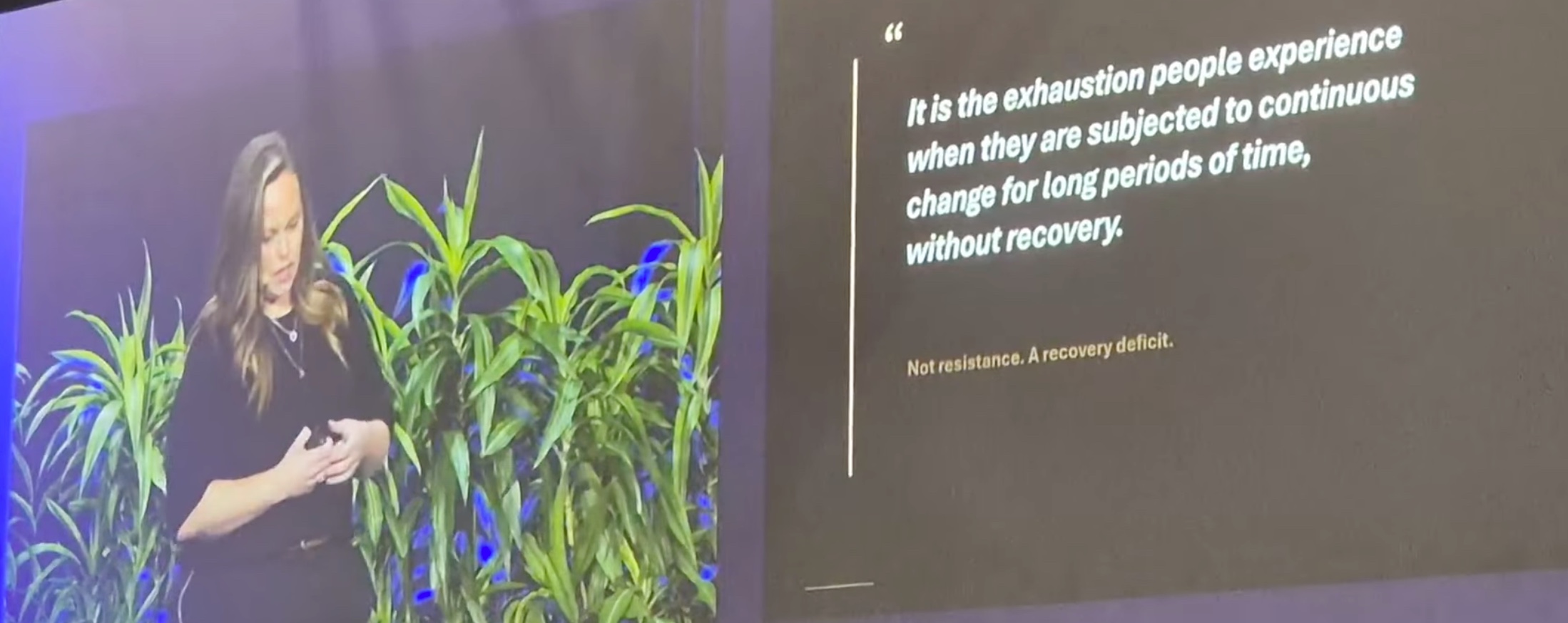
Her definition of transformation fatigue was precise: the exhaustion people experience when they are subjected to continuous change for long periods without recovery. The important words were not simply “continuous change”. They were “without recovery”.
This was not a clinical diagnosis, and Stevens did not present it as one. It was a leadership lens for understanding what sustained change can do to behaviour and performance. That systems framing is consistent with WorkSafe New Zealand’s guidance on psychosocial risks, which identifies work design, heavy workloads, constant time pressure and low job control as potential workplace hazards. WorkSafe also distinguishes managing work-related risk from diagnosing a mental-health condition.
The implication for CIOs is uncomfortable. If the source of exhaustion is the operating environment, a resilience workshop aimed at the individual cannot be the whole response. Leaders have to examine the work itself: its volume, interruptions, ambiguity, dependencies and absence of recovery.
Fifteen years of alerts
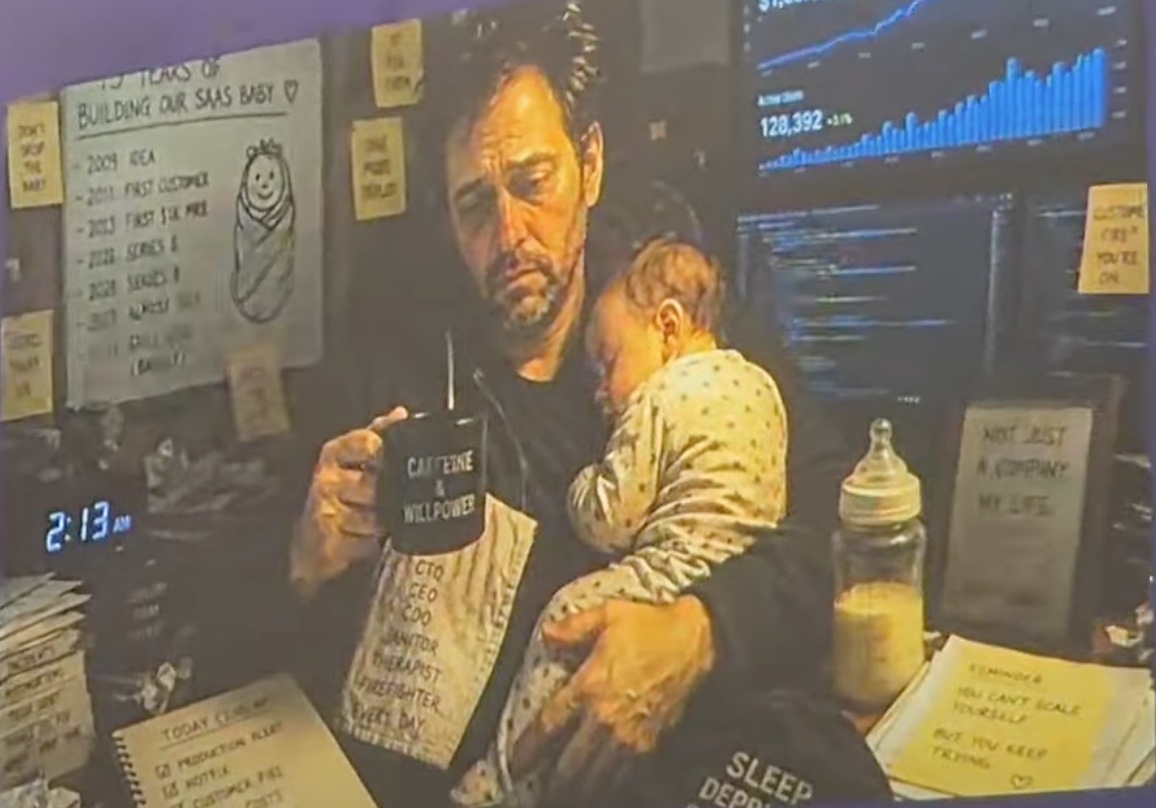
Stevens made the problem concrete through a technology founder she had worked alongside. He was brilliant, deeply committed to customers and personally connected to the product. For 15 years, she said, every incident and every production alert came to him, approximately one every two hours. Weekends, holidays and Christmas Day made no difference. There was no sustained break from responsibility and no mental escape from the possibility that something might fail.
The founder did not initially recognise that the arrangement was abnormal. It had become part of what being responsible meant. Stevens was leading the technical team at the time, while her unofficial role became helping him reduce the organisation’s dependency on his constant availability.
The obvious technical fixes were available. Change the on-call balance, build rotations, reduce incident priorities, redesign alerting and consider switching off signals that did not justify waking somebody. Yet every proposal met a reason it could not happen. How would he know what was going on? What if the team missed something? What if he could restore service faster himself?
Stevens realised the dependency was not really about monitoring. It had become part of the founder’s identity. He felt personally responsible to customers, staff, stakeholders and shareholders, and that sense of responsibility had crowded out attention to his own wellbeing.
The company was building the technology team from six people to 30, with the goal of addressing a three-year product backlog, reducing dependence on the founder and introducing modern engineering practices. Specialists were hired and a system was built around him. He agreed with changes he could understand quickly, but held tightly to technical control when the risk or uncertainty felt harder to process.
Stevens called this fatigue-driven control. Exhaustion does not always make a person let go. When uncertainty feels dangerous, it can make them hold on harder.
When easy decisions become difficult
The founder was an extreme example, but Stevens recognised the same pattern in her own experience. Her workplace had gone through three chief executives in three years, an attempted merger or acquisition, declining sales and continuous cost optimisation. She was exhausted and had lost the ability to see much positivity in what was happening.
The sensation resembled a familiar dream: running hard while getting nowhere. Simple work became difficult, and the effects travelled home. By Friday she was shattered and sometimes dreaded the weekend because it contained more activities and more decisions.
Predictability became relief. Laundry was comforting because the task had a defined sequence. A suggestion to go out for dinner produced a fresh list of decisions: getting ready, choosing where to go and working out what to order. The issue was not the size of any one choice. It was the cumulative cost of having no spare decision-making capacity.
"Fatigue is absolutely the hardest to see when you're right in the middle of it."
Recognition came only when Stevens stopped, slowed down and took stock. That reflection gave her a reference point for the future. She could notice the energy shift earlier, separate what was critical from what was not, reset boundaries and redirect energy before reaching the same point.
Build a baseline of OK
Stevens’ first practical tool was the “baseline of OK”: a leader’s working understanding of what normal engagement looks like for each person.
Some people are naturally vocal in meetings; others contribute after reflection. Some prefer the office; others do their best work remotely. People differ in how quickly they decide, ask for help, respond to interruptions and interact with colleagues. The signal is not that somebody behaves differently from the leader. It is that they start behaving differently from themselves.
An employee who is normally active and visible may begin working from home more often. That could be disengagement, but it could also be energy conservation. A normally decisive engineer may become slow or overwhelmed. A quiet person becoming quieter may be more significant than the same behaviour from somebody whose baseline has always been reserved.
"The baseline of OK is not a survey."
Her point was not that survey data has no value. It was that a manager cannot outsource knowing their people. The baseline comes from observing how individuals communicate in person and online, how they make decisions, what energises them and how they respond when work becomes difficult. That knowledge makes deviations easier to see and conversations easier to start.
Connect before trying to correct
Stevens described an engineer who became progressively quieter in meetings and increasingly overwhelmed. Rather than treating the change as a performance issue, she invited him for coffee in a less formal setting.
The first answers sounded normal. Work was busy, but manageable. A deeper conversation revealed pressure involving his family, made harder by being geographically distant and unable to control what was happening.
The team could not resolve the family situation, but it could change the work. Stevens reduced four priorities to one, removed interruptions and created room for the engineer to direct energy toward his family. Over the following weeks, she saw his capacity return. He began picking up work without being asked and re-engaged with the team without being pressured.
The sequence mattered: know the baseline, observe the change, connect quickly in a non-confrontational way, then change what the system can change. Support produced loyalty and engagement because it demonstrated that the person mattered beyond the immediate output.
This is also where WorkSafe’s systems view becomes useful. Its guidance recommends regular, open conversations with workers, collaborative design of interventions and attention to how leadership decisions may contribute to psychosocial risk. The manager’s job is not to diagnose the person over coffee. It is to understand the work experience well enough to remove avoidable pressure and direct somebody toward appropriate support when needed.
A five-minute fatigue budget
The second tool was a fatigue budget, which Stevens described as a human version of an error budget. Its purpose is not to produce a sophisticated wellbeing score. It is to give a team a fast, shared view of available capacity and show where a leader needs to lean in.
Her version asked for a simple thumbs-up, flat or thumbs-down assessment across four areas:
- Workload
- Interruptions
- Incident recovery
- Confidence in priorities
Stevens used the approach with a global engineering team whose working days overlapped for only a small number of hours each week. Time together was scarce, so a five-minute check gave her immediate information about where people were stretched, how connected the team felt and which issue required attention.
The scale can be adapted. A team might prefer a one-to-five score or red, amber and green. The important part is agreeing the dimensions with the team, establishing the baseline together and repeating the check often enough to see movement.
The fatigue budget is not a clinical measure and should not be treated as one. It is an operating signal. If workload is high, interruptions are constant, the team has not recovered from the last incident and priorities remain unclear, the next transformation milestone is entering a system with no margin.
Bake recovery into the operating rhythm
Stevens’ third action was the simplest to describe and often the hardest to protect: schedule recovery deliberately.
That can mean focus blocks, protected time for learning and unfinished work, a quieter period after a major incident, or reduced activity after a large release. What matters is that recovery appears in the operating rhythm rather than being offered once when exhaustion is already visible.
Leadership behaviour determines whether the permission is real. Managers who take leave while monitoring messages teach people that leave is another form of availability. Stevens urged leaders to take the break, leave the laptop behind and let their teams observe them disconnecting.
WorkSafe’s fatigue guidance similarly treats recovery as part of safe work design. Fatigue can reduce alertness and the ability to work safely and effectively, and organisations are expected to manage the work-related risks rather than leave the entire burden with individuals.
For technology leaders, recovery is also an engineering question. Alert quality, on-call design, release cadence, incident follow-up, dependency concentration and priority discipline all influence whether people can disengage from work. A wellbeing programme cannot compensate for an operating model that wakes the same expert every two hours.
Trust changed what structure could not
The founder did not leave the alert chain simply because a larger team and new process existed. Stevens said the first attempt to remove him produced strong resistance. He believed he could restore service faster and worried that others would not know what to do.
The leadership team realised it had built technical capability around him without building his trust in that capability.
"We actually forgot to build that trust."
So the transfer became gradual. The team clarified escalation paths and let the founder observe engineers resolving interruptions during the day. Managed on-call arrangements gave him uninterrupted sleep. Each small success supplied evidence that customers could remain safe without his direct intervention.
The founder also had to learn a different form of technical leadership: coaching, guiding and mentoring rather than doing the work himself. The shift took the better part of a year because trust had to grow while habits built over 15 years were being dismantled.
The outcome was more human than a new support chart. Stevens said the founder eventually travelled without his laptop and returned to photography, an interest that had disappeared during the years of constant availability.
This is a useful warning for any succession plan or dependency-reduction programme. Moving boxes on an organisational chart does not transfer trust. The person holding the dependency needs repeated evidence that the system works, while the people receiving responsibility need space to demonstrate competence.
Design the system, protect the people
Stevens closed with three actions leaders could begin immediately:
- Establish the baseline of OK so changes in behaviour become visible.
- Add a five-minute fatigue budget to the team rhythm.
- Bake recovery into calendars, releases, incident practices and leadership behaviour.
Underneath all three was one conclusion.
"Fatigue is not a people problem. It's often a systems problem."
CIOs cannot stop every strategic reset, acquisition, platform release, security event or AI-driven change. They can control whether priorities are clear, interruptions are shared, recovery is protected, dependencies are reduced and managers know their people well enough to notice when something shifts.
The aim is not to make teams resistant to fatigue so more change can be loaded onto them. It is to build a system that does not depend on invisible exhaustion for performance.
Stevens’ final instruction captured the difference: design the systems, protect your people and keep building, but do not build on top of them.