
Steve Bush takes the helm at Tait Systems NZ for the emergency network build
24 July 2026· AFQY News
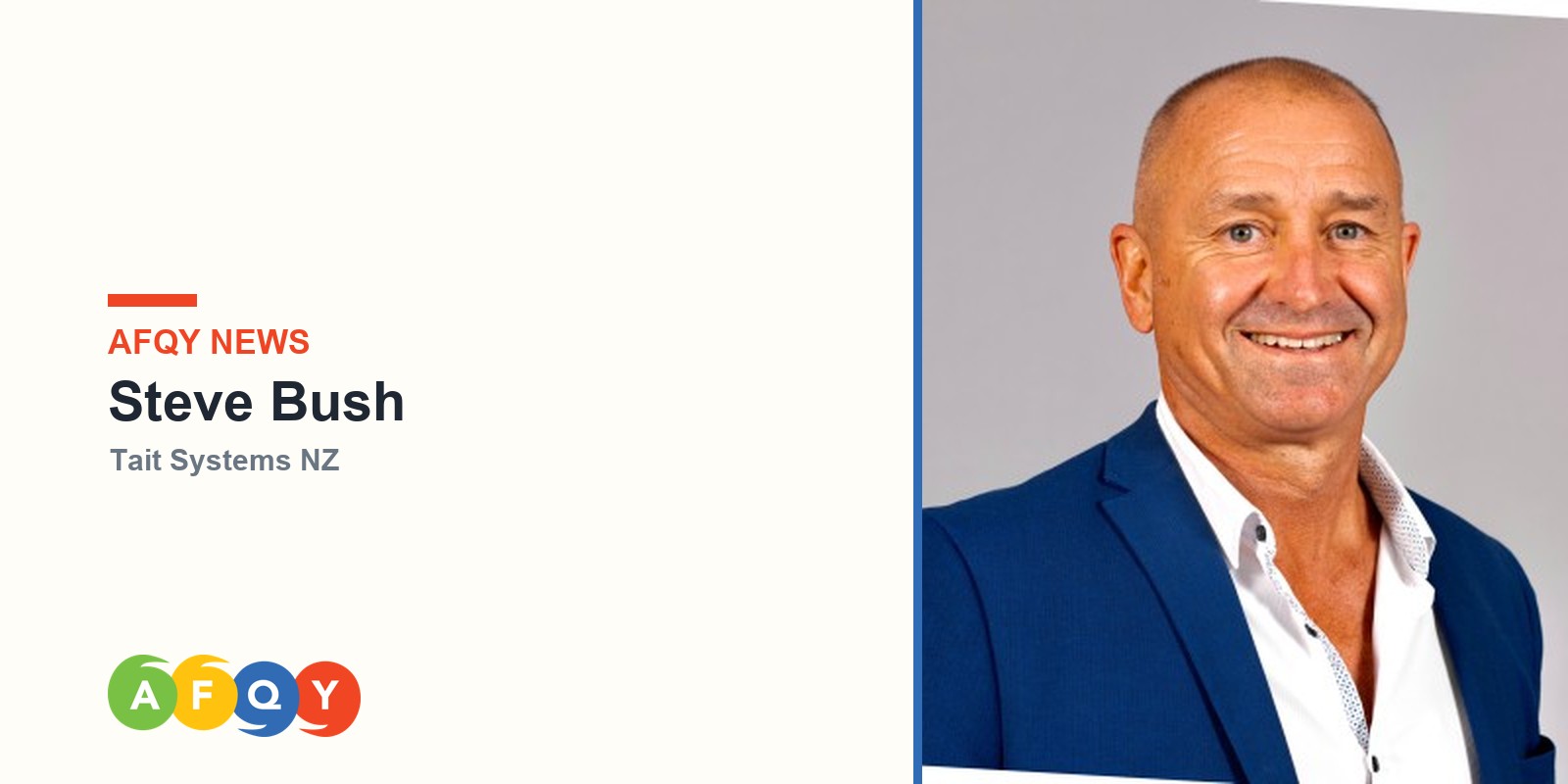
Tait Systems NZ has a new chief executive. Steve Bush, a telecommunications leader with more than two decades of experience across Australia and New Zealand, took up the role on 20 July, according to reports. His arrival lands at a decisive moment for one of the country’s largest public safety infrastructure projects.
Tait Systems NZ is the Christchurch-based company building the new Land Mobile Radio network at the heart of New Zealand’s Public Safety Network. The business was formerly the Tait Kordia Joint Venture and is now wholly owned by Tait Communications, the long-established Christchurch radio and critical-communications manufacturer. Tait said in 2024 that it had reshaped operations and brought in additional expertise as it moved into the delivery phase, with Kordia continuing as a subcontractor.
The scale of the work is considerable. Government figures put the Public Safety Network at roughly $1.7 billion over ten years, delivering a single nationwide, encrypted digital radio service for frontline responders. The Land Mobile Radio component alone involves around 500 sites from Northland to Southland. Reports indicate the programme includes installing more than 7,000 radios in emergency vehicles, around 1,300 in public safety buildings, and roughly 30,000 portable radios for frontline staff. The rollout is on track to be completed by the end of 2026.
For the first time, Fire and Emergency New Zealand, Police, Hato Hone St John and Wellington Free Ambulance will share the same radio network. That shared platform is designed to make everyday coordination simpler and to hold up during large-scale events such as natural disasters, when conventional networks can fail. Oversight of the wider network shifted this year to SafetyNet Critical Communications, an independent Crown company that launched on 1 July 2026 and took over from the Next Generation Critical Communications unit previously run inside Police.
Bush steps into this environment with a background built squarely around critical communications. According to reports, he has held senior roles with the NSW Telco Authority’s Critical Communications Enhancement Program, Kordia, Huawei Australia, Tata Consultancy Services and Amalgamotion, spanning telecommunications, broadcasting and network delivery. His most recent work centred on New South Wales land mobile radio, giving him direct experience of the kind of nationwide radio programme he now leads in New Zealand. His earlier time at Kordia also connects him to a partner already embedded in the Public Safety Network build.
Bush framed the appeal of the job around its purpose rather than its technology. Reports quote him describing the work as “a national public safety capability” rather than an ordinary network rollout, and pointing to the importance of teams staying connected “when communities need them most.” He has emphasised that reliable, encrypted communications are fundamental for first responders.
Tait signalled confidence in the choice. Board chair Penny Hoogerwerf said Bush has “a strong record of leading complex telecommunications and critical communications programmes,” according to reports. Tait Systems NZ’s own site now lists Bush as chief executive, alongside a leadership team covering deployment, finance, relationships, and health and safety.
The timing matters. With completion targeted for the end of 2026, Bush inherits a programme in its most demanding phase, where thousands of devices must be installed and a nationwide network brought fully into service for agencies that cannot afford downtime. It is a handover measured less in fanfare than in delivery.
For Christchurch, the appointment also keeps a nationally significant technology programme anchored in the city where Tait has built radios for decades. The next eighteen months will show how the network performs when it matters, and Bush now carries responsibility for getting it there.
Sources
- Reseller News: Tait Systems NZ strengthens critical comms with telco vet Steve Bush
- SecurityBrief NZ: Tait Systems NZ appoints Steve Bush as chief executive
- Tait Systems NZ: Our Team
- Tait Communications: Tait Systems NZ to continue delivery of the Public Safety Network radio network
- NZ Police: Emergency Services Chief Executives welcome the build phase of the Public Safety Network
- NGCC: Public Safety Network