
CullBeck's $20 million raise shows NZ deep tech can go the distance
27 July 2026· AFQY News
Here’s a story to warm a winter weekend. CullBeck, a Wellington deep tech company that makes iron with hydrogen instead of coal, has raised $20 million in total capital. That includes a $15 million first outside round at a $60 million valuation, reported as the largest recorded first raise for a New Zealand deep tech company.
CullBeck spun out of Victoria University of Wellington’s Paihau Robinson Research Institute in September 2025, but the science behind it has been brewing for close to a decade. The reactor at the heart of the company is an electrically heated continuous fluidised bed, co-invented by chief scientist Professor Chris Bumby, whose hydrogen ironmaking work won a national innovation award back in 2020. The research programme drew government backing along the way, including a $6.5 million Endeavour Fund grant, and support from New Zealand Steel.
The pitch is simple and quietly audacious. Conventional blast furnaces use coking coal to strip oxygen from iron ore, a process that takes many hours and produces large amounts of carbon dioxide. CullBeck’s reactor uses hydrogen to do the same job in roughly 150 seconds, and it is designed specifically for titanomagnetite, the black ironsand found on New Zealand’s west coast beaches that conventional systems struggle to process. The by-products are water and a slag rich in vanadium and titanium, both valuable in their own right.
Chief executive Martin Hacon, who brings more than 40 years in steel operations, is careful about how he frames it. “This isn’t green iron. It is cheaper iron that happens to be very green,” he told the company’s investors. Even running on grey hydrogen the process roughly halves emissions, with near-zero possible once green hydrogen supply catches up.
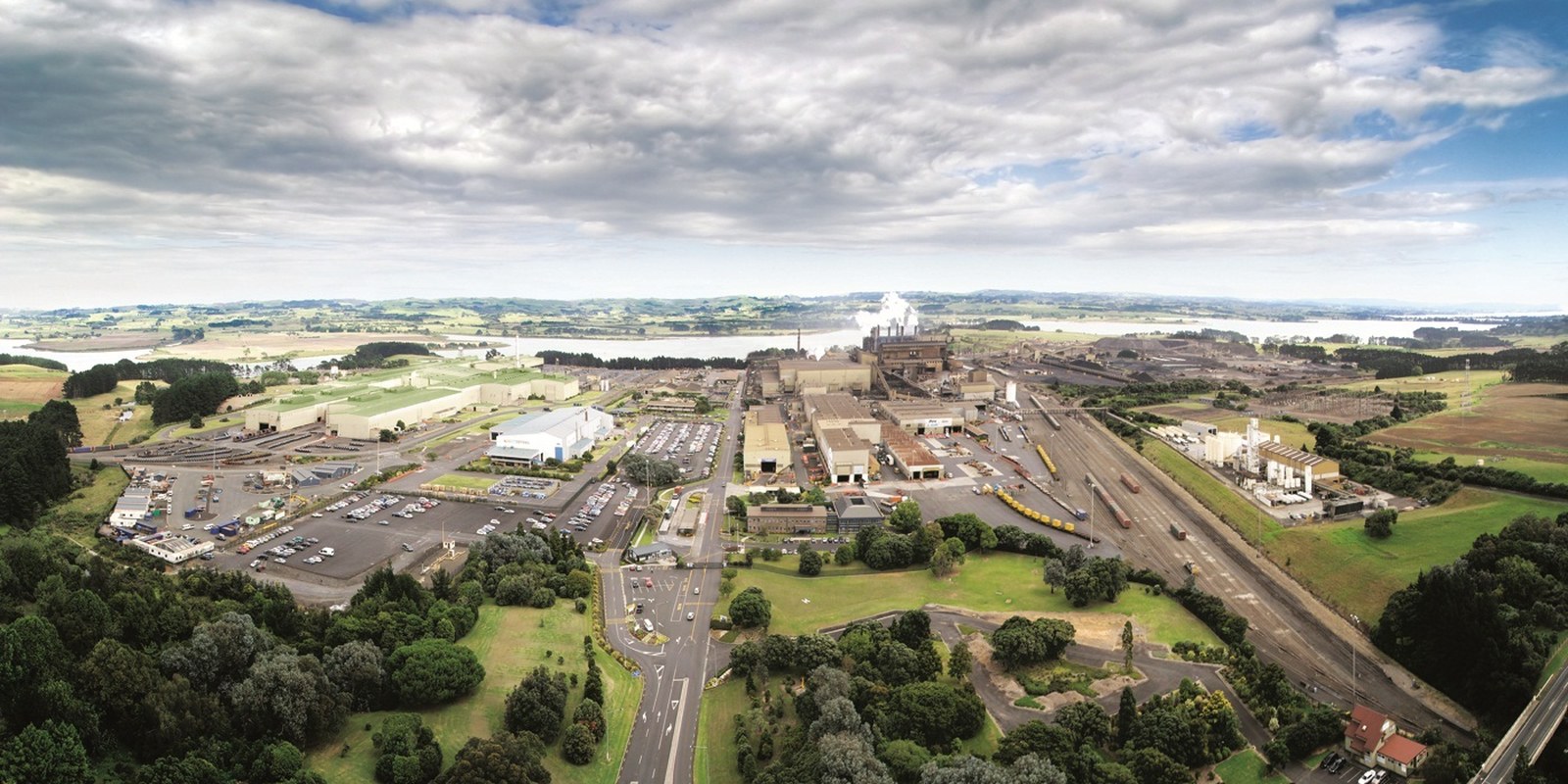
The commercial signals are what set this raise apart. An Australian customer has come in as a foundation investor with $5 million of equity, and has reportedly committed to buying 18 production modules if the company’s demonstrator performs, a deal the company projects at more than $1 billion in revenue. The demonstrator, targeting 2.5 tonnes per hour, is planned for a site next to New Zealand Steel’s Glenbrook plant, with installation expected in early 2027 and operation in 2028.
The backer list reads like a roll call of New Zealand’s deep tech ecosystem: Punakaiki Fund, 2040 Ventures, Outset Ventures, Motion Capital and Icehouse Ventures all feature in reports of the round.
For New Zealand tech leaders, the encouraging part is the pattern, not just the deal. This is patient university research, backed by public science funding, spun out with experienced operators at the helm, and validated by a paying industrial customer before the first commercial plant exists. It follows a strong month for local deep tech, with several Auckland companies also closing rounds for AI and materials ventures solving physical-world problems.
New Zealand has long exported clever people and imported finished technology. Companies like CullBeck point at a different future, one where the clever bit stays here, gets built here, and ships to the world as high-value plant and intellectual property. A demonstrator at Glenbrook is still a long way from a global business. But a record first raise, a billion-dollar customer pipeline and a decade of hard science underneath it is about as good a start as deep tech gets.
Sources
- B2B News: CullBeck raises $20m, signs $1b steel customer
- BusinessDesk: CullBeck raises $20m in record first funding round for hydrogen steelmaking tech
- NBR: Green iron: NZ deep tech startup CullBeck raises record $20m
- Climate Venture Capital Fund: CullBeck: making iron without coal, in 150 seconds
- Victoria University of Wellington: Robinson Research Institute's hydrogen-steelmaking research wins Innovation Award
- Metals NZ: Accelerating research into low-emissions steelmaking