
AI Perspectives: Three Different Lenses on Where AI Is Taking Business
13 September 2026· AFQY News
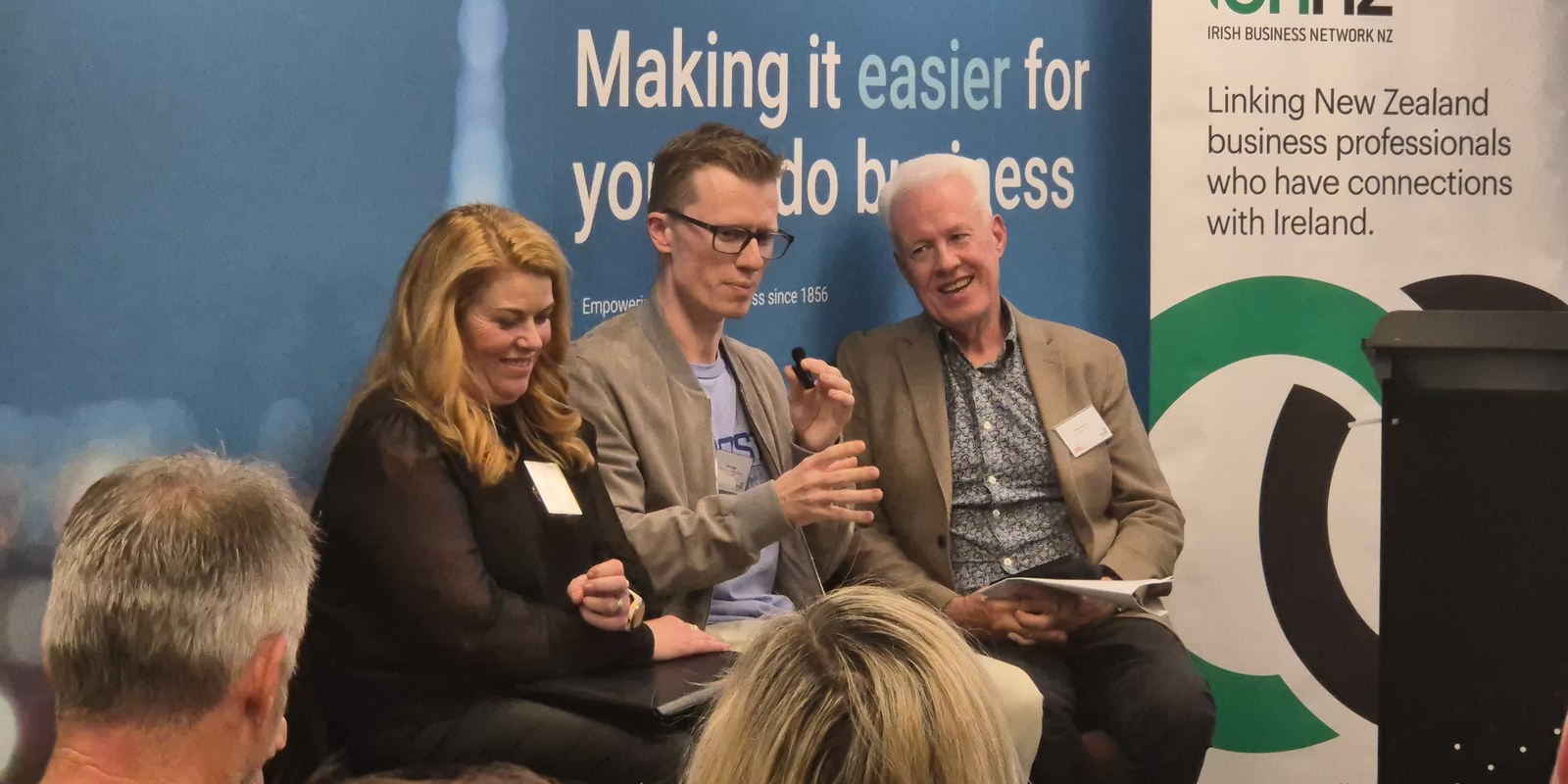
The Irish Business Network New Zealand and Dutch Business Association New Zealand recently came together for AI Perspectives, a joint event that brought two business communities, different cultures and a range of experiences together around one subject that is rapidly reshaping all of them: artificial intelligence.
It proved to be a highly successful joining of communities and ideas. Rather than presenting AI through a single lens, the event brought together three speakers with markedly different perspectives, creating a much more complete picture of what AI means for business.
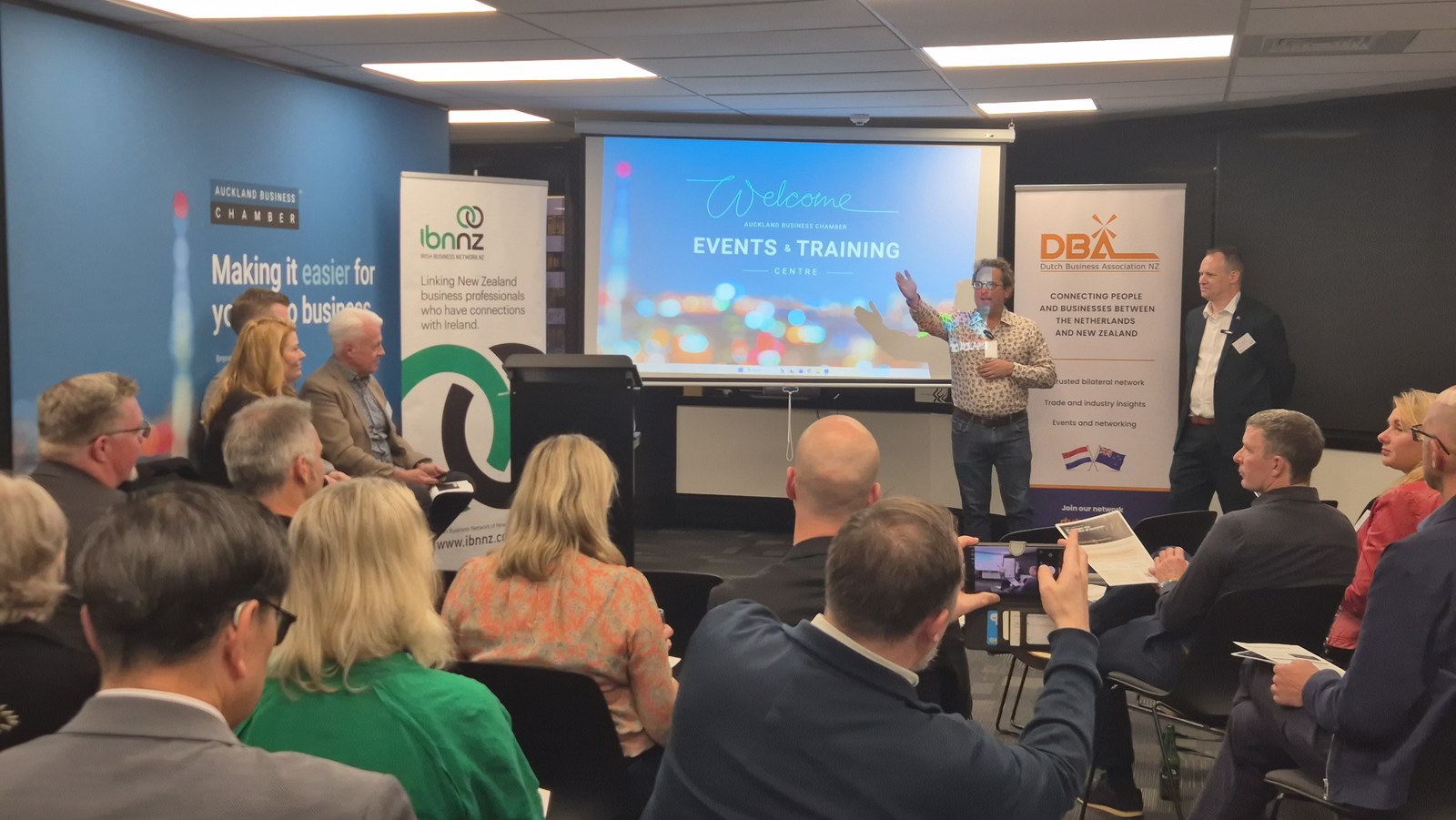
Rob Benson, an experienced technology company CEO who has lived through multiple generations of technological change, approached AI from the strategic and commercial level: what is fundamentally changing, why it matters, and where the opportunity for business differentiation lies.
Lisa Byrnes, a marketer rather than a technologist, represented perhaps the perspective closest to many everyday business users. Having immersed herself in AI through curiosity and practical experimentation, she cut through much of the terminology surrounding prompts, skills, workflows and agents, focusing particularly on understanding what businesses are actually buying and whether increased autonomy is necessarily desirable.
Matt Reid, an experienced technical architect, took the conversation beneath the surface into the information and systems required to make AI useful. His presentation highlighted a critical reality: AI cannot make consistently good decisions if the information it needs is fragmented, inaccessible or poorly structured.
Their presentations were different, but the messages fitted together remarkably well.
Rob Benson: “AI is changing the economics of what we do.”
Lisa Byrnes: “Do not confuse more autonomous with better.”
Matt Reid: “80% of the work is ultimately tied up… in organising the data and structuring it.”
Put together, those three statements tell much of the story.
AI is creating opportunities that previously weren’t economically possible. But businesses should not automate simply because they can. And when they do identify something worth changing, the quality and accessibility of their information becomes fundamental to making it work.
Rob Benson: AI Is Changing the Economics of Technology
Rob Benson opened from the broadest perspective: not simply what AI can do, but what it is changing about the economics of technology and therefore the choices available to businesses.
Having worked through decades of technology change, Rob drew a distinction between the increasingly standardised technology environment businesses have become accustomed to and the new opportunity emerging through AI.
For many years, organisations have largely faced a choice between buying standardised software, effectively the technological equivalent of buying a suit off the rack, or commissioning something bespoke.
Bespoke technology could create competitive differentiation, but historically it also introduced considerably more cost and risk. That often meant the organisations most able to pursue genuine customisation were large enterprises and government organisations with the budgets and resources to absorb that risk.
AI is beginning to shift that equation.
Rob’s central argument was that AI dramatically reduces some of the economic barriers to conceiving, building and deploying tailored technology. That means a business of perhaps 20 people can increasingly consider doing something genuinely distinctive that, until recently, might have required an enterprise-level budget or development team.
Standard platforms such as accounting, CRM and other business applications will continue to provide enormous value. There is little advantage in rebuilding technology that already performs a common function extremely well.
The interesting question becomes:
Where does your business need to be different?
That is where AI potentially changes the equation.
Instead of every organisation following effectively the same technology pathway, businesses have a growing ability to use AI to develop capabilities, processes and customer experiences that are particular to them. Rob described this as an opportunity for the “sameness” that has increasingly characterised business technology to begin giving way to differentiation.
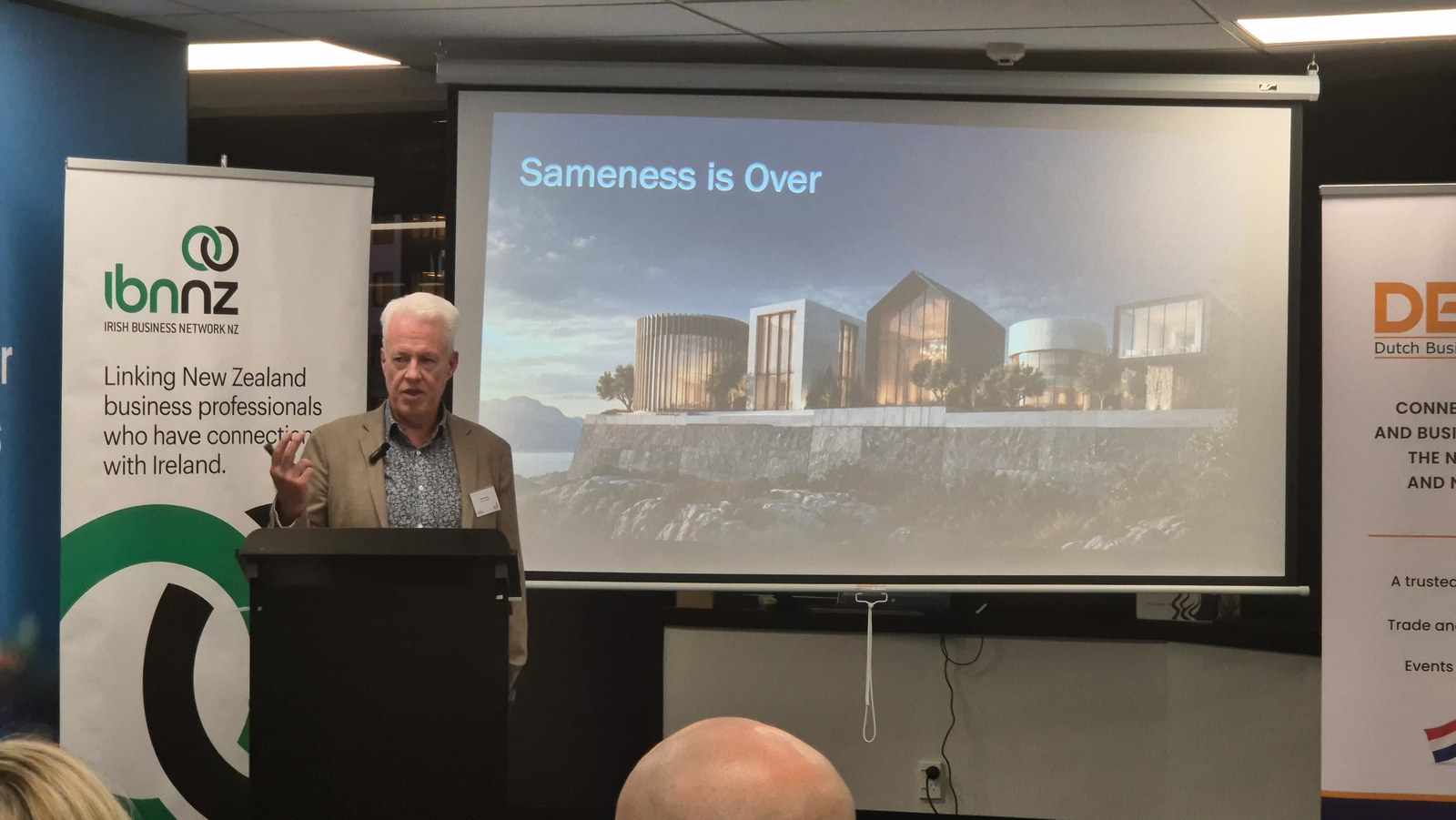
Experience may become more valuable, not less
Rob also challenged the assumption that rapidly advancing AI somehow makes decades of technology experience redundant.
His plumber analogy captured the point particularly well.
A capable DIYer may spend days attempting to diagnose and repair a problem. An experienced plumber can arrive with the right tools, recognise the issue and solve it in minutes. The customer is not really paying for those few minutes of labour; they are paying for the years of accumulated expertise that made those few minutes possible.
Rob sees something similar happening with AI.
The technology provides extraordinarily powerful new tools, but experience helps determine which tool to use, what problem is actually worth solving, and how to avoid spending enormous amounts of time experimenting in the wrong direction.
That leads to perhaps the most important question in Rob’s presentation:
What is actually worth building?
AI makes experimentation easier. It makes development faster. It makes previously uneconomic ideas possible.
But the business challenge remains identifying the things that will genuinely “move the dial”.
For Rob, AI is therefore both a threat and an opportunity for the technology sector itself. Existing technology businesses must adapt, but the same forces disrupting established models also create an enormous opportunity for organisations prepared to rethink how technology can create differentiation.
Lisa Byrnes: Understand What AI Is Actually Doing
If Rob’s perspective was strategic, Lisa Byrness’ was deliberately practical.
Lisa began by making something clear: she is not a coder, developer, engineer or programmer.
She is a marketer who became intensely curious about AI after recognising several years ago that it was going to fundamentally disrupt her profession.
That perspective made her presentation particularly relevant to the large number of business people who now use AI every day without necessarily wanting, or needing, to become technologists.
Her focus was one of the most talked-about areas of AI today: agents.
But rather than begin with the technology, Lisa began with a warning.
Businesses are increasingly being sold “agentic” solutions, yet not everything described as an agent genuinely requires, or even benefits from, agentic technology.
Her objective was therefore not to teach the room everything about agents in a few minutes, but to give businesspeople enough understanding to ask better questions when someone proposes an agentic solution.
Prompt → Skill → Workflow → Agent
Lisa explained AI capability as something of a progression.
At the simplest level there is the prompt: an instruction given to an AI model.
When a useful prompt or set of instructions is repeatedly refined and reused, it can become a skill, a repeatable capability developed through working with the model, testing it, correcting it and capturing what works.
Skills can then be combined inside workflows.
The important distinction is that a workflow follows a predetermined path. Someone has designed the steps and the system moves through those steps.
An agent is fundamentally different.
Lisa described four characteristics required for genuinely agentic behaviour:
- A goal extending beyond producing one response.
- Tools, allowing the AI to interact with systems or information beyond the conversation itself.
- Memory, enabling it to retain relevant context and learn from what has occurred.
- A loop, allowing it to try something, evaluate the result, adjust and continue.
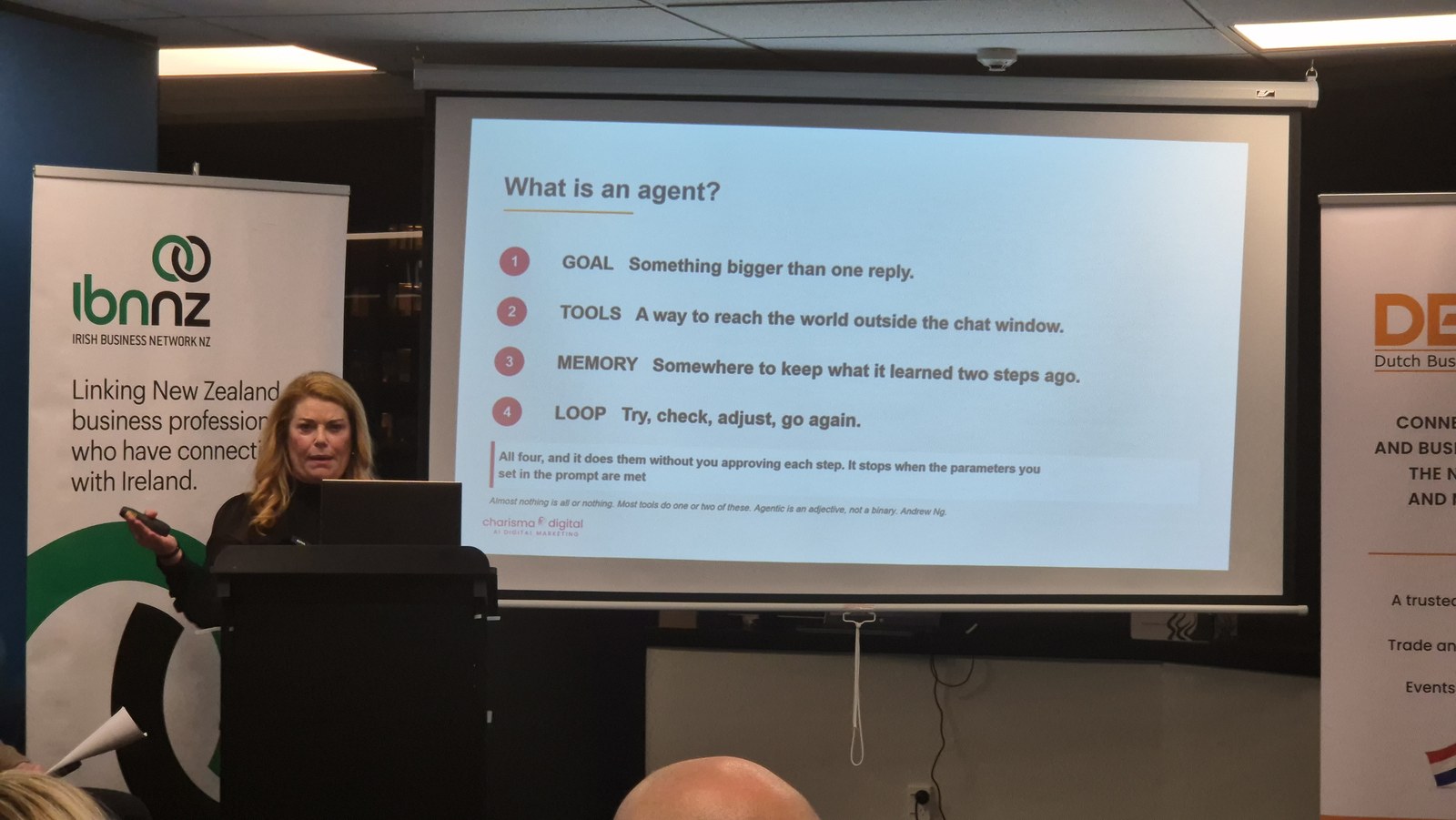
The crucial difference is decision-making.
A workflow has been given the path.
An agent can assess context and determine the next step for itself.
Not everything needs to become an agent
This distinction matters because increased autonomy is not automatically an improvement.
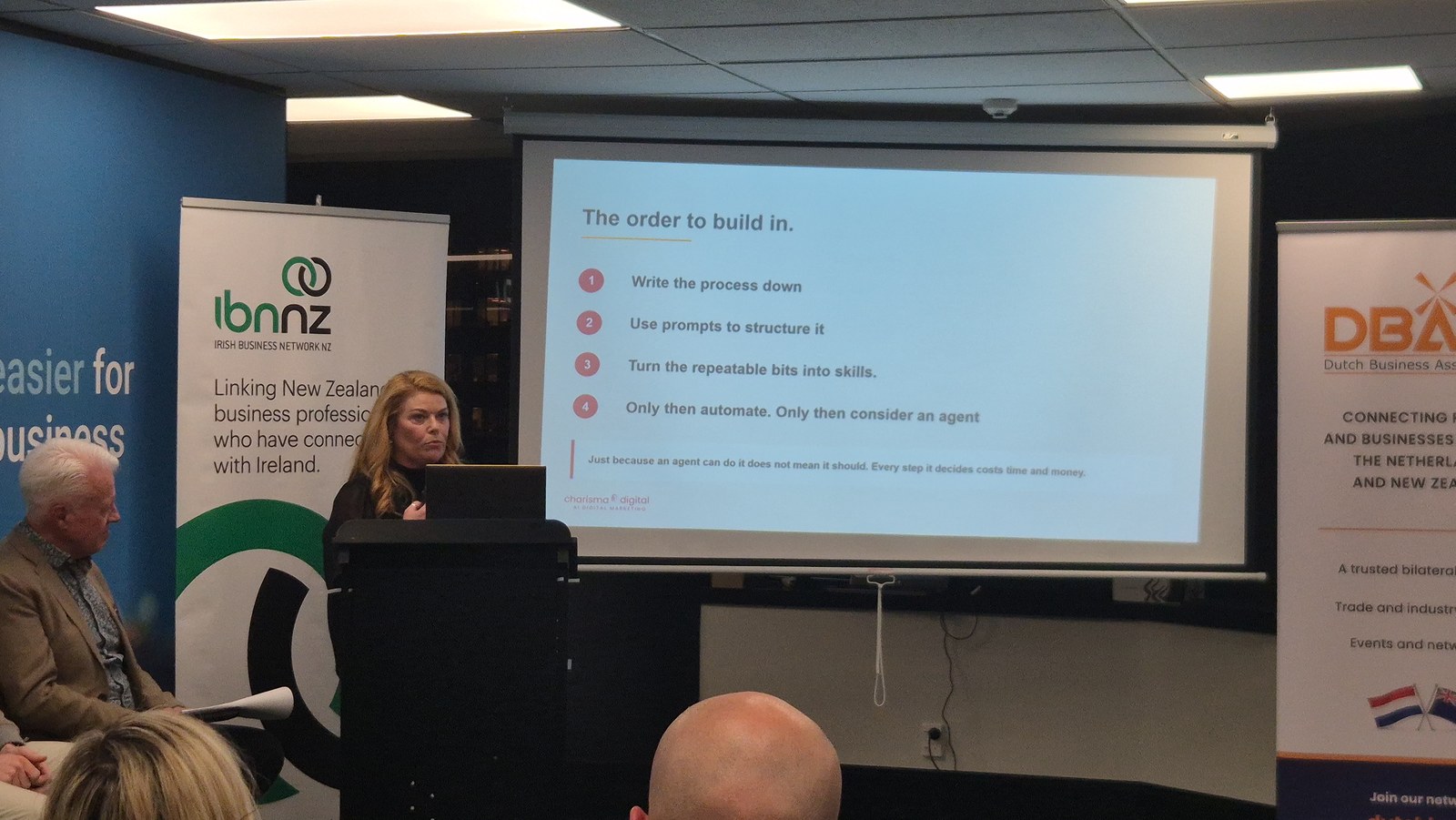
Lisa suggested that many organisations can achieve enormous gains simply by properly documenting processes, improving prompts, developing repeatable skills and combining those skills into well-designed workflows.
In many cases, that may achieve most of the desired business outcome without introducing the complexity of fully autonomous agents.
Her rule of thumb for human oversight was particularly memorable:
If it sends, spends, publishes or deletes, have a human in the loop.
The more autonomous and multi-agent a system becomes, the more organisational complexity starts to resemble a business itself: different specialists, responsibilities, tools and supervisory layers.
Lisa’s recommendation was therefore refreshingly pragmatic:
Start small.
Understand the process first. Improve the prompt. Turn repeated instructions into skills. Combine them into workflows. Introduce greater autonomy where there is a genuine reason for doing so.
And above all:
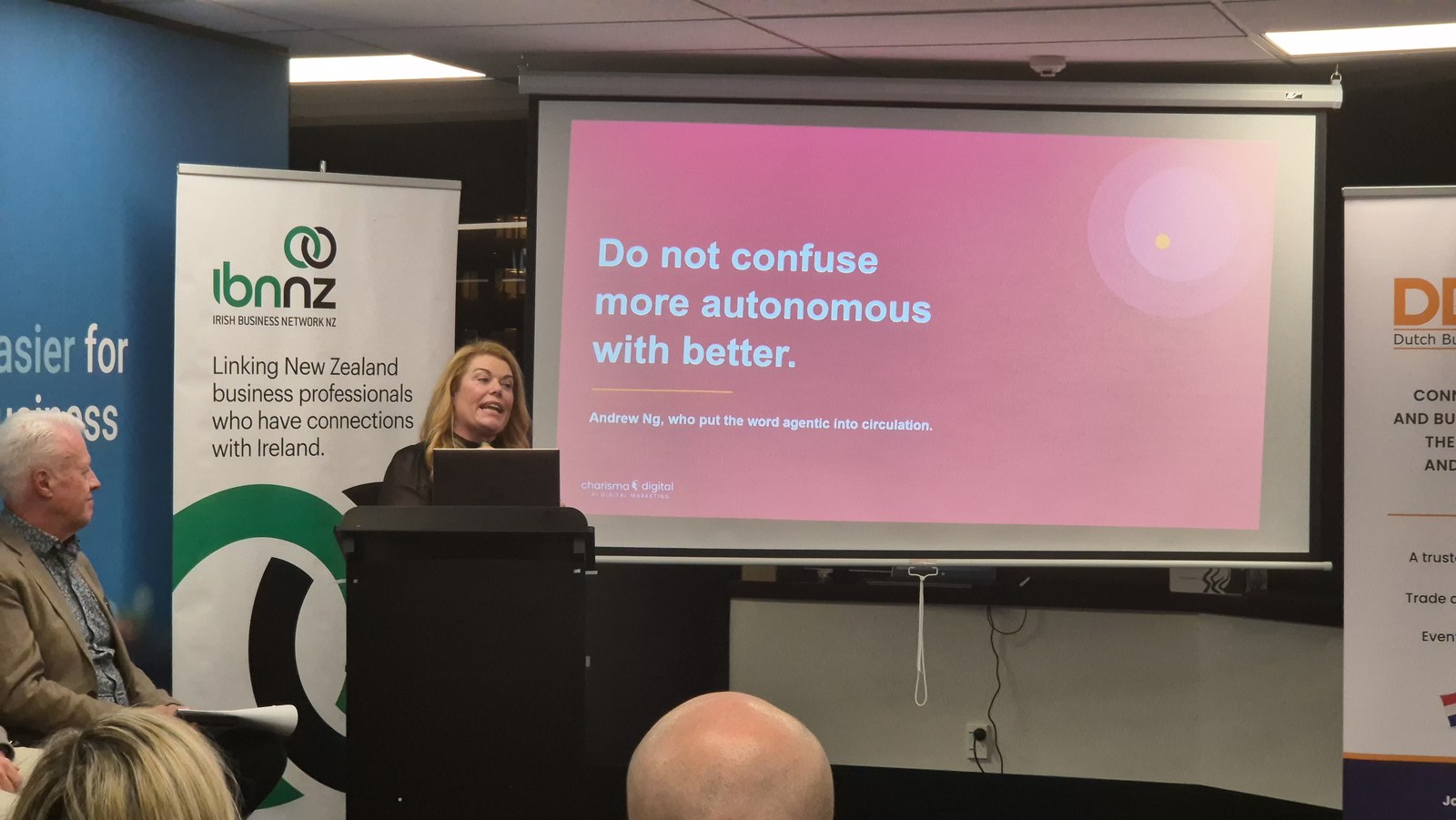
“Do not confuse more autonomous with better.”
Just because AI can perform something does not automatically mean it should.
Matt Reid: AI Is Only as Useful as the Information You Give It
Matt Reid then took the discussion further underneath the technology.
His opening question was deceptively simple:
Where does your information currently live?
For many organisations the answer is: everywhere.
Documents sit on employee laptops, file servers, email inboxes, spreadsheets, paper records and different versions of different folders.
That becomes a fundamental problem when organisations begin expecting AI to make meaningful business decisions.
Matt used the analogy of employing the best business analyst in the country, placing them in a dark room, telling them nothing about the organisation and sliding a set of expense statements underneath the door.
Then asking:
Which subscriptions should we cancel?
Even an exceptional analyst would struggle because they are missing the information required to make the decision.
AI faces exactly the same problem.
It isn’t necessarily the intelligence that is missing.
It is the context.
Give the system the expense information alone and the answer may be poor. Give it the organisation’s subscription list and it improves. Explain which applications are charged per user and it improves again. Add the current employee roster and suddenly the system has considerably more of the information a human would use to make the same decision.
Nothing about the underlying AI has changed.
The inputs have changed.
Start with the decision
Matt’s approach therefore begins before automation.
Talk to the person currently responsible for the process and ask:
What decision are you making?
Then ask:
What information do you use to make that decision?
Those questions reveal both whether the process is suitable for AI and how difficult it will be to automate.
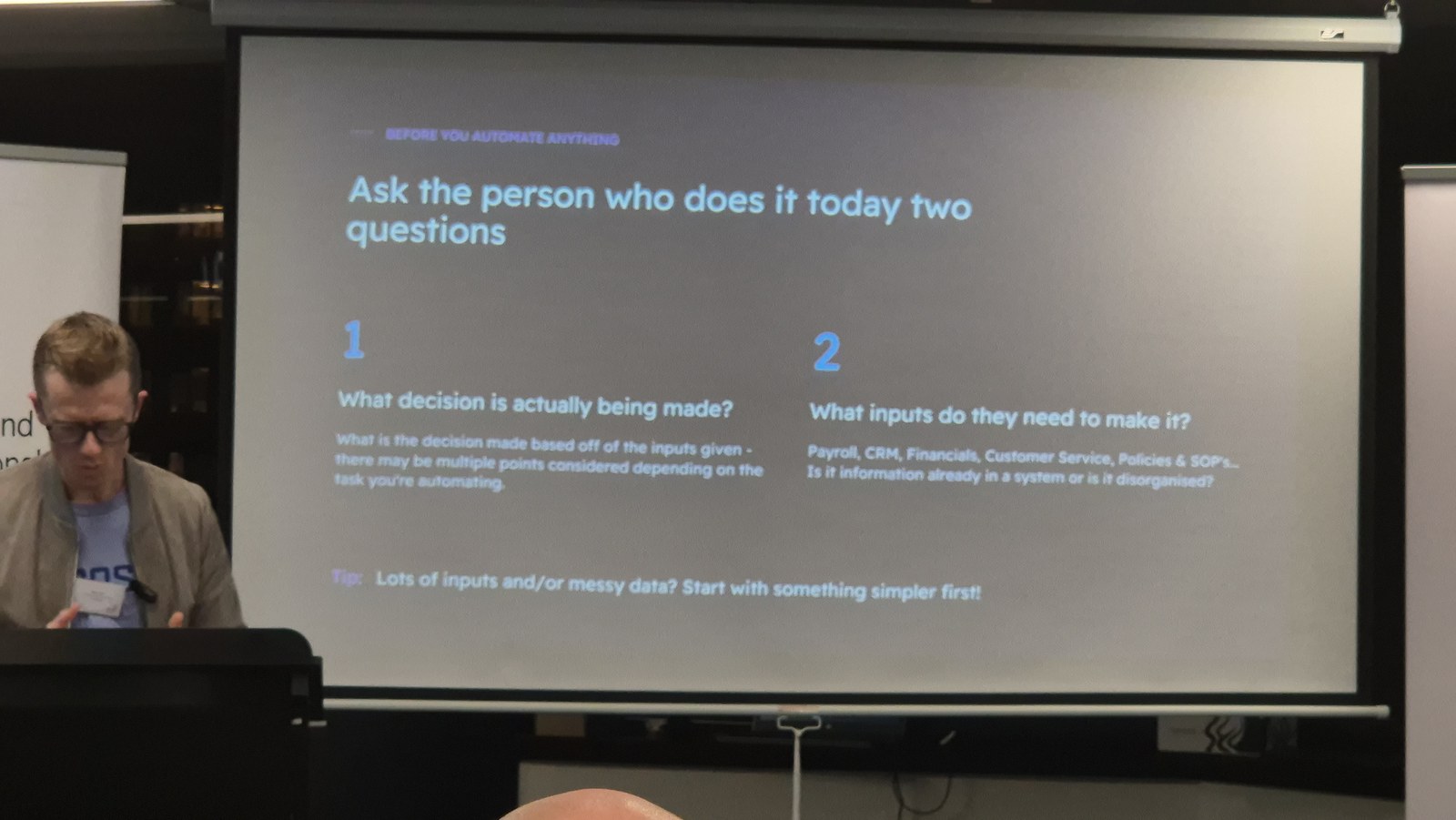
If the necessary inputs already exist in accessible, well-structured systems, automation may be relatively straightforward.
If the information exists across paper, spreadsheets, emails and disconnected legacy systems, considerable work may be required before AI can reliably use it.
That is why Matt estimates that a large proportion of the effort involved in successful AI implementation is not necessarily building the AI itself.
It is organising and structuring the information around it.
He illustrated this through his own organisation’s executive reporting, where the majority of relevant business information has been connected and made accessible. This allows AI to generate a weekly view covering areas such as leave, sales pipeline, wins and losses and operational priorities, while also referencing internal procedures and business knowledge.
Once information has been properly structured for one workflow, it can also be reused by the next.
And the next.
That means good data foundations create a compounding return: the difficult work undertaken to make one process possible becomes infrastructure for future AI initiatives.

Three Perspectives, One Bigger Picture
What made the AI Perspectives event particularly valuable was that none of the three presentations attempted to provide the entire answer.
Instead, they addressed three different questions.
Rob Benson asked: What has AI now made possible?
AI is altering the economics of technology and giving organisations new opportunities to differentiate themselves.
Lisa Byrnes asked: How much AI do we actually need?
Not every problem requires an autonomous agent. Start with the business process, use the simplest appropriate approach and introduce autonomy deliberately.
Matt Reid asked: What does AI need in order to work properly?
Clear processes, the right context and well-organised, accessible information.
Taken together, that creates a useful framework for almost any business considering AI:
Find the opportunity.
Choose the appropriate level of automation.
Build the information foundations required to make it work.
Perhaps that was also the wider success of bringing the Irish Business Network New Zealand and Dutch Business Association New Zealand together.
Different backgrounds and different perspectives did not need to produce identical conclusions.
Instead, each added another part of the picture.
And for a technology moving as quickly as AI, that ability to combine strategic experience, practical curiosity and technical depth may be exactly what businesses need.
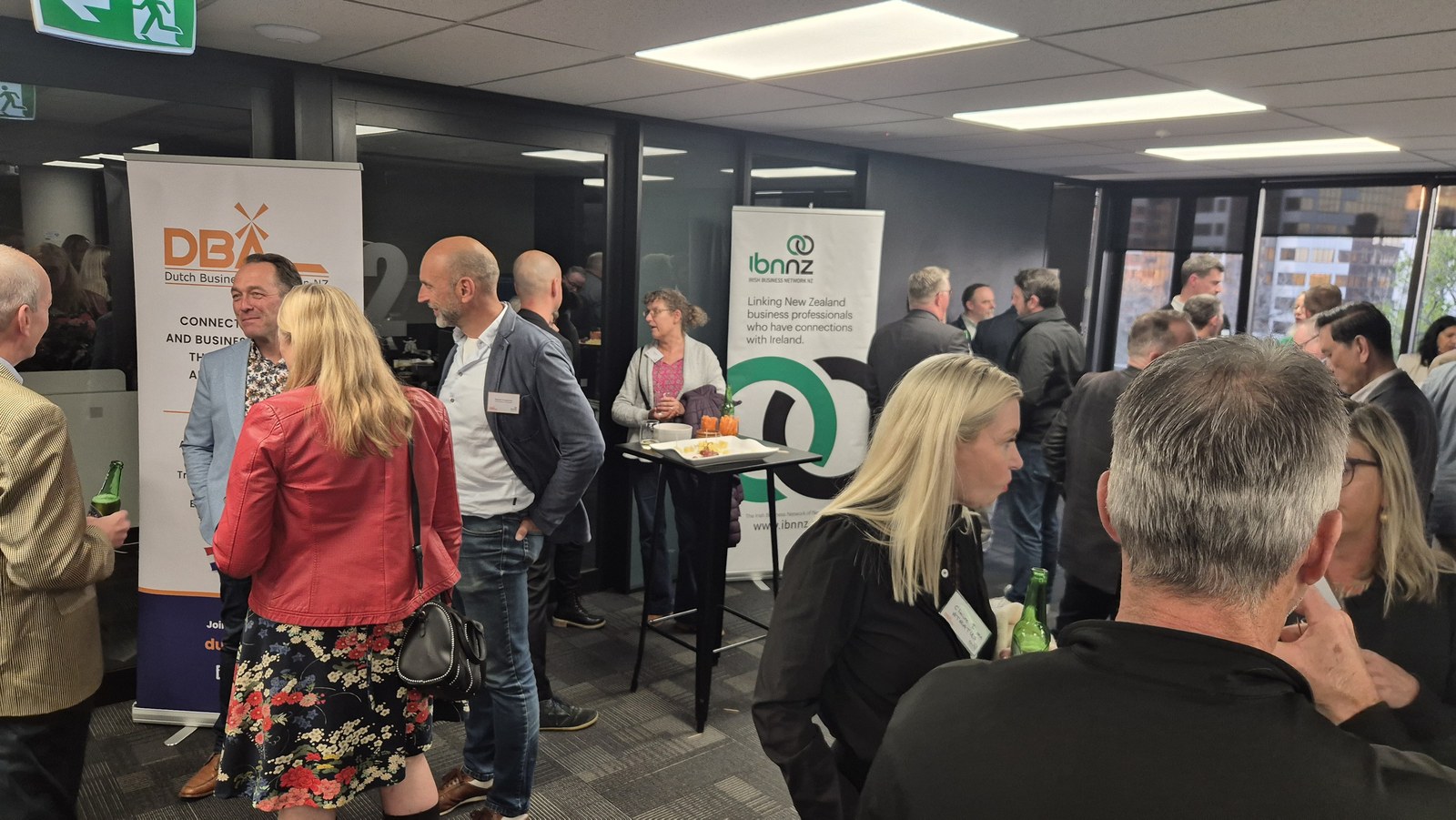
Join through your connection. The Irish Business Network of New Zealand, established in 2015, describes itself as a friendly and open forum for business people with a connection to Ireland, with more than 800 members across a range of industries. You can join through its member portal or email info@ibnnz.com. The Dutch Business Association New Zealand connects professionals and businesses with an interest in the Netherlands and New Zealand through networking events, webinars and knowledge sharing, and takes new members through its membership page. If you’d like to join either professional body through an Irish or Dutch connection, do get in touch with the respective organisation.