Mana, mauri and the machine: Te Aroha Grace opens CDAIO New Zealand
19 October 2026· AFQY News
Before a single slide about artificial intelligence went up at CDAIO New Zealand, a room of chief data and AI officers was asked to think about a pair of basketball shoes.
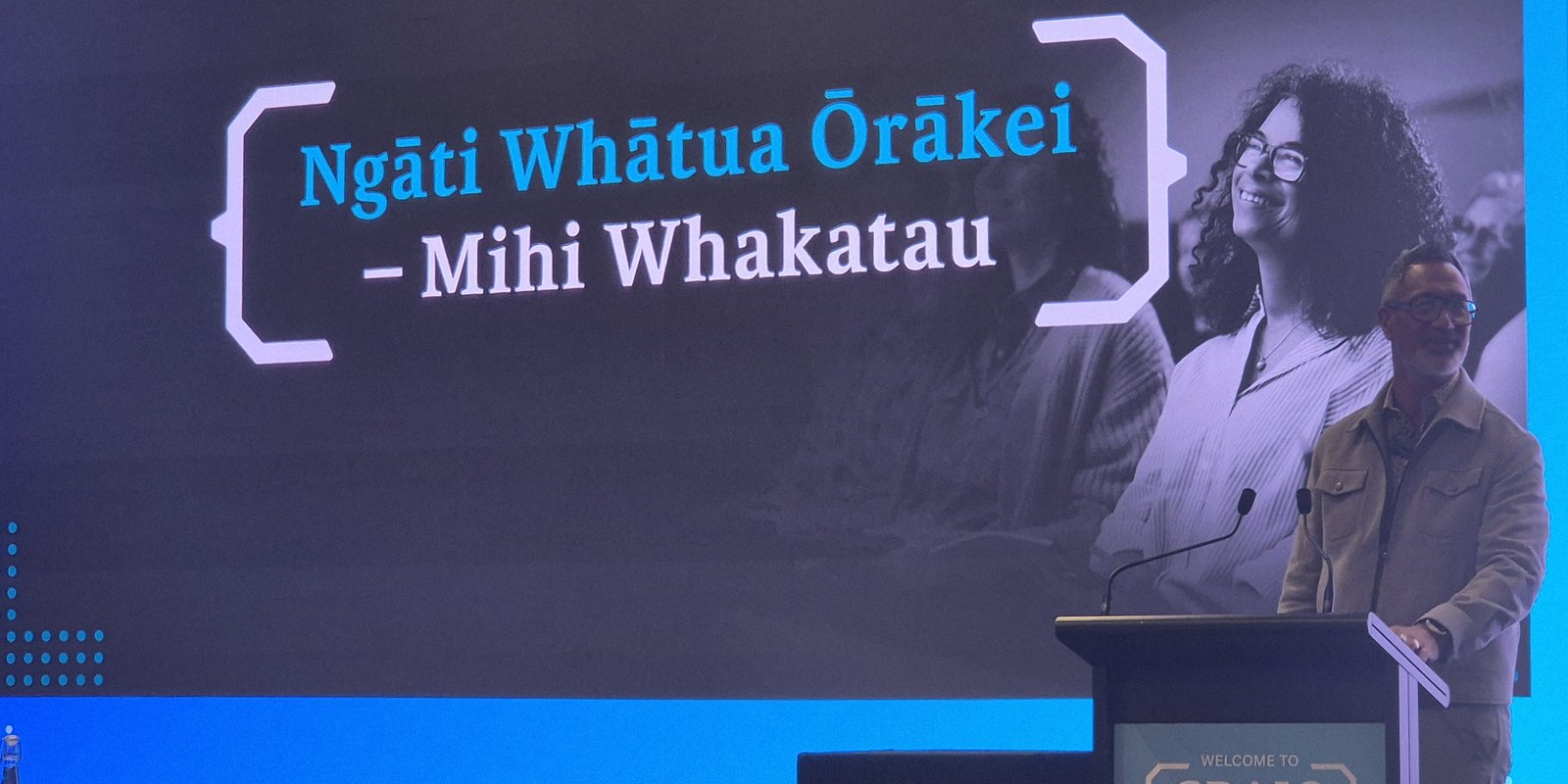
Te Aroha Grace of Ngāti Whātua Ōrākei opened the two-day conference with the mihi whakatau, the formal welcome, at the Grand Millennium Auckland on the morning of 19 October. It was the first session on the CDAIO New Zealand agenda, and in a few minutes it handed a room of technologists a working vocabulary they could take into everything that followed: mana, mauri, tapu, and a piece of te reo Māori grammar that sorts the whole universe into two.
He did not offer Te Ao Māori as decoration for a tech event. He offered it as a way, in his words, and the parallels with the questions data and AI leaders wrestle with every day were hard to miss.
TL;DR
- Te Aroha Grace of Ngāti Whātua Ōrākei gave the mihi whakatau that opened CDAIO New Zealand at the Grand Millennium Auckland on 19 October 2026.
- Mana, he said, is the bright light around a person: it comes from skill and from the attention of many people. “There is no one better at being you, than you. So everyone has mana.”
- Mauri is the life force. “Even a rock has mauri. Even your name.”
- Tapu is the shoe in the glass box: something sanctioned because of its special properties.
- Te reo Māori divides everything in the universe by two, ā and ō, which is why he called it a quantum language.
- His message to a room building AI: live the metaphor with the land, the river and the sky, bring mana inside your teams, and remember that “We all need partners.”
Starting well
Grace began where every mihi begins. People love the idea of starting well, he said, no matter who they are or what country they are from, and this is the ceremony that does it.
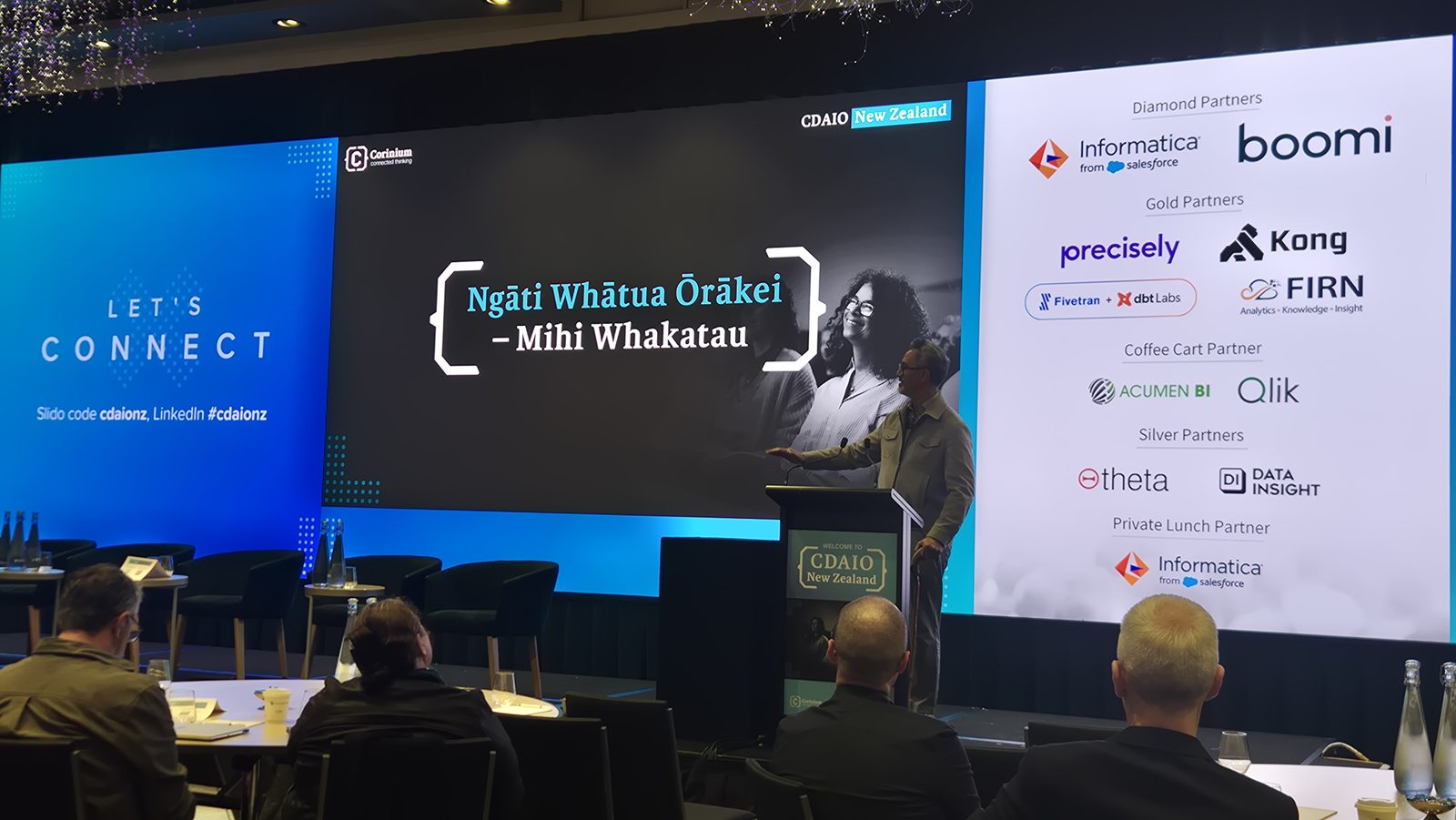
He spoke of his great-great-great-great-great-grand-uncle, who had an aspiration to share. “The gift that he gave has become the most global city in our country. We call it Auckland.” That gift is the tuku whenua of 1840, when the Ngāti Whātua Ōrākei chief Āpihai Te Kawau, soon after signing Te Tiriti o Waitangi, gave land on the Waitematā Harbour to Governor Hobson for a new capital. Central Auckland stands on it today, and the iwi marks the anniversary each 18 September.
His ancestors, he added to some laughter, had some pretty nasty business partners back then, and some awesome ones.
He then told the room how he sees being Māori. It is not an event, he said. It is a way. The same is true of te reo Māori, which he described as a sound wave.
"It is often confused as a language, but I believe that it is a way."
Mana: Michael Jordan’s shoes
To show what that way looks like, he reached for a pair of basketball shoes. If a Jordan shoe sat on the stage and any of us touched it, nothing might happen. When Michael Jordan puts it on his foot and plays in it, something happens to it.
In te reo Māori, he said, we would say there is a brightness in that individual. It comes from skill, and it comes from the attention of many people to what they have done.
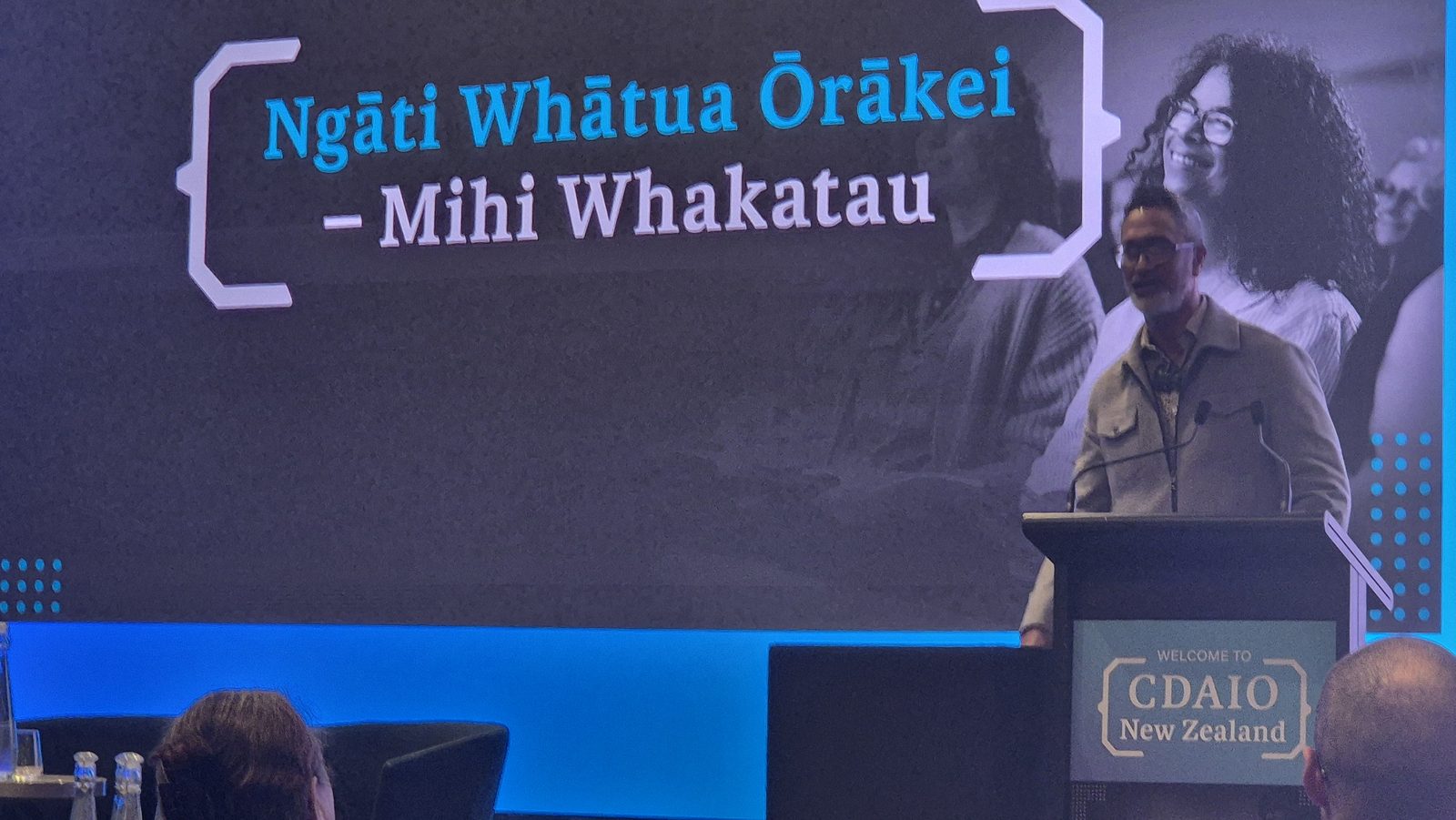
"We don't need to like them. We just need to know that there's a lot of attention towards them."
That attention usually gravitates around who a person is and what they do. “That bright light we call mana,” he said. “The sovereignty that makes you who you are.”
"There is no one better at being you, than you. So everyone has mana."
For a room whose systems run on attention, the point landed.
Mauri: even a rock
Then he went back to the shoe. You can’t just look at it, he said. You have to touch it.
What passes across is mauri. “Mauri is used as a word for life force,” he said, and it is in everything. “Even a rock has mauri. Even your name.” When you write a book with your pen, he said, even if it looks like just a name on a page, it is an artefact.
Tapu: the glass box
The shoe had one more lesson in it. Some people put a famous shoe in a glass box so that no one can touch it. In te reo Māori there is a word for that: tapu, the idea that something has been sanctioned because of its special properties.
Bad things can have special properties too, he said, and we sanction those as well. But the analogy is true.
Ā and ō: everything divides by two
He finished his tour of te reo with one more property of what he called the sound wave.
"Everything in the universe is divisible by two, ā and ō."
These, he said, are the two most important categories in the whole universe. The ā category can be mine: it can be my grandchild, it can be a child. The ō category is what sits above: like my ancestor, like a sacred book, like a mountain.
Everything falls into one or the other, he said, even the unobservable, which is why he believes te reo Māori is a quantum language: it is intermingled and it intersects.
Living the metaphor
Grace then turned the language into a challenge. What if we lived the metaphor with the land, the river or the sky? If you personify these things, he said, you will treat them differently. Aotearoa has already written that idea into law: the Te Awa Tupua Act of 2017 recognises the Whanganui River as a legal person.
He described Māori as carriers of an old intelligence. It is up to us to preserve it, he said, and to share and distribute it well. “It’s no longer about culture. It’s about the way.”
He asked the room to bring nature, and those bright lights of mana, inside their corporates and their teams, and said the future of that work needs to be human.
"We all need partners."
Before handing over, he asked the Corinium team to stand so the room could celebrate the work behind the event, and closed with an analogy about water. We each have our origin, and our own sound, and we can always go back.
What it means for the room
None of this was a lecture on data governance, and it was not meant as one. But it is hard to sit in a room of data and AI leaders and not hear the parallels.
Mana asks what gives a dataset, a model or an organisation its standing. Mauri asks whether data carries something of the people it came from. Tapu asks what belongs behind glass. And ā and ō ask the most useful question of all: which data do you hold, and which data holds you?
Those questions already have a home in Aotearoa. Te Mana Raraunga’s principles of Māori data sovereignty start from the idea that all data has a whakapapa, a genealogy, and that Māori have inherent rights over data about their people, language and environment. Grace gave the room the words underneath that thinking.
He also gave them a reminder from the most global city in the country, which began as a gift from people who wanted to share. Starting well, as he said at the outset, is the point of the ceremony. Two days on data and AI could not have asked for a better one.
Sources
- Corinium: CDAIO New Zealand 2026 agenda
- Wikipedia: Āpihai Te Kawau
- The Spinoff: Happy birthday Auckland, you can thank Ngāti Whātua for your gifts
- Te Ao Māori News: Special exhibition marks 184 years since tuku whenua, the birth of modern Tāmaki Makaurau
- Ako Aotearoa: Ngā Tūkapi Riro, possessive pronouns in te reo Māori
- Te Mana Raraunga: Principles of Māori Data Sovereignty
- New Zealand Legislation: Te Awa Tupua (Whanganui River Claims Settlement) Act 2017